Scored using Graphics cards Methodology v3.0
Graphics cards Methodology v3.0
Mathematical & Unbiased Scoring
Products in this category are scored under Frontum Graphics cards Methodology v3.0: the technical score from the specifications is the base, and independent expert and video reviews (up to ±0.5 points), owner opinions (up to ±0.3) and best-of lists (up to +0.3) move it up or down.
Explore Graphics cards Methodology v3.0

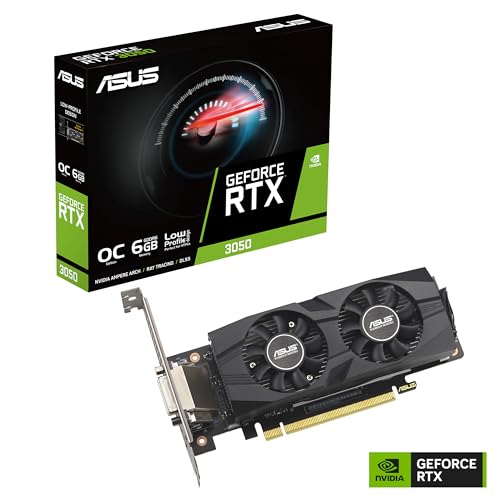
ASUS GeForce RTX 3050 LP BRK OC Edition 6GB Review: 117 Specs Compared

Avg. price:~$180VRAM:6 GBMemory bus width:96 bitThermal Design Power (TDP):70 W

ASUS GeForce RTX 3050 LP BRK OC Edition 6GB Review: Compare 117 technical specifications and 176 owner opinions to see how this product ranks in the Graphics cards category and whether it is worth buying.
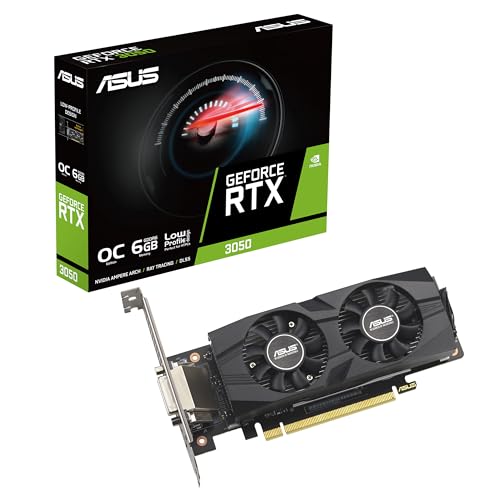
ASUS GeForce RTX 3050 LP BRK OC Edition 6GB
6.1/10

Overall score

Score
6.1/ 10
✕
What it is
Our main score for this model, 1–10. It combines specs, expert reviews, best-of lists and owners.
How we count it
Parts: Technical score 40%, Reviews score 25%, List score 25%, Sentiment score 10%
Marks: Each part gets a mark out of 10. For reviews, lists and owners, a typical model in this category gets about 8 and the best one gets 10.
No data yet: A part with no data shows "?". It counts as the mark of a weaker model in this category (4 in 5 models with data score higher). This way, models with reviews, lists and owners usually come out ahead.
Score distribution
â–¼
<55-66-77-88-99-10
Score components

40%

4.7

Technical Score

25%

?

Reviews scoreNot enough data yet, so we use 7.6, the mark of a weaker model in this category

25%

?

List scoreNot enough data yet, so we use 7.5, the mark of a weaker model in this category

10%

4.7

Sentiment score

â–¼Worse than 87% of graphics cards
7.1

Ratio quality/price

Ratio quality/price
7.1/ 10
✕
What it is
An indicator that combines the graphics card's overall rating with its cost.
When it matters
When you are looking for a graphics card that offers a strong balance of performance, features, and price.
Score distribution
â–¼
<55-66-77-88-99-10
Score components

70%

6.1

Overall score

30%

9.6

Price

â–¼Worse than 69%
4.7

Technical Score

Technical score
4.7/ 10
✕
What it is
How good the specs are compared with the other models in this category, 1–10.
How we count it
Areas: We rate the specs in each area against the other models in this category.
Weighting: The areas that matter most to buyers count more. The shares are shown under Score components.
Share: The technical score is 40% of the overall score.
Score distribution
â–¼
<55-66-77-88-99-10
Score components

44%

2.9

Performance

24%

2.8

Memory

12%

8.5

Power

11%

9.0

Features

5%

8.9

Design

4%

6.3

Connectivity

â–¼Worse than 88%
?

Reviews score

Reviews score
✕
What it is
Average grade from independent test sites, magazines and video reviewers, 1–10.
How we count it
Grades: Each review's own score is converted to 1–10; without one, we grade the review ourselves. Big test sites count more, short reviews half as much as full tests. A video review counts half.
Score: The average grade is 80% of the review mark; the number of reviews is the other 20% (1 review = 5, the typical number in this category = 8, the most-reviewed model = 10).
Enough data: With few reviews, the average grade is pulled toward the typical grade of this category. No reviews yet: 7.6 for now.
Share: Reviews count 25% of the overall score.
Score distribution
â–¼
<55-66-77-88-99-10
Grades by review (0)
We have not found an independent test of this model yet. Until we do, its review part counts as 7.6.
User ratings collected online are not part of this score.
No expert tests yet
4.7

Sentiment score

Sentiment score
4.7/ 10
✕
What it is
How positive owners are about this model in their comments under video reviews and on forums. We read each comment, keep only people who say they own the model, and sort them into positive, mixed or negative.
How we count it
Score: We compare how satisfied this model’s owners are with the other models in this category: the typical model gets 8, the most satisfied tenth 10, the least satisfied 4. This is 80% of the owner mark; the number of owners is the other 20%.
Enough data: A model counts with 10+ owners from 4+ different discussions. With fewer, the owner part counts as 7.8 for now.
Share: Owners count 10% of the overall score (left out in categories where fewer than 10 models have enough owner comments).
Score distribution
â–¼
<55-66-77-88-99-10

4.7

Mark 7.9 is below the typical mark 8.2 of this category, so it cannot lift the score above the technical score

80%

8.0

Satisfaction

20%

7.8

Popularity

Owners (176)
176 owners from 10 online discussions
74% positive
10% mixed
15% negative
Category average: 73% positive
Our own analysis of online owner opinions, not a rating from any website.
â–¼Worse than 93%
?

List score

List score
7.5/ 10
✕
What it is
How often independent test sites, magazines and video reviewers put this model in their best-of lists for this category.
How we count it
Points: The model in the most lists of this category gets 10; the others get 8 to 10 in proportion. In no list yet: 7.5. Lists count 25% of the overall score.
Enough data: Every list counts, even a single one. With fewer than 5 best-of lists in the category, this part is left out.
Lists with this model (0)
Not in any best-of list yet, so this part counts as 7.5. Models in a list get 8 to 10.
Not in any best-of list yet
  • asus-geforce-rtx-3050-lp-brk-oc-edition-6gb
  • asus-geforce-rtx-3050-lp-brk-oc-edition-6gb
  • asus-geforce-rtx-3050-lp-brk-oc-edition-6gb
  • asus-geforce-rtx-3050-lp-brk-oc-edition-6gb
  • asus-geforce-rtx-3050-lp-brk-oc-edition-6gb
  • asus-geforce-rtx-3050-lp-brk-oc-edition-6gb
  • asus-geforce-rtx-3050-lp-brk-oc-edition-6gb
  • asus-geforce-rtx-3050-lp-brk-oc-edition-6gb
asus-geforce-rtx-3050-lp-brk-oc-edition-6gb
Where to Buy
    N/A
Best Rankings
Available: ranking among products currently available (including other versions of this product).All: ranking among all products in the database.

What owners say about the ASUS GeForce RTX 3050 LP BRK OC Edition 6GB

Based on 176 owners sharing their experience in online comments

74%positive11%mixed15%negative

Owners praise its capable gaming performance and big upgrades, though newer demanding games can reveal its limits.

What owners dislike

  • Newer demanding games often need low settings, and the 4 GB version can show VRAM warnings or refuse to launch.9
  • Some owners get freezes at medium settings, or stutter when VRAM fills up, and one reports frame drops after relaunching a game.3

Points mentioned by at least 3 owners, most mentioned first.

Loading...
Loading category ranking...

Technical Specifications of Graphics Card ASUS GeForce RTX 3050 LP BRK OC Edition 6GB

Technical Score
Technical score
4.7/ 10
✕
What it is
How good the specs are compared with the other models in this category, 1–10.
How we count it
Areas: We rate the specs in each area against the other models in this category.
Weighting: The areas that matter most to buyers count more. The shares are shown under Score components.
Share: The technical score is 40% of the overall score.
Score distribution
â–¼
<55-66-77-88-99-10
Score components:

44%

2.9

Performance

24%

2.8

Memory

12%

8.5

Power

11%

9.0

Features

5%

8.9

Design

4%

6.3

Connectivity

4.7
Reviews score
7.6
Sentiment score
4.7
List score
?
Ratio quality/price
Value for money
7.1/ 10
✕
What it is
An indicator that combines the graphics card's overall rating with its cost.
When it matters
When you are looking for a graphics card that offers a strong balance of performance, features, and price.
Score distribution
â–¼
<55-66-77-88-99-10
Score components:

70%

6.1

Overall score

30%

9.6

Price

7.1
3DMark Time Spy benchmark score
4,705 points
This graphics card scores 4,705 points in 3DMark Time Spy, which is lower than 86.6% of graphics cards.
3DMark Port Royal score
4,231 points
This graphics card scores 4,231 points in 3DMark Port Royal, which is lower than 74.8% of graphics cards and equal to 0.1% of graphics cards.
PassMark (G3D) result
10,553 points
This graphics card scores 10,553 points in PassMark G3D, which is lower than 83.5% of graphics cards and equal to 0.1% of graphics cards.
PassMark (DirectCompute) result
5,219 points
This graphics card scores 5,219 points in PassMark DirectCompute, which is lower than 82.1% of graphics cards and equal to 0.1% of graphics cards.
FP32 performance
6.94 TFLOPS
This graphics card delivers 6.94 TFLOPS FP32 performance, which is lower than that of 80.2% of graphics cards.
Show more
VRAM
6 GB
This graphics card has 6 GB of VRAM, which is less than 82.5% of graphics cards and equal to 5.1% of graphics cards.
Memory type
GDDR6
This graphics card uses GDDR6 memory, which is newer than on 16.4% of graphics cards and equal to 40.3% of graphics cards.
Memory bus width
96 bit
This graphics card uses a 96 bit memory bus, which is narrower than that of 95.3% of graphics cards and equal to that of 1.4% of graphics cards.
Maximum memory bandwidth
168 GB/s
This graphics card reaches 168 GB/s memory bandwidth, which is lower than that of 89.7% of graphics cards and equal to that of 1.2% of graphics cards.
Effective memory speed
14,000 MHz
This graphics card reaches an effective memory speed of 14,000 MHz, which is slower than that of 69.4% of graphics cards and equal to that of 11.1% of graphics cards.
Show more
PCI Express (PCIe) version
4
This graphics card supports PCIe 4, which is newer than on 22.5% of graphics cards and equal to 50.5% of graphics cards.
PCIe lanes
x8
This graphics card uses x8 PCIe lanes, which is fewer than 75.9% of graphics cards and equal to 22.9% of graphics cards.
DirectX version
12 Ultimate
This graphics card supports DirectX 12 Ultimate, which is more advanced than on 22.8% of graphics cards and equal to 77.2% of graphics cards.
Vulkan version
1.4
This graphics card supports Vulkan 1.4, which is more advanced than on 20.8% of graphics cards and equal to 79.2% of graphics cards.
OpenGL version
4.6
This graphics card supports OpenGL 4.6, which is more advanced than on 2% of graphics cards and equal to 98% of graphics cards.
Show more
Max displays supported
3
This graphics card supports up to 3 displays, which is fewer than 91% of graphics cards and equal to 6.6% of graphics cards.
Max digital resolution
7680x4320
This graphics card supports a maximum digital resolution of 7680x4320, which is higher than that of 9.2% of graphics cards and equal to that of 90.9% of graphics cards.
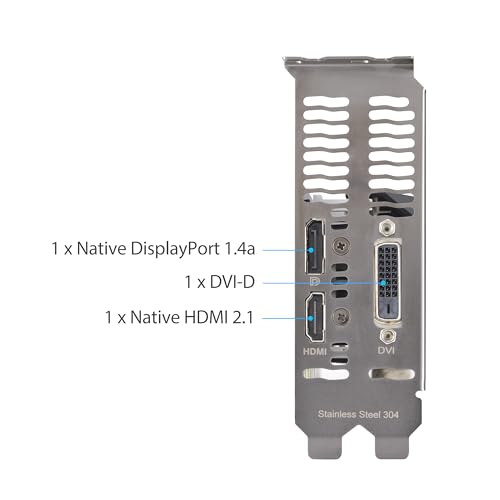
DisplayPort outputs
1
This graphics card offers 1 DisplayPort outputs, which is fewer than 88.1% of graphics cards and equal to 8.7% of graphics cards.
DisplayPort version
1.4a
This graphics card supports DisplayPort 1.4a, which is more advanced than on 19.3% of graphics cards and equal to 46.3% of graphics cards.
DisplayPort link rates
32.4 Gbps
This graphics card supports DisplayPort link rates up to 32.4 Gbps, which is faster than on 56.6% of graphics cards and equal to 20.9% of graphics cards.
Show more
Thermal Design Power (TDP)
70 W
This graphics card has a TDP of 70 W, which is lower than that of 93.1% of graphics cards and equal to that of 1.5% of graphics cards.
Power consumption while under peak load
70 W
This graphics card draws 70 W under peak load, which is lower than 94.2% of graphics cards and equal to 1.3% of graphics cards.
Recommended PSU wattage
300 W
This graphics card recommends a 300 W PSU, which is lower than that of 94% of graphics cards and equal to that of 5% of graphics cards.
Board power limit
70 W
This graphics card has a board power limit of 70 W, which is lower than that of 94.1% of graphics cards and equal to that of 1.4% of graphics cards.
PCIe power spec
70 W
Show more
Size
182x 69x 40 mm
Length
182 mm
This graphics card is 182 mm long, which is shorter than 92.6% of graphics cards and equal in length to 0.3% of graphics cards.
Height
69 mm
This graphics card is 69 mm tall, which is shorter than 92.5% of graphics cards and equal in height to 1.6% of graphics cards.
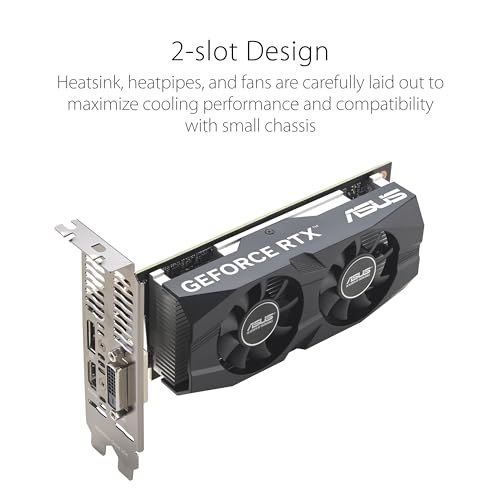
Slot width
2 slot/s
This graphics card occupies 2 slot/s, which is slimmer than 52.4% of graphics cards and equal in width to 43.4% of graphics cards.
Weight
0.72 lb
This graphics card weighs 0.72 lb, which is lighter than 96.5% of Graphics cards and equal to 0.2% of Graphics cards.
Show more

ASUS GeForce RTX 3050 LP BRK OC Edition 6GB vs the Average Graphics Card

246810TotalPerformanceMemoryFeaturesConnectivityPowerDesign
  • 67.4% lower TDP
    This graphics card has a lower TDP than the average graphics card (70 W vs 215 W). The average graphics card has a TDP of 215 W.
    70 W vs 215 W
  • 53.8% lower PSU requirement
    This graphics card has a lower PSU requirement than the average graphics card (300 W vs 650 W). The average graphics card has a PSU requirement of 650 W.
    300 W vs 650 W
  • 100.2 mm shorter card length
    This graphics card is shorter than the average graphics card (182 mm vs 282.2 mm). The average graphics card has a length of 282.2 mm.
    182 mm vs 282.2 mm
  • 56 mm lower card height
    This graphics card is shorter than the average graphics card (69 mm vs 125 mm). The average graphics card has a height of 125 mm.
    69 mm vs 125 mm
  • 68.2% lower board power limit
    This graphics card has a lower board power limit than the average graphics card (70 W vs 220 W). The average graphics card has a board power limit of 220 W.
    70 W vs 220 W
  • 0.5 slot/s slimmer design
    This graphics card occupies fewer slots than the average graphics card (2 slot/s vs 2.5 slot/s). The average graphics card occupies 2.5 slot/s.
    2 slot/s vs 2.5 slot/s
  • 1 more DVI outputs
    This graphics card has more DVI outputs than the average graphics card (1 vs 0). The average graphics card has 0 DVI outputs.
    1 vs 0
  • 14 °C lower load temperature
    This graphics card has a lower load temperature than the average graphics card (53 °C vs 67 °C). The average graphics card has a load temperature of 67 °C.
    53 °C vs 67 °C
  • 2.97x cheaper
    ASUS GeForce RTX 3050 LP BRK OC Edition 6GB is cheaper than the average graphics card ($180 vs $535).
    $180 vs $535
  • 1 more DVI outputs
    This graphics card has more DVI outputs than the average graphics card (1 vs 0). The average graphics card has 0 DVI outputs.
    1 vs 0
  • 67.4% lower TDP
    This graphics card has a lower TDP than the average graphics card (70 W vs 215 W). The average graphics card has a TDP of 215 W.
    70 W vs 215 W
  • 53.8% lower PSU requirement
    This graphics card has a lower PSU requirement than the average graphics card (300 W vs 650 W). The average graphics card has a PSU requirement of 650 W.
    300 W vs 650 W
  • 68.2% lower board power limit
    This graphics card has a lower board power limit than the average graphics card (70 W vs 220 W). The average graphics card has a board power limit of 220 W.
    70 W vs 220 W
  • 14 °C lower load temperature
    This graphics card has a lower load temperature than the average graphics card (53 °C vs 67 °C). The average graphics card has a load temperature of 67 °C.
    53 °C vs 67 °C
  • 68.2% lower peak power draw
    This graphics card has a lower peak power draw than the average graphics card (70 W vs 220 W). The average graphics card has a peak power draw of 220 W.
    70 W vs 220 W
  • 50% lower idle power draw
    This graphics card has a lower idle power draw than the average graphics card (6 W vs 12 W). The average graphics card has an idle power draw of 12 W.
    6 W vs 12 W
  • 100.2 mm shorter card length
    This graphics card is shorter than the average graphics card (182 mm vs 282.2 mm). The average graphics card has a length of 282.2 mm.
    182 mm vs 282.2 mm
  • 56 mm lower card height
    This graphics card is shorter than the average graphics card (69 mm vs 125 mm). The average graphics card has a height of 125 mm.
    69 mm vs 125 mm
  • 0.5 slot/s slimmer design
    This graphics card occupies fewer slots than the average graphics card (2 slot/s vs 2.5 slot/s). The average graphics card occupies 2.5 slot/s.
    2 slot/s vs 2.5 slot/s
  • 67.9% lighter
    This graphics card is lighter than the average graphics card (0.7 lb vs 2.24 lb). The average graphics card weighs 2.24 lb.
    0.72 lb vs 2.24 lb
  • 38.6% lower boost clock speed
    This graphics card has a lower boost GPU clock than the average graphics card (1,537 MHz vs 2,505 MHz). The average graphics card has a boost GPU clock of 2,505 MHz.
    1,537 MHz vs 2,505 MHz
  • 6 GB less VRAM
    This graphics card has fewer VRAM than the average graphics card (6 GB vs 12 GB). The average graphics card has 12 GB VRAM.
    6 GB vs 12 GB
  • 22 fewer compute units
    This graphics card has fewer compute units than the average graphics card (18 vs 40). The average graphics card has 40 compute units.
    18 vs 40
  • Less advanced frame generation
    This graphics card has less advanced frame generation than the average graphics card (no vs multi frame generation).
  • 45.7% lower base clock speed
    This graphics card has a lower base GPU clock than the average graphics card (1,042 MHz vs 1920 MHz). The average graphics card has a base GPU clock of 1920 MHz.
    1,042 MHz vs 1,920 MHz
  • 112 fewer TMUs
    This graphics card has fewer TMUs than the average graphics card (72 vs 184). The average graphics card has 184 TMUs.
    72 vs 184
  • 22 fewer ray tracing cores
    This graphics card has fewer ray tracing cores than the average graphics card (18 vs 40). The average graphics card has 40 ray tracing cores.
    18 vs 40
  • 72% lower texture rate
    This graphics card has a lower texture rate than the average graphics card (105.8 GTexel/s vs 378 GTexel/s). The average graphics card has a texture rate of 378 GTexel/s.
    105.8 GTexel/s vs 378 GTexel/s
  • 39.7% lower sentiment score
    Sentiment score
    4.7/ 10
    ✕
    What it is
    How positive owners are about this model in their comments under video reviews and on forums. We read each comment, keep only people who say they own the model, and sort them into positive, mixed or negative.
    How we count it
    Score: We compare how satisfied this model’s owners are with the other models in this category: the typical model gets 8, the most satisfied tenth 10, the least satisfied 4. This is 80% of the owner mark; the number of owners is the other 20%.
    Enough data: A model counts with 10+ owners from 4+ different discussions. With fewer, the owner part counts as 7.8 for now.
    Share: Owners count 10% of the overall score (left out in categories where fewer than 10 models have enough owner comments).
    Score distribution
    â–¼
    <55-66-77-88-99-10

    4.7

    Mark 7.9 is below the typical mark 8.2 of this category, so it cannot lift the score above the technical score

    80%

    8.0

    Satisfaction

    20%

    7.8

    Popularity

    Owners (176)
    176 owners from 10 online discussions
    74% positive
    10% mixed
    15% negative
    Category average: 73% positive
    Our own analysis of online owner opinions, not a rating from any website.
    4.7 vs 7.8
  • 3% worse value for money
    ASUS GeForce RTX 3050 LP BRK OC Edition 6GB has worse value for money than the average graphics card (7.14 vs 7.4).
    7.14 vs 7.36
  • 38.6% lower boost clock speed
    This graphics card has a lower boost GPU clock than the average graphics card (1,537 MHz vs 2,505 MHz). The average graphics card has a boost GPU clock of 2,505 MHz.
    1,537 MHz vs 2,505 MHz
  • 22 fewer compute units
    This graphics card has fewer compute units than the average graphics card (18 vs 40). The average graphics card has 40 compute units.
    18 vs 40
  • 45.7% lower base clock speed
    This graphics card has a lower base GPU clock than the average graphics card (1,042 MHz vs 1920 MHz). The average graphics card has a base GPU clock of 1920 MHz.
    1,042 MHz vs 1,920 MHz
  • 112 fewer TMUs
    This graphics card has fewer TMUs than the average graphics card (72 vs 184). The average graphics card has 184 TMUs.
    72 vs 184
  • 22 fewer ray tracing cores
    This graphics card has fewer ray tracing cores than the average graphics card (18 vs 40). The average graphics card has 40 ray tracing cores.
    18 vs 40
  • 72% lower texture rate
    This graphics card has a lower texture rate than the average graphics card (105.8 GTexel/s vs 378 GTexel/s). The average graphics card has a texture rate of 378 GTexel/s.
    105.8 GTexel/s vs 378 GTexel/s
  • 70.1% lower pixel rate
    This graphics card has a lower pixel rate than the average graphics card (48.2 GPixel/s vs 161.3 GPixel/s). The average graphics card has a pixel rate of 161.3 GPixel/s.
    48.22 GPixel/s vs 161.3 GPixel/s
  • 32 fewer ROPs
    This graphics card has fewer ROPs than the average graphics card (32 vs 64). The average graphics card has 64 ROPs.
    32 vs 64
  • 69.3% lower FP32 performance
    This graphics card has a lower FP32 performance than the average graphics card (6.9 TFLOPS vs 22.6 TFLOPS). The average graphics card has FP32 performance of 22.6 TFLOPS.
    6.94 TFLOPS vs 22.6 TFLOPS
  • 72 fewer AI cores
    This graphics card has fewer AI cores than the average graphics card (72 vs 144). The average graphics card has 144 AI cores.
    72 vs 144
  • 53.4% lower PassMark score
    This graphics card has a lower PassMark score than the average graphics card (10,553 points vs 22,638 points). The average graphics card has a PassMark score of 22,638 points.
    10,553 points vs 22,638 points
  • 68.2% lower gaming score
    This graphics card has a lower gaming score than the average graphics card (4,705 points vs 14,779 points). The average graphics card has a gaming score of 14,779 points.
    4,705 points vs 14,779 points
  • 53.7% lower ray tracing score
    This graphics card has a lower ray tracing score than the average graphics card (4,231 points vs 9,148 points). The average graphics card has a ray tracing score of 9,148 points.
    4,231 points vs 9,148 points
  • 76.5% lower FP16 performance
    This graphics card has a lower FP16 performance than the average graphics card (6.9 TFLOPS vs 29.5 TFLOPS). The average graphics card has FP16 performance of 29.5 TFLOPS.
    6.94 TFLOPS vs 29.5 TFLOPS
  • 77.1% lower FP64 performance
    This graphics card has a lower FP64 performance than the average graphics card (0.1 TFLOPS vs 0.48 TFLOPS). The average graphics card has FP64 performance of 0.48 TFLOPS.
    0.11 TFLOPS vs 0.48 TFLOPS
  • 56.8% lower compute score
    This graphics card has a lower compute score than the average graphics card (5,219 points vs 12,70.5 points). The average graphics card has a compute score of 12,070.5 points.
    5,219 points vs 12,070.5 points
  • 6 GB less VRAM
    This graphics card has fewer VRAM than the average graphics card (6 GB vs 12 GB). The average graphics card has 12 GB VRAM.
    6 GB vs 12 GB
  • 62.5% lower memory bandwidth
    This graphics card has a lower memory bandwidth than the average graphics card (168 GB/s vs 448 GB/s). The average graphics card has a memory bandwidth of 448 GB/s.
    168 GB/s vs 448 GB/s
  • 96 bit narrower memory bus
    This graphics card has a narrower memory bus than the average graphics card (96 bit vs 192 bit). The average graphics card has a memory bus width of 192 bit.
    96 bit vs 192 bit
  • 26.3% slower memory speed
    This graphics card has a lower effective memory speed than the average graphics card (14,000 MHz vs 19,000 MHz). The average graphics card reaches an effective memory speed of 19,000 MHz.
    14,000 MHz vs 19,000 MHz
  • 91.7% smaller L2 cache
    This graphics card has fewer L2 cache than the average graphics card (2 MB vs 24 MB). The average graphics card has 24 MB L2 cache.
    2 MB vs 24 MB
  • Less advanced frame generation
    This graphics card has less advanced frame generation than the average graphics card (no vs multi frame generation).
  • 60% larger process node
    This graphics card uses a larger manufacturing process than the average graphics card (8 nm vs 5 nm). The average graphics card uses a manufacturing process of 5 nm.
    8 nm vs 5 nm
  • Fewer PCIe lanes
    This graphics card has fewer PCIe lanes than the average graphics card (x8 vs x16). The average graphics card has x16 PCIe lanes.
    x8 vs x16
  • 62% fewer transistors
    This graphics card has fewer transistors than the average graphics card (8,700 million vs 22,900 million). The average graphics card has 22,900 million transistors.
    8,700 million vs 22,900 million
  • Older FSR version
    This graphics card supports an older FSR version than the average graphics card (3 vs 3.1).
    3.0 vs 3.1
  • 2 fewer DisplayPort outputs
    This graphics card has fewer DisplayPort outputs than the average graphics card (1 vs 3). The average graphics card has 3 DisplayPort outputs.
    1 vs 3
  • No AV1 encoding
    This graphics card does not support AV1 encoding, the average graphics card does.
  • 1 fewer displays supported
    This graphics card supports fewer displays than the average graphics card (3 vs 4). The average graphics card supports 4 displays.
    3 vs 4
  • Older HDMI version
    This graphics card supports an older HDMI version than the average graphics card (2.1 vs 2.1a).
    2.1 vs 2.1a
  • Older NVDEC generation
    This graphics card has a lower NVDEC generation than the average graphics card (5 vs 6). The average graphics card offers NVDEC generation 6.
    5 vs 6
  • 1 fewer fans
    This graphics card has fewer fans than the average graphics card (2 vs 3).
    2 vs 3
  • No dual BIOS
    This graphics card does not include dual BIOS, the average graphics card does.
  • No fan stop
    This graphics card does not support fan stop, the average graphics card does.
  • No backplate
    This graphics card does not include a backplate, the average graphics card does.
  • No RGB lighting
    This graphics card does not include RGB lighting, the average graphics card does.

Third-Party Reviews

What Customers Like About ASUS GeForce RTX 3050 LP BRK OC Edition 6GB

  • No external power required; runs entirely off the PCIe slot power (70W TDP)
  • Compact low-profile design ideal for small form factor (SFF) and slim OEM PC builds
  • Supports modern NVIDIA technologies like DLSS for upscaling and Ray Tracing
  • Excellent for 1080p esports titles (e.g., Valorant, Fortnite) and light AAA gaming
  • Stays cool and quiet under load due to efficient dual-fan cooling and low power draw
  • Solid upgrade for older office PCs with limited power supplies

What Customers Don't Like About ASUS GeForce RTX 3050 LP BRK OC Edition 6GB

  • Significant performance reduction (approx. 18-20%) compared to the original 8GB 3050 model
  • Poor price-to-performance ratio compared to competitors like the RX 6600
  • 6GB of VRAM and a 96-bit memory bus can cause bottlenecks in demanding AAA games
  • Struggles with modern titles at high settings or 1440p resolution
  • Lacks a backplate, leaving some PCB components exposed
  • Performance is closer to an older GTX 1660 Super rather than modern mid-tier cards

Verdict

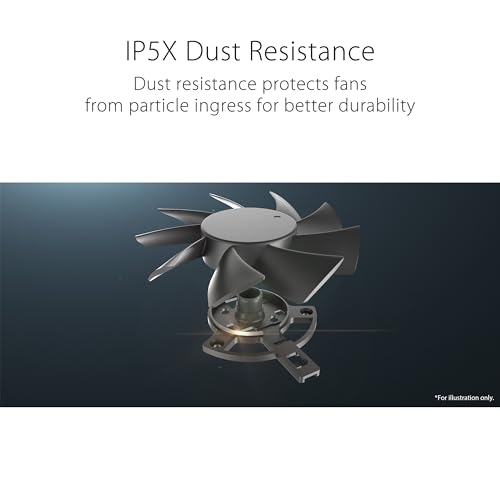
The ASUS GeForce RTX 3050 LP BRK OC Edition 6GB is a compact, low-profile graphics card built on the NVIDIA Ampere architecture, featuring 2304 CUDA cores and an overclocked boost clock of 1537 MHz. It includes 6GB of GDDR6 memory on a 96-bit bus, delivering a 168 GB/s bandwidth, and is designed with a durable stainless steel bracket and IP5X dust-resistant dual-ball bearing fans. Key advantages include its efficient 70W TDP that requires no external power connectors, legacy support via a DVI-D port alongside HDMI 2.1 and DisplayPort 1.4a, and its ability to fit into small form factor (SFF) builds while supporting DLSS and ray tracing. However, the card is limited by its cut-down 6GB VRAM and reduced memory bus compared to the standard 8GB model, which can struggle with demanding AAA titles at higher settings, and it lacks support for DLSS 3 frame generation.

Compare ASUS GeForce RTX 3050 LP BRK OC Edition 6GB With Other Products in the Graphics Cards Category

1Product to compare no. 1
VS
2Product to compare no. 2
VS
3Product to compare no. 3 (optional)

Graphic Comparison of ASUS GeForce RTX 3050 LP BRK OC Edition 6GB and Other Products in the Graphics Cards Category

No results found