Scored using Processors Methodology v3.0
Processors Methodology v3.0
Mathematical & Unbiased Scoring
Products in this category are scored under Frontum Processors Methodology v3.0: the technical score from the specifications is the base, and independent expert and video reviews (up to ±0.5 points), owner opinions (up to ±0.3) and best-of lists (up to +0.3) move it up or down.
Explore Processors Methodology v3.0

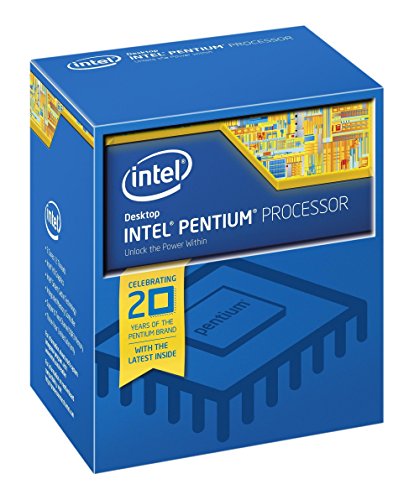
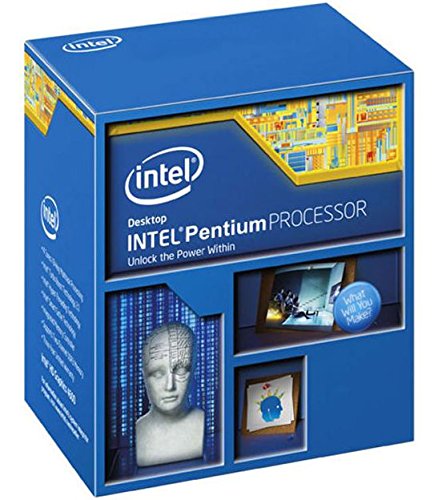
Intel Pentium Gold G4560 Review: 74 Specs Compared

Avg. price:~$90PassMark multi-core score:3535N. of physical cores:2CPU boost clock speed:N/A GHzCPU socket:LGA1151TDP (Thermal design power):54 W

Intel Pentium Gold G4560 Review: Compare 74 technical specifications, 29 expert and video reviews and 59 owner opinions to see how this product ranks in the Processors category and whether it is worth buying.
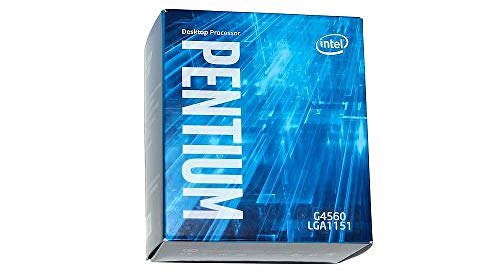
Intel Pentium Gold G4560
6.6/10

Overall score

Score
6.6/ 10
✕
What it is
Our main score for this model, 1–10. It combines specs, expert reviews, best-of lists and owners.
How we count it
Parts: Technical score 40%, Reviews score 25%, List score 25%, Sentiment score 10%
Marks: Each part gets a mark out of 10. For reviews, lists and owners, a typical model in this category gets about 8 and the best one gets 10.
No data yet: A part with no data shows "?". It counts as the mark of a weaker model in this category (4 in 5 models with data score higher). This way, models with reviews, lists and owners usually come out ahead.
Score distribution
â–¼
<55-66-77-88-99-10
Score components

40%

4.2

Technical Score

25%

8.4

Reviews score

25%

?

List scoreNot enough data yet, so we use 7.5, the mark of a weaker model in this category

10%

9.1

Sentiment score

â–²Better than 53% of processors
7.6

Ratio quality/price

Ratio quality/price
7.6/ 10
✕
What it is
An indicator that combines the processor's overall rating with its cost.
When it matters
When you are looking for a processor with a good balance between performance, efficiency, and price.
Score distribution
â–¼
<55-66-77-88-99-10
Score components

70%

6.6

Overall score

30%

10

Price

â–²Better than 65%
4.2

Technical Score

Technical score
4.2/ 10
✕
What it is
How good the specs are compared with the other models in this category, 1–10.
How we count it
Areas: We rate the specs in each area against the other models in this category.
Weighting: The areas that matter most to buyers count more. The shares are shown under Score components.
Share: The technical score is 40% of the overall score.
Score distribution
â–¼
<55-66-77-88-99-10
Score components

60%

3.2

Performance

18%

4.8

Architecture

10%

5.3

Memory & PCIe

7%

7.3

Power & Thermal

4%

7.3

Platform

1%

6.0

Integrated graphics

â–¼Worse than 77%
8.4

Reviews score

Reviews score
8.4/ 10
✕
What it is
Average grade from independent test sites, magazines and video reviewers, 1–10.
How we count it
Grades: Each review's own score is converted to 1–10; without one, we grade the review ourselves. Big test sites count more, short reviews half as much as full tests. A video review counts half.
Score: The average grade is 80% of the review mark; the number of reviews is the other 20% (1 review = 5, the typical number in this category = 8, the most-reviewed model = 10).
Enough data: With few reviews, the average grade is pulled toward the typical grade of this category. No reviews yet: 7.1 for now.
Share: Reviews count 25% of the overall score.
Score distribution
â–¼
<55-66-77-88-99-10

80%

8.2

Average grade

20%

9.2

Popularity

Grades by review (29)
12 reviews: 6 with a printed score, 6 estimated from the review. 17 video reviews, each counting half as much as a written test. Reviews count 25% of the overall score.
User ratings collected online are not part of this score.
â–²Better than 88%
9.1

Sentiment score

Sentiment score
9.1/ 10
✕
What it is
How positive owners are about this model in their comments under video reviews and on forums. We read each comment, keep only people who say they own the model, and sort them into positive, mixed or negative.
How we count it
Score: We compare how satisfied this model’s owners are with the other models in this category: the typical model gets 8, the most satisfied tenth 10, the least satisfied 4. This is 80% of the owner mark; the number of owners is the other 20%.
Enough data: A model counts with 10+ owners from 4+ different discussions. With fewer, the owner part counts as 7.0 for now.
Share: Owners count 10% of the overall score (left out in categories where fewer than 10 models have enough owner comments).
Score distribution
â–¼
<55-66-77-88-99-10

80%

9.6

Satisfaction

20%

7.4

Popularity

Owners (59)
59 owners from 9 online discussions
81% positive
5% mixed
14% negative
Category average: 61% positive
Our own analysis of online owner opinions, not a rating from any website.
â–²Better than 82%
?

List score

List score
7.5/ 10
✕
What it is
How often independent test sites, magazines and video reviewers put this model in their best-of lists for this category.
How we count it
Points: The model in the most lists of this category gets 10; the others get 8 to 10 in proportion. In no list yet: 7.5. Lists count 25% of the overall score.
Enough data: Every list counts, even a single one. With fewer than 5 best-of lists in the category, this part is left out.
Lists with this model (0)
Not in any best-of list yet, so this part counts as 7.5. Models in a list get 8 to 10.
Not in any best-of list yet
  • intel-pentium-gold-g4560
  • intel-pentium-gold-g4560
  • intel-pentium-gold-g4560
intel-pentium-gold-g4560
Where to Buy
*As an Amazon Associate, we earn from qualifying purchases.
Best Rankings
Available: ranking among products currently available (including other versions of this product).All: ranking among all products in the database.

What Reviewers Say About the Intel Pentium Gold G4560

Based on 9 · 21

Reviewers call it a great-value budget chip that handles gaming well, but note it can't be overclocked and lacks newer instruction sets.
Praised
Mixed views
Criticised
Pick a topic to see who said what

What owners say about the Intel Pentium Gold G4560

Based on 59 owners sharing their experience in online comments

81%positive5%mixed14%negative

Owners value its low-cost gaming performance, though demanding games can stutter or hit its limits.

What owners dislike

  • Newer demanding games at ultra are not recommended; a GTX 1060 bottlenecks at 1440p, and Assassin's Creed Unity fps drops over time.4
  • Serious hitching in CPU-heavy games such as GTA V and Ghost Recon Wildlands, even at 720p.3

Points mentioned by at least 3 owners, most mentioned first.

Loading...
Loading category ranking...

Technical Specifications of Processor Intel Pentium Gold G4560

Technical Score
Technical score
4.2/ 10
✕
What it is
How good the specs are compared with the other models in this category, 1–10.
How we count it
Areas: We rate the specs in each area against the other models in this category.
Weighting: The areas that matter most to buyers count more. The shares are shown under Score components.
Share: The technical score is 40% of the overall score.
Score distribution
â–¼
<55-66-77-88-99-10
Score components:

60%

3.2

Performance

18%

4.8

Architecture

10%

5.3

Memory & PCIe

7%

7.3

Power & Thermal

4%

7.3

Platform

1%

6.0

Integrated graphics

4.2
Reviews score
8.4
Sentiment score
9.1
List score
?
Ratio quality/price
Value for money
7.6/ 10
✕
What it is
An indicator that combines the processor's overall rating with its cost.
When it matters
When you are looking for a processor with a good balance between performance, efficiency, and price.
Score distribution
â–¼
<55-66-77-88-99-10
Score components:

70%

6.6

Overall score

30%

10

Price

7.6
Processor type
desktop
This processor belongs to the desktop processor class, which is more advanced than that of 54.7% of processors and equal to that of 39.5% of processors.
CPU socket
LGA1151
This processor uses the LGA1151 CPU socket, which is newer than that of 59% of processors and equal to that of 9% of processors.
Chipset
Intel 200 Series
This processor supports Intel 200 Series chipsets, which is broader compatibility than 49.5% of processors and equal to that of 0.6% of processors.
CPU architecture
x86-64
This processor uses the x86-64 architecture, which is more advanced than that of 1.8% of processors and equal to that of 98.2% of processors.
Instruction sets
MMX, SSE, SSE2, SSE3, SSSE3, SSE4.1, SSE4.2, AES
This processor supports MMX, SSE, SSE2, SSE3, SSSE3, SSE4.1, SSE4.2, AES instruction sets, which is narrower support than 76.7% of processors and equal to that of 1.4% of processors.
Show more
What reviewers say
N. of physical cores
2
This processor has 2 CPU cores, which is fewer than 80.4% of processors and equal to 19.6% of processors.
CPU threads
4
This processor offers 4 CPU threads, which is fewer than 69% of processors and equal to 25.2% of processors.
CPU boost clock speed
N/A
CPU base clock speed
2x 3.5 GHz
This processor has a base clock of 2x3.5 GHz which is lower than that of 78.5% of processors and equal to that of 1.1% of processors.
PassMark multi-core score
3,535
This processor scores 3,535 in PassMark, which is lower than 81.9% of processors and equal to 0.1% of processors.
Show more
What reviewers say
Semiconductor size
14 nm
This processor uses a 14 nm process node, which is older than that of 52% of processors and equal to that of 32.9% of processors.
Foundry
Intel 14 nm
This processor is built on the Intel 14 nm foundry process, which is less advanced than that of 55.9% of processors and equal to that of 29% of processors.
L3 cache
3 MB
This processor has an L3 cache of 3 MB which is smaller than that of 85.6% of processors and equal to that of 5.4% of processors.
L2 cache
0.5 MB
This processor has an L2 cache of 0.5 MB which is smaller than that of 85.4% of processors and equal to that of 14.5% of processors.
L1 cache
?
Show more
DDR memory version
DDR3L/DDR4
This processor supports DDR DDR3L/DDR4, which is older than that of 78.6% of processors and equal to that of 5.1% of processors.
Maximum memory speed
2,400 MHz
This processor supports memory speeds up to 2,400 MHz, which is lower than that of 64.6% of processors and equal to 11.7% of processors.
Max memory speed (JEDEC)
?
Max memory speed (XMP / EXPO)
N/A
Maximum memory capacity
64 GB
This processor supports up to 64 GB of memory, which is more than 27.2% of processors and equal to 26.1% of processors.
Show more
What reviewers say
Integrated graphics
yes
This processor includes integrated graphics. 14.7% of processors offer this.
Integrated GPU model
Intel HD Graphics 610
This processor uses the Intel HD Graphics 610 integrated GPU, which is less advanced than that in 75.6% of processors and equal to that in 0.6% of processors.
Integrated GPU execution units
12
This processor has 12 GPU execution units, which is fewer than 62.7% of processors and equal to 9.2% of processors.
Integrated GPU base frequency
350 MHz
This processor has an integrated GPU clock of 350 MHz which is higher than that of 42.7% of processors and equal to that of 25.4% of processors.
Integrated media encoders/decoders
VP8 (HW decode), MPEG-2 (HW decode), VC-1 (HW decode)
This processor supports VP8 (HW decode), MPEG-2 (HW decode), VC-1 (HW decode) media codecs, which is narrower support than 59.5% of processors.
Show more
TDP (Thermal design power)
54 W
This processor has a TDP of 54 W which is higher than that of 60.3% of processors and equal to that of 1.3% of processors.
Base power (PL1)
54 W
This processor has a base power of 54 W which is higher than that of 60.5% of processors and equal to that of 1.3% of processors.
Boost power (PL2)
54 W
This processor has a boost power of 54 W which is lower than that of 66.1% of processors and equal to that of 2.8% of processors.
Tau (power duration limit)
N/A
Configurable TDP
no
This processor does not support configurable TDP. 53.7% of processors offer this.
Show more
What reviewers say

Intel Pentium Gold G4560 vs the Average Processor

246810TotalPlatformPerformanceArchitectureMemory & PCIeIntegrated graphicsPower & Thermal
  • Includes a cooler
    This processor includes a cooler, while the average processor does not. 26.9% of processors include a cooler.
  • 25.4% higher review score
    Reviews score
    8.4/ 10
    ✕
    What it is
    Average grade from independent test sites, magazines and video reviewers, 1–10.
    How we count it
    Grades: Each review's own score is converted to 1–10; without one, we grade the review ourselves. Big test sites count more, short reviews half as much as full tests. A video review counts half.
    Score: The average grade is 80% of the review mark; the number of reviews is the other 20% (1 review = 5, the typical number in this category = 8, the most-reviewed model = 10).
    Enough data: With few reviews, the average grade is pulled toward the typical grade of this category. No reviews yet: 7.1 for now.
    Share: Reviews count 25% of the overall score.
    Score distribution
    â–¼
    <55-66-77-88-99-10

    80%

    8.2

    Average grade

    20%

    9.2

    Popularity

    Grades by review (29)
    12 reviews: 6 with a printed score, 6 estimated from the review. 17 video reviews, each counting half as much as a written test. Reviews count 25% of the overall score.
    User ratings collected online are not part of this score.
    8.4 vs 6.7
  • Supports ECC memory
    This processor supports ECC memory, while the average processor does not. 32% of processors support it.
  • 28.8% smaller die size
    This processor has a lower die size than the average processor (126 mm² vs 177 mm²). The average processor has a die size of 177 mm².
    126 mm² vs 177 mm²
  • 26.4% higher sentiment score
    Sentiment score
    9.1/ 10
    ✕
    What it is
    How positive owners are about this model in their comments under video reviews and on forums. We read each comment, keep only people who say they own the model, and sort them into positive, mixed or negative.
    How we count it
    Score: We compare how satisfied this model’s owners are with the other models in this category: the typical model gets 8, the most satisfied tenth 10, the least satisfied 4. This is 80% of the owner mark; the number of owners is the other 20%.
    Enough data: A model counts with 10+ owners from 4+ different discussions. With fewer, the owner part counts as 7.0 for now.
    Share: Owners count 10% of the overall score (left out in categories where fewer than 10 models have enough owner comments).
    Score distribution
    â–¼
    <55-66-77-88-99-10

    80%

    9.6

    Satisfaction

    20%

    7.4

    Popularity

    Owners (59)
    59 owners from 9 online discussions
    81% positive
    5% mixed
    14% negative
    Category average: 61% positive
    Our own analysis of online owner opinions, not a rating from any website.
    9.1 vs 7.2
  • 15.6% lower boost power
    This processor has a lower boost power draw than the average processor (54 W vs 64 W). The average processor has a boost power draw of 64 W.
    54 W vs 64 W
  • Modern CPU socket
    This processor uses a more modern CPU socket than the average processor (LGA1151 vs FP5).
    LGA1151 vs FP5
  • 25.4% higher review score
    Reviews score
    8.4/ 10
    ✕
    What it is
    Average grade from independent test sites, magazines and video reviewers, 1–10.
    How we count it
    Grades: Each review's own score is converted to 1–10; without one, we grade the review ourselves. Big test sites count more, short reviews half as much as full tests. A video review counts half.
    Score: The average grade is 80% of the review mark; the number of reviews is the other 20% (1 review = 5, the typical number in this category = 8, the most-reviewed model = 10).
    Enough data: With few reviews, the average grade is pulled toward the typical grade of this category. No reviews yet: 7.1 for now.
    Share: Reviews count 25% of the overall score.
    Score distribution
    â–¼
    <55-66-77-88-99-10

    80%

    8.2

    Average grade

    20%

    9.2

    Popularity

    Grades by review (29)
    12 reviews: 6 with a printed score, 6 estimated from the review. 17 video reviews, each counting half as much as a written test. Reviews count 25% of the overall score.
    User ratings collected online are not part of this score.
    8.4 vs 6.7
  • 26.4% higher sentiment score
    Sentiment score
    9.1/ 10
    ✕
    What it is
    How positive owners are about this model in their comments under video reviews and on forums. We read each comment, keep only people who say they own the model, and sort them into positive, mixed or negative.
    How we count it
    Score: We compare how satisfied this model’s owners are with the other models in this category: the typical model gets 8, the most satisfied tenth 10, the least satisfied 4. This is 80% of the owner mark; the number of owners is the other 20%.
    Enough data: A model counts with 10+ owners from 4+ different discussions. With fewer, the owner part counts as 7.0 for now.
    Share: Owners count 10% of the overall score (left out in categories where fewer than 10 models have enough owner comments).
    Score distribution
    â–¼
    <55-66-77-88-99-10

    80%

    9.6

    Satisfaction

    20%

    7.4

    Popularity

    Owners (59)
    59 owners from 9 online discussions
    81% positive
    5% mixed
    14% negative
    Category average: 61% positive
    Our own analysis of online owner opinions, not a rating from any website.
    9.1 vs 7.2
  • Modern CPU socket
    This processor uses a more modern CPU socket than the average processor (LGA1151 vs FP5).
    LGA1151 vs FP5
  • 28.8% smaller die size
    This processor has a lower die size than the average processor (126 mm² vs 177 mm²). The average processor has a die size of 177 mm².
    126 mm² vs 177 mm²
  • Supports ECC memory
    This processor supports ECC memory, while the average processor does not. 32% of processors support it.
  • Includes a cooler
    This processor includes a cooler, while the average processor does not. 26.9% of processors include a cooler.
  • 15.6% lower boost power
    This processor has a lower boost power draw than the average processor (54 W vs 64 W). The average processor has a boost power draw of 64 W.
    54 W vs 64 W
  • 86.3% lower multi-core score
    This processor has a lower Geekbench 6 multi-core score than the average processor (712 vs 5,209). The average processor scores 5,209 in Geekbench 6 multi-core.
    712 vs 5,209
  • 69.2% lower PassMark score
    This processor has a lower PassMark benchmark score than the average processor (3,535 vs 11,469). The average processor scores 11,469 in PassMark benchmark.
    3,535 vs 11,469
  • 4 fewer CPU cores
    This processor has fewer CPU cores than the average processor (2 vs 6). The average processor has 6 CPU cores.
    2 vs 6
  • 53.6% lower single-core score
    This processor has a lower Geekbench 6 single-core score than the average processor (712 vs 1,535). The average processor scores 1,535 in Geekbench 6 single-core.
    712 vs 1,535
  • No configurable TDP
    This processor does not support configurable TDP, while the average processor does. 53.7% of processors support configurable TDP.
  • 18.5% weaker single-core performance
    This processor has a lower PassMark single-core score than the average processor (2084 vs 2,558). The average processor scores 2,558 in PassMark single-core.
    2,084 vs 2,558
  • Narrower instruction support
    This processor supports a narrower instruction set than the average processor (MMX, SSE, SSE2, SSE3, SSSE3, SSE4.1, SSE4.2, AES vs MMX, SSE, SSE2, SSE3, SSSE3, SSE4A, SSE4.1, SSE4.2, AVX, AVX2, F16C, FMA3, AES, SHA, AMD-V).
    MMX, SSE, SSE2, SSE3, SSSE3, SSE4.1, SSE4.2, AES vs MMX, SSE, SSE2, SSE3, SSSE3, SSE4A, SSE4.1, SSE4.2, AVX, AVX2, F16C, FMA3, AES, SHA, AMD-V
  • 2 fewer performance cores
    This processor has fewer performance cores than the average processor (2 vs 4). The average processor has 4 performance cores.
    2 vs 4
  • Narrower instruction support
    This processor supports a narrower instruction set than the average processor (MMX, SSE, SSE2, SSE3, SSSE3, SSE4.1, SSE4.2, AES vs MMX, SSE, SSE2, SSE3, SSSE3, SSE4A, SSE4.1, SSE4.2, AVX, AVX2, F16C, FMA3, AES, SHA, AMD-V).
    MMX, SSE, SSE2, SSE3, SSSE3, SSE4.1, SSE4.2, AES vs MMX, SSE, SSE2, SSE3, SSSE3, SSE4A, SSE4.1, SSE4.2, AVX, AVX2, F16C, FMA3, AES, SHA, AMD-V
  • Weaker security extensions
    This processor provides less advanced security extensions than the average processor (AES-NI, NX bit, Secure Key, SGX, MPX, OS Guard, Boot Guard vs AES-NI, NX bit, Secure Key, TXT, OS Guard, Boot Guard, CET, MBEC, TME, TME-MK).
    AES-NI, NX bit, Secure Key, SGX, MPX, OS Guard, Boot Guard vs AES-NI, NX bit, Secure Key, TXT, OS Guard, Boot Guard, CET, MBEC, TME, TME-MK
  • 3 years older release date
    This processor has an older release date than the average processor (2017 vs 2020).
    January 2017
    2017 vs 2020
  • More limited crypto acceleration
    This processor offers more limited crypto acceleration than the average processor (AES vs AES, SHA).
    AES vs AES, SHA
  • 86.3% lower multi-core score
    This processor has a lower Geekbench 6 multi-core score than the average processor (712 vs 5,209). The average processor scores 5,209 in Geekbench 6 multi-core.
    712 vs 5,209
  • 69.2% lower PassMark score
    This processor has a lower PassMark benchmark score than the average processor (3,535 vs 11,469). The average processor scores 11,469 in PassMark benchmark.
    3,535 vs 11,469
  • 4 fewer CPU cores
    This processor has fewer CPU cores than the average processor (2 vs 6). The average processor has 6 CPU cores.
    2 vs 6
  • 53.6% lower single-core score
    This processor has a lower Geekbench 6 single-core score than the average processor (712 vs 1,535). The average processor scores 1,535 in Geekbench 6 single-core.
    712 vs 1,535
  • 18.5% weaker single-core performance
    This processor has a lower PassMark single-core score than the average processor (2084 vs 2,558). The average processor scores 2,558 in PassMark single-core.
    2,084 vs 2,558
  • 2 fewer performance cores
    This processor has fewer performance cores than the average processor (2 vs 4). The average processor has 4 performance cores.
    2 vs 4
  • 4 fewer CPU threads
    This processor has fewer CPU threads than the average processor (4 vs 8). The average processor has 8 CPU threads.
    4 vs 8
  • Lower base clock
    This processor has a lower base clock than the average processor (2x3.5 GHz vs 4x3.4 GHz).
    2x3.5 GHz vs 4x3.4 GHz
  • No speed boosting
    This processor does not support automatic speed boosting, while the average processor does. 87.7% of processors offer this.
  • 83.3% smaller L2 cache
    This processor has a lower L2 cache than the average processor (0.5 MB vs 3 MB). The average processor has L2 cache of 3 MB.
    0.5 MB vs 3 MB
  • 16.7% larger process node
    This processor has a higher process node than the average processor (14 nm vs 12 nm). The average processor uses a process node of 12 nm.
    14 nm vs 12 nm
  • 50% less L2 per core
    This processor has less L2 cache per core than the average processor (0.3 MB/core vs 0.5 MB/core). The average processor provides 0.5 MB/core of L2 cache per core.
    0.25 MB/core vs 0.5 MB/core
  • 66.7% smaller L3 cache
    This processor has a lower L3 cache than the average processor (3 MB vs 9 MB). The average processor has L3 cache of 9 MB.
    3 MB vs 9 MB
  • 18.9% less L3 per core
    This processor has less L3 cache per core than the average processor (1.5 MB/core vs 1.85 MB/core). The average processor provides 1.85 MB/core of L3 cache per core.
    1.5 MB/core vs 1.85 MB/core
  • 25% lower memory speed
    This processor has a lower maximum memory speed than the average processor (2,400 MHz vs 3,200 MHz). The average processor supports memory speed of 3,200 MHz.
    2,400 MHz vs 3,200 MHz
  • Older DDR support
    This processor supports an older DDR generation than the average processor (DDR3L/DDR4 vs DDR4).
    DDR3L/DDR4 vs DDR4
  • 18.1% lower memory bandwidth
    This processor has a lower memory bandwidth than the average processor (38.4 GB/s vs 46.9 GB/s). The average processor offers memory bandwidth of 46.9 GB/s.
    38.4 GB/s vs 46.9 GB/s
  • Limited PCIe bifurcation
    This processor supports less flexible PCIe bifurcation than the average processor (x16, x8/x8, x8/x4/x4 vs x16, x8/x8, x4/x4/x4/x4).
    x16, x8/x8, x8/x4/x4 vs x16, x8/x8, x4/x4/x4/x4
  • Narrower media codec support
    This processor supports fewer media codecs than the average processor (VP8 (HW decode), MPEG-2 (HW decode), VC-1 (HW decode) vs H.264 (HW decode/encode), H.265 (HW decode/encode), VP9 (HW decode/encode), AV1 (HW decode), JPEG (HW decode/encode)).
    VP8 (HW decode), MPEG-2 (HW decode), VC-1 (HW decode) vs H.264 (HW decode/encode), H.265 (HW decode/encode), VP9 (HW decode/encode), AV1 (HW decode), JPEG (HW decode/encode)
  • Inferior integrated GPU
    This processor uses an inferior integrated GPU to the average processor (Intel HD Graphics 610 vs Intel UHD Graphics 630).
    Intel HD Graphics 610 vs Intel UHD Graphics 630
  • 50% fewer GPU execution units
    This processor has fewer GPU execution units than the average processor (12 vs 24). The average processor has 24 GPU execution units.
    12 vs 24
  • No configurable TDP
    This processor does not support configurable TDP, while the average processor does. 53.7% of processors support configurable TDP.
  • 20% higher base power
    This processor has a higher base power draw than the average processor (54 W vs 45 W). The average processor has a base power draw of 45 W.
    54 W vs 45 W

Video Reviews

Hands-on testing, unboxing, and real-world video evaluations

9.5
Gamers Nexus
≈ estimated
06/05/2017
Full review · gaming benchmarks against i3 and mid-range CPUs
Verdict
Intel Pentium Gold G4560 is a strong budget gaming CPU that beats most i3s, though it will show its age sooner.
9.5
Hardware Unboxed
≈ estimated
31/03/2017
Budget build review · gaming tests and value
Verdict
Intel Pentium Gold G4560 is the best option right now for cheap gaming PCs.
7.0
Jerry Neutron
≈ estimated
06/03/2017
Build benchmarks · 1080p gaming and CPU load tests
Verdict
Intel Pentium Gold G4560 is fine for 1080p gaming in most titles, but avoid it for CPU-heavy games or multitasking.
7.0
Digital Foundry
≈ estimated
04/02/2017
Hands-on review · gaming tests and CPU limits
Verdict
Intel Pentium Gold G4560 is a good-value budget gaming chip, but a quad-core chip is better for smooth 60 fps play.
8.0
Hardware Unboxed
≈ estimated
20/01/2017
Compatibility test · Windows 7 benchmarks and setup
Verdict
Intel Pentium Gold G4560 runs fine on Windows 7 with a small performance drop, though driver setup was a real hassle.
9.0
TheFullSetup
≈ estimated
15/01/2017
Hands-on review · gaming benchmarks and budget build
Verdict
Intel Pentium Gold G4560 is probably the best budget gaming processor available, though some CPU-heavy games bottleneck.
9.0
optimum
≈ estimated
21/06/2017
Hands-on test · 4K 60fps gaming benchmarks
Verdict
Intel Pentium Gold G4560 is a fine budget pick for 4K 60fps gaming, but high-refresh gaming still needs a faster chip.
9.0
PC Tech
≈ estimated
05/03/2017
Hands-on review · gaming benchmarks at 1080p
Verdict
Intel Pentium Gold G4560 offers excellent price-to-performance for budget gaming, with only minor drawbacks in editing.
9.0
Digital Foundry
≈ estimated
30/01/2017
Benchmark comparison · three budget CPUs in games
Verdict
Intel Pentium Gold G4560 is the better budget choice, clearly faster and close to a Core i3 with fast memory.
9.0
Shahzeeq Shahren
≈ estimated
24/01/2017
Hands-on review · benchmarks in a budget PC build
Verdict
Intel Pentium Gold G4560 delivers strong performance for a budget build, especially in Counter-Strike and Dota 2.
9.0
Jezy
≈ estimated
18/01/2017
Budget value review · gaming benchmarks vs Core i3
Verdict
Intel Pentium Gold G4560 is excellent for budget builds and not worth paying extra for a Core i3.
8.0
RandomGaminginHD
≈ estimated
15/01/2017
Integrated graphics gaming test · several older games
Verdict
Intel Pentium Gold G4560 is recommended for streaming and as the core of a budget PC, though not really for 1080p gaming.
More graded video reviews (1)
creator’s own scoreestimated by us

Expert Reviews

In-depth analysis and verdict from leading tech publications

9.0
digitalfoundry.net
≈ estimated
5/12/2017
Gaming benchmarks · Entry-level build
Verdict
The Intel Pentium Gold G4560 is a capable gaming chip that matches the Core i3-6100 in most games with faster memory, but it struggles with video encoding.
8.3
pcgamer.com
✓ explicit
5/2/2018
Benchmark review · Gaming performance
Verdict
The Intel Pentium Gold G4560 is a strong pick for a modest gaming PC with a mid-range graphics card, but it can't handle video editing or streaming.
9.0
tomshardware.com
≈ estimated
12/2/2018
Lab review · Pentium comparison
Verdict
The Pentium G4560 suits gaming builds with a separate graphics card, as it gives up a little clock speed and integrated graphics power but keeps Hyper-Threading.
9.5
techspot.com
✓ explicit
7/2/2017
Benchmark review · Synthetic tests
Verdict
The Pentium G4560 adds Hyper-Threading to a dual-core chip, landing close to the Core i3-6100 in benchmarks with a slightly lower clock.
9.5
techspot.com
✓ explicit
7/2/2017
Lab test · Gaming benchmarks
Verdict
The Pentium Gold G4560 is a dual-core chip that keeps up with a GTX 1050 Ti at 1080p, but falls far behind in strategy games like Total War: Warhammer.
9.0
computerbase.de
≈ estimated
1/1/2018
Hands-on test · Kaby Lake Pentium
Verdict
The Intel Pentium G4560 is the first Pentium with four threads and comes close to the older Core i3-6100 in speed, though some software gains little.
7.7
gamestar.de
✓ explicit
6/7/2017
Gaming benchmark · Entry-level CPU
Verdict
The Intel Pentium G4560 is a two-core gaming CPU whose Hyper-Threading gives games four threads, though it can't replace a true quad-core chip.
5.0
chip.de
≈ estimated
1/9/2019
Test rating · Entry-level desktop CPU
Verdict
The Intel Pentium G4560 is a dual-core chip with four threads that handles basic desktop tasks, but its CPU and graphics results trail most rivals.
6.0
lesnumeriques.com
✓ explicit
1/8/2019
Benchmark review · Office desktop CPU
Verdict
The Intel Pentium G4560 is an energy-efficient dual-core chip for office PCs that comes close to small Core i3 chips, though it adds little over Skylake.
8.6
profesionalreview.com
✓ explicit
9/2/2017
Hands-on review · Power draw
Verdict
The Pentium G4560 is a good gaming chip at 1080p with a mid-range graphics card, drawing little power, but it struggles with rendering and video compression.

Third-Party Reviews

What Customers Like About Intel Pentium Gold G4560

  • Exceptional value for money, often described as the 'budget king' of its era
  • Hyper-threading support (2 cores, 4 threads) significantly boosts performance over older Pentiums
  • Gaming performance is remarkably close to more expensive Core i3 processors
  • Low power consumption and runs cool even with the stock cooler
  • Excellent for budget 1080p gaming when paired with a mid-range GPU like a GTX 1050 Ti or 1060
  • Reliable for daily office tasks, web browsing, and general media consumption

What Customers Don't Like About Intel Pentium Gold G4560

  • Lacks support for AVX and AVX2 instruction sets, which can hinder performance in specific modern apps
  • Struggles with heavy multi-threaded workloads such as video editing or live streaming
  • Dual-core architecture can cause bottlenecks in CPU-intensive AAA games
  • The integrated graphics (Intel HD 610) are weak and unsuitable for gaming
  • No support for overclocking (locked multiplier)
  • May require a BIOS update to work on older 100-series motherboards

Verdict

The Intel Pentium Gold G4560 is a budget-oriented dual-core processor from the Kaby Lake family featuring 4 threads via Hyper-Threading, a fixed 3.50 GHz base frequency, and a 3 MB Smart Cache on the LGA 1151 socket. Built on a 14nm process with a 54W TDP, it supports up to 64 GB of DDR4-2133/2400 or DDR3L-1333/1600 memory and includes integrated Intel HD Graphics 610. Its primary advantages include exceptional value-for-money, performing similarly to higher-tier i3 processors in gaming, and supporting ECC memory for specialized builds. However, its main drawbacks are the lack of Turbo Boost technology, an locked multiplier that prevents overclocking, and the omission of AVX/AVX2 instruction sets, which can significantly hinder performance in heavy video encoding or professional number-crunching tasks.

Compare Intel Pentium Gold G4560 With Other Processors

1Product to compare no. 1
VS
2Product to compare no. 2
VS
3Product to compare no. 3 (optional)

Graphic Comparison of Intel Pentium Gold G4560 and Other Processors

No results found