Scored using Projectors Methodology v3.0
Projectors Methodology v3.0
Mathematical & Unbiased Scoring
Products in this category are scored under Frontum Projectors Methodology v3.0: the technical score from the specifications is the base, and independent expert and video reviews (up to ±0.5 points), owner opinions (up to ±0.3) and best-of lists (up to +0.3) move it up or down.
Explore Projectors Methodology v3.0

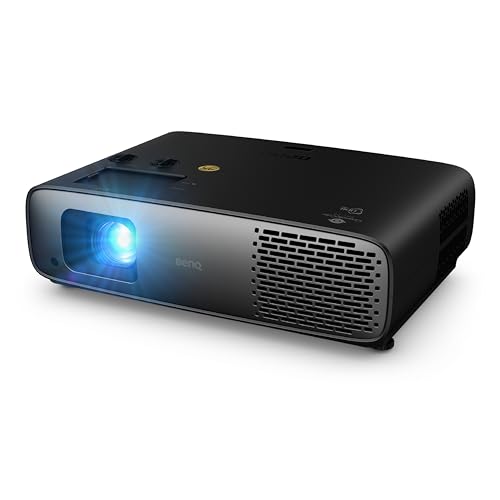
BenQ W7500 Review: 86 Specs Compared

Avg. price:~$2,800Native panel resolution:1920x1080ANSI lumens:2000Throw ratio:1.62-2.43:1Lamp life:2000 hours

BenQ W7500 Review: Compare 86 technical specifications and 11 expert reviews to see how this product ranks in the Projectors category and whether it is worth buying.

BenQ W7500
7.1/10

Overall score

Score
7.1/ 10
✕
What it is
Our main score for this model, 1–10. It combines specs, best-of lists, expert reviews and owners.
How we count it
Parts: Technical score 35%, List score 30%, Reviews score 25%, Sentiment score 10%
Marks: Each part gets a mark out of 10. For reviews, lists and owners, a typical model in this category gets about 8 and the best one gets 10.
No data yet: A part with no data shows "?". It counts as the mark of a weaker model in this category (4 in 5 models with data score higher). This way, models with reviews, lists and owners usually come out ahead.
Score distribution
▼
<55-66-77-88-99-10
Score components

35%

5.9

Technical Score

30%

?

List scoreNot enough data yet, so we use 7.5, the mark of a weaker model in this category

25%

8.5

Reviews score

10%

?

Sentiment scoreNot enough data yet, so we use 6.8, the mark of a weaker model in this category

▲Better than 50% of projectors
5.3

Ratio quality/price

Ratio quality/price
5.3/ 10
✕
What it is
An indicator that combines the projector's overall rating with its cost.
When it matters
When you are looking for a projector with a good balance between quality and price.
Score distribution
▼
<55-66-77-88-99-10
Score components

70%

7.1

Overall score

30%

1.0

Price

▼Worse than 96%
5.9

Technical Score

Technical score
5.9/ 10
✕
What it is
How good the specs are compared with the other models in this category, 1–10.
How we count it
Areas: We rate the specs in each area against the other models in this category.
Weighting: The areas that matter most to buyers count more. The shares are shown under Score components.
Share: The technical score is 35% of the overall score.
Score distribution
▼
<55-66-77-88-99-10
Score components

42%

6.9

Image Quality

22%

6.0

Projection & Lens

12%

5.1

HDMI & Gaming

10%

4.9

Audio & Features

8%

5.2

Connectivity

6%

3.8

Design & Power

▼Worse than 76%
8.5

Reviews score

Reviews score
8.5/ 10
✕
What it is
Average grade from independent test sites, magazines and video reviewers, 1–10.
How we count it
Grades: Each review's own score is converted to 1–10; without one, we grade the review ourselves. Big test sites count more, short reviews half as much as full tests. A video review counts half.
Score: The average grade is 80% of the review mark; the number of reviews is the other 20% (1 review = 5, the typical number in this category = 8, the most-reviewed model = 10).
Enough data: With few reviews, the average grade is pulled toward the typical grade of this category. No reviews yet: 7.8 for now.
Share: Reviews count 25% of the overall score.
Score distribution
▼
<55-66-77-88-99-10

80%

8.6

Average grade

20%

8.2

Popularity

Grades by review (11)
11 reviews: 3 with a printed score, 8 estimated from the review. Reviews count 25% of the overall score.
User ratings collected online are not part of this score.
▲Better than 72%
?

Sentiment score

Sentiment score
6.8/ 10
✕
What it is
How positive owners are about this model in their comments under video reviews and on forums. We read each comment, keep only people who say they own the model, and sort them into positive, mixed or negative.
How we count it
Score: We compare how satisfied this model’s owners are with the other models in this category: the typical model gets 8, the most satisfied tenth 10, the least satisfied 4. This is 80% of the owner mark; the number of owners is the other 20%.
Enough data: A model counts with 10+ owners from 4+ different discussions. With fewer, the owner part counts as 6.8 for now.
Share: Owners count 10% of the overall score (left out in categories where fewer than 10 models have enough owner comments).
Score distribution
▼
<55-66-77-88-99-10
Owners (0)
Not enough owner comments yet (10+ owners from 4+ discussions needed), so the owner part counts as 6.8 for now.
Our own analysis of online owner opinions, not a rating from any website.
Not enough owner comments yet
?

List score

List score
7.5/ 10
✕
What it is
How often independent test sites, magazines and video reviewers put this model in their best-of lists for this category.
How we count it
Points: The model in the most lists of this category gets 10; the others get 8 to 10 in proportion. In no list yet: 7.5. Lists count 30% of the overall score.
Enough data: Every list counts, even a single one. With fewer than 5 best-of lists in the category, this part is left out.
Lists with this model (0)
Not in any best-of list yet, so this part counts as 7.5. Models in a list get 8 to 10.
Not in any best-of list yet
  • benq-w7500
  • benq-w7500
  • benq-w7500
  • benq-w7500
  • benq-w7500
benq-w7500
benq-w7500
benq-w7500
benq-w7500
benq-w7500
Where to Buy
*As an Amazon Associate, we earn from qualifying purchases.
Best Rankings
Available: ranking among products currently available (including other versions of this product).All: ranking among all products in the database.

What Reviewers Say About the BenQ W7500

Based on 9

Reviewers love the 3D and deep, contrasty picture, but note visual artifacts and dislike the body finish and lamp life.
Praised
Mixed views
Criticised
Pick a topic to see who said what
Loading...
Loading category ranking...

Technical Specifications of Projector BenQ W7500

Technical Score
Technical score
5.9/ 10
✕
What it is
How good the specs are compared with the other models in this category, 1–10.
How we count it
Areas: We rate the specs in each area against the other models in this category.
Weighting: The areas that matter most to buyers count more. The shares are shown under Score components.
Share: The technical score is 35% of the overall score.
Score distribution
▼
<55-66-77-88-99-10
Score components:

42%

6.9

Image Quality

22%

6.0

Projection & Lens

12%

5.1

HDMI & Gaming

10%

4.9

Audio & Features

8%

5.2

Connectivity

6%

3.8

Design & Power

5.9
Reviews score
8.5
Sentiment score
?
List score
?
Ratio quality/price
Value for money
5.3/ 10
✕
What it is
An indicator that combines the projector's overall rating with its cost.
When it matters
When you are looking for a projector with a good balance between quality and price.
Score distribution
▼
<55-66-77-88-99-10
Score components:

70%

7.1

Overall score

30%

1.0

Price

5.3
ANSI lumens
2000
This projector reaches 2000 ANSI lumens, dimmer than 54% of projectors and equal to 5% of projectors.
Contrast ratio
60,000:1
This projector has a contrast ratio of 60000:1, higher than 71.7% of projectors and equal to 0.2% of projectors.
Native panel resolution
1920x1080
This projector uses a native resolution of 1920x1080, higher than 27% of projectors and equal to 59.2% of projectors.
Output resolution
1920x1080
This projector supports output resolution up to 1920x1080, higher than 25.9% of projectors and equal to 42.3% of projectors.
Projection technology
DLP
Show more
What reviewers say
Throw ratio
1.62-2.43:1
Min throw distance
3.4 ft
This projector needs a minimum throw distance of 3.4 ft, longer than 51.3% of projectors and equal to 0.7% of projectors.
Max projection size
300 inch
This projector supports projection sizes up to 300 inch, larger than 51.5% of projectors and equal to 38% of projectors.
Zoom ratio
1.5
This projector offers a zoom ratio of 1.5, wider than 58% of projectors and equal to 3.4% of projectors.
Motorized zoom
no
This projector does not have motorized zoom. 14.8% of projectors offer this.
Show more
What reviewers say
Input lag
61.7 ms
This projector has input lag of 61.7 ms, higher than 88.1% of projectors.
At 1080P/60Hz.
Auto low latency mode (ALLM)
no
This projector does not switch to low-latency mode automatically. 16.1% of projectors offer this.
Variable refresh rate (VRR)
no
This projector does not support variable refresh rate. 1.8% of projectors offer this.
HDMI version
1.4
This projector supports HDMI 1.4, older than 54% of projectors and equal to 35.7% of projectors.
Max HDMI bandwidth
10.2 Gbps
This projector supports HDMI bandwidth up to 10.2 Gbps, lower than 51.2% of projectors and equal to 46.5% of projectors.
Show more
N. of HDMI ports
2
This projector has 2 HDMI port/s, more than 45.9% of projectors and equal to 47.3% of projectors.
Wi-Fi connectivity
no
This projector does not connect to Wi-Fi networks. 53.4% of projectors offer this.
Wi-Fi version
N/A
Bluetooth connectivity
no
This projector does not support Bluetooth. 50.7% of projectors offer this.
Bluetooth version
N/A
Show more
Smart TV features
no
This projector does not have built-in smart TV features. 43.9% of projectors offer this.
Operating system
none
Android OS
no
This projector does not run Android OS. 19.1% of projectors run Android OS.
Dedicated smartphone app
no
This projector does not come with a dedicated smartphone app. 36.8% of projectors come with a dedicated smartphone app.
Remote control
yes
This projector includes a remote control. 1.5% of projectors offer this.
Show more
Light source type
lamp
This projector uses lamp light source technology, less advanced than 66.5% of projectors and equal to 33.5% of projectors.
Laser light source
no
This projector does not have a laser light source. 26.8% of projectors offer this.
Lamp life
2000 hours
This projector offers lamp life of 2000 hours, longer than 96.6% of projectors and equal to 2.9% of projectors.
Lamp life (eco mode)
3,000 hours
This projector offers eco-mode lamp life of 3,000 hours, longer than 96.9% of projectors and equal to 1.9% of projectors.
Operating power consumption
416 W
This projector uses 416 W of power, more than 93.1% of projectors and equal to 0.1% of projectors.
Normal mode power draw.
Show more
What reviewers say

BenQ W7500 vs the Average Projector

246810TotalImage QualityProjection & LensHDMI & GamingConnectivityAudio & FeaturesDesign & Power
  • 61 % more vertical lens shift
    This projector has more vertical lens shift than the average projector (125 % vs 64 %). The average projector has 64 % vertical lens shift.
    125 % vs 64 %
  • Higher contrast ratio
    This projector has a higher contrast ratio than the average projector (60000:1 vs 10000:1). The average projector has 10000:1 of contrast ratio.
    60,000:1 vs 10,000:1
  • 10 % more horizontal lens shift
    This projector has more horizontal lens shift than the average projector (40 % vs 30 %). The average projector has 30 % horizontal lens shift.
    40 % vs 30 %
  • Supports motion smoothing
    This projector supports motion smoothing, while the average projector does not. 34.1% of projectors offer this.
    Creative Frame Interpolation.
  • 0.18 inch larger DMD chip
    This projector has a higher DMD chip size than the average projector (0.7 inch vs 0.47 inch). The average projector has 0.47 inch of DMD chip size.
    0.65 inch vs 0.47 inch
  • 41.2% higher refresh rate
    This projector has a higher refresh rate than the average projector (120 Hz vs 85 Hz). The average projector has 85 Hz of refresh rate.
    120 Hz vs 85 Hz
  • 14.9% higher review score
    Reviews score
    8.5/ 10
    ✕
    What it is
    Average grade from independent test sites, magazines and video reviewers, 1–10.
    How we count it
    Grades: Each review's own score is converted to 1–10; without one, we grade the review ourselves. Big test sites count more, short reviews half as much as full tests. A video review counts half.
    Score: The average grade is 80% of the review mark; the number of reviews is the other 20% (1 review = 5, the typical number in this category = 8, the most-reviewed model = 10).
    Enough data: With few reviews, the average grade is pulled toward the typical grade of this category. No reviews yet: 7.8 for now.
    Share: Reviews count 25% of the overall score.
    Score distribution
    ▼
    <55-66-77-88-99-10

    80%

    8.6

    Average grade

    20%

    8.2

    Popularity

    Grades by review (11)
    11 reviews: 3 with a printed score, 8 estimated from the review. Reviews count 25% of the overall score.
    User ratings collected online are not part of this score.
    8.5 vs 7.4
  • 50 inch larger image size
    This projector has a higher projection size than the average projector (300 inch vs 250 inch). The average projector has 250 inch of projection size.
    300 inch vs 250 inch
  • 14.9% higher review score
    Reviews score
    8.5/ 10
    ✕
    What it is
    Average grade from independent test sites, magazines and video reviewers, 1–10.
    How we count it
    Grades: Each review's own score is converted to 1–10; without one, we grade the review ourselves. Big test sites count more, short reviews half as much as full tests. A video review counts half.
    Score: The average grade is 80% of the review mark; the number of reviews is the other 20% (1 review = 5, the typical number in this category = 8, the most-reviewed model = 10).
    Enough data: With few reviews, the average grade is pulled toward the typical grade of this category. No reviews yet: 7.8 for now.
    Share: Reviews count 25% of the overall score.
    Score distribution
    ▼
    <55-66-77-88-99-10

    80%

    8.6

    Average grade

    20%

    8.2

    Popularity

    Grades by review (11)
    11 reviews: 3 with a printed score, 8 estimated from the review. Reviews count 25% of the overall score.
    User ratings collected online are not part of this score.
    8.5 vs 7.4
  • Higher contrast ratio
    This projector has a higher contrast ratio than the average projector (60000:1 vs 10000:1). The average projector has 10000:1 of contrast ratio.
    60,000:1 vs 10,000:1
  • 0.18 inch larger DMD chip
    This projector has a higher DMD chip size than the average projector (0.7 inch vs 0.47 inch). The average projector has 0.47 inch of DMD chip size.
    0.65 inch vs 0.47 inch
  • 41.2% higher refresh rate
    This projector has a higher refresh rate than the average projector (120 Hz vs 85 Hz). The average projector has 85 Hz of refresh rate.
    120 Hz vs 85 Hz
  • 61 % more vertical lens shift
    This projector has more vertical lens shift than the average projector (125 % vs 64 %). The average projector has 64 % vertical lens shift.
    125 % vs 64 %
  • 10 % more horizontal lens shift
    This projector has more horizontal lens shift than the average projector (40 % vs 30 %). The average projector has 30 % horizontal lens shift.
    40 % vs 30 %
  • 50 inch larger image size
    This projector has a higher projection size than the average projector (300 inch vs 250 inch). The average projector has 250 inch of projection size.
    300 inch vs 250 inch
  • 0.2 2x wider zoom range
    This projector has a higher zoom ratio than the average projector (1.5 vs 1.3). The average projector has 1.3 of zoom ratio.
    1.5 vs 1.3
  • Supports motion smoothing
    This projector supports motion smoothing, while the average projector does not. 34.1% of projectors offer this.
    Creative Frame Interpolation.
  • VGA input included
    This projector supports VGA input, while the average projector does not. 44.1% of projectors support VGA input.
  • Limited HDMI format
    This projector supports a less capable max HDMI input format than the average projector (1080p/60Hz vs 4K/120Hz). The average projector supports a max HDMI input format of 4K/120Hz.
    1080p/60Hz vs 4K/120Hz
  • Basic light source
    This projector has Basic light source than the average projector (lamp vs laser). The average projector uses a laser light source.
    lamp vs laser
  • No HDR10 support
    This projector does not support HDR10, while the average projector does. 57.6% of projectors support HDR10.
  • 43.3% lower HDMI bandwidth
    This projector has a lower HDMI bandwidth than the average projector (10.2 Gbps vs 18 Gbps). The average projector has 18 Gbps of HDMI bandwidth.
    10.2 Gbps vs 18 Gbps
  • 34.7 ms higher input lag
    This projector has a higher input lag than the average projector (61.7 ms vs 27 ms). The average projector has 27 ms of input lag.
    At 1080P/60Hz.
    61.7 ms vs 27 ms
  • No Wi-Fi connectivity
    This projector does not connect to Wi-Fi networks, while the average projector does. 53.4% of projectors offer this.
  • No Bluetooth connectivity
    This projector does not support Bluetooth, while the average projector does. 50.6% of projectors offer this.
  • Older HDMI version
    This projector has Old HDMI standard than the average projector (1.4 vs 2). The average projector supports HDMI 2.0.
    1.4 vs 2.0
  • 25.7% worse value for money
    BenQ W7500 has a lower value-for-money score than the average projector (5.3 vs 6.7).
    5.3 vs 6.66
  • 3.29x more expensive
    BenQ W7500 is more expensive than the average projector ($2,800 vs $850).
    $2,800 vs $850
  • No HDR10 support
    This projector does not support HDR10, while the average projector does. 57.6% of projectors support HDR10.
  • 7 earlier release
    This projector was released earlier than the average projector (2014 vs 2021). The average projector was released in 2021.
    March 2014
    2,014 vs 2,021
  • 9.1% dimmer image
    This projector has lower ANSI lumens than the average projector (2000 vs 2,200). The average projector has 2,200 ANSI lumens.
    2,000 vs 2,200
  • 20 degrees less vertical correction
    This projector offers less vertical keystone correction than the average projector (10 degrees vs 30 degrees). The average projector offers vertical keystone correction of 30 degrees.
    10 degrees vs 30 degrees
  • Limited HDMI format
    This projector supports a less capable max HDMI input format than the average projector (1080p/60Hz vs 4K/120Hz). The average projector supports a max HDMI input format of 4K/120Hz.
    1080p/60Hz vs 4K/120Hz
  • 43.3% lower HDMI bandwidth
    This projector has a lower HDMI bandwidth than the average projector (10.2 Gbps vs 18 Gbps). The average projector has 18 Gbps of HDMI bandwidth.
    10.2 Gbps vs 18 Gbps
  • 34.7 ms higher input lag
    This projector has a higher input lag than the average projector (61.7 ms vs 27 ms). The average projector has 27 ms of input lag.
    At 1080P/60Hz.
    61.7 ms vs 27 ms
  • Older HDMI version
    This projector has Old HDMI standard than the average projector (1.4 vs 2). The average projector supports HDMI 2.0.
    1.4 vs 2.0
  • More outdated HDCP support
    This projector supports an older HDCP version than the average projector (1.4 vs 2.2).
    1.4 vs 2.2
  • No Wi-Fi connectivity
    This projector does not connect to Wi-Fi networks, while the average projector does. 53.4% of projectors offer this.
  • No Bluetooth connectivity
    This projector does not support Bluetooth, while the average projector does. 50.6% of projectors offer this.
  • No built-in speaker
    This projector does not have a built-in speaker, while the average projector does. 87% of projectors have one.
  • Basic light source
    This projector has Basic light source than the average projector (lamp vs laser). The average projector uses a laser light source.
    lamp vs laser
  • 18,000 hours shorter lamp life
    This projector has a lower lamp life than the average projector (2000 hours vs 20,000 hours). The average projector has 20,000 hours of lamp life.
    2,000 hours vs 20,000 hours
  • 17,000 hours shorter eco lamp life
    This projector has a lower lamp life in eco mode than the average projector (3,000 hours vs 20,000 hours). The average projector has 20,000 hours of lamp life in eco mode.
    3,000 hours vs 20,000 hours
  • 186 W higher power use
    This projector uses more power than the average projector (416 W vs 230 W). The average projector uses 230 W of power.
    Normal mode power draw.
    416 W vs 230 W
  • 3 dB louder eco mode
    This projector has a higher audible noise in eco mode than the average projector (31 dB vs 28 dB). The average projector has 28 dB of audible noise in eco mode.
    Eco mode figure.
    31 dB vs 28 dB
  • 2.24x heavier weight
    This projector is heavier than the average projector (14.8 lb vs 6.6 lb). The average projector weighs 6.6 lb.
    14.8 lb vs 6.6 lb
  • 5.2 in wider body
    This projector is wider than the average projector (16.9 in vs 11.7 in). The average projector has a width of 11.7 in.
    16.9 in vs 11.7 in

Video Reviews

Hands-on testing, unboxing, and real-world video evaluations

Shop video
Shop video
Shop video

Expert Reviews

In-depth analysis and verdict from leading tech publications

8.0
pcmag.com
✓ explicit
10/3/2014
Lab test · Home-theater DLP
Verdict
The BenQ W7500 has excellent color and strong brightness for lit family rooms, though it has no built-in sound and shows some rainbows.
10
projectorcentral.com
✓ explicit
10/3/2014
Lab test · Dark-room home theater
Verdict
The BenQ W7500 is a bright, detailed home-theater projector with flexible placement, though its blacks, while good, are not its strongest point.
9.0
hometheaterhifi.com
≈ estimated
7/3/2016
Lab test · Home theater
Verdict
The BenQ W7500 is a bright DLP projector with precise lens shift and very few rainbow streaks, but it arrives too bright and needs tuning.
9.0
projectorreviews.com
≈ estimated
6/3/2015
Quick review · Home theater
Verdict
The BenQ W7500 is a sharp, very bright projector with good black levels, though its lamp life trails many rivals.
8.0
uk.pcmag.com
✓ explicit
8/3/2014
Hands-on test · Home cinema projector
Verdict
The BenQ W7500 is an excellent home cinema projector with lens shift and full 1080p 3D, though rainbow flashes show up now and then.
8.0
soundstagexperience.com
≈ estimated
1/3/2014
Hands-on review · Home theater
Verdict
The BenQ W7500 is very bright with deep blacks and strong 3D, but fiddly lens controls make setup slow going.
9.0
projectorjunkies.com
≈ estimated
2014
Hands-on test · Motion and color
Verdict
The BenQ W7500 does well on color, skin tones and motion smoothing, but its lens sharpness falls short and blacks trail LCD projectors.
9.0
projectorreviews.com
≈ estimated
6/3/2015
Hands-on test · Brightness and placement
Verdict
The BenQ W7500 is a sharp, bright projector that is easy to place in most rooms, though its blacks trail the best rivals.
9.0
connectedmag.com.au
≈ estimated
11/11/2014
Hands-on review · Picture and 3D
Verdict
The BenQ W7500 gives deep blacks and convincing 3D once tuned, but it arrives too bright and struggles with interlaced signals and camera pans.
8.0
biareview.com
≈ estimated
4/4/2018
Feature overview · 3D projector
Verdict
The BenQ W7500 is a Full HD projector suited to 3D movies, with wide lens shift and an Eco mode that stretches lamp life, but its glossy top shows marks.
9.0
mediasluis.nl
≈ estimated
6/3/2015
Updated review · Gaming and 3D
Verdict
The BenQ W7500 is a bright, dynamic DLP suited to lit rooms, sports and gaming, but it needs ISF calibration and a high-contrast screen for deep blacks.

Third-Party Reviews

What Customers Like About BenQ W7500

  • High brightness (2,000 lumens) suitable for rooms with ambient light
  • Excellent 3D image quality with minimal crosstalk
  • Sharp and detailed 2D image quality
  • Flexible installation with vertical and horizontal lens shift and 1.5x zoom
  • Fast 6x color wheel speed reduces the 'rainbow effect' for most viewers
  • Comprehensive calibration controls, including ISFccc support

What Customers Don't Like About BenQ W7500

  • Black levels are good but not class-leading compared to LCD/LCoS competitors
  • Short lamp life (2,000–3,000 hours) relative to similar models
  • Noticeable 'rainbow artifacts' for highly sensitive viewers
  • Aggressive frame interpolation can cause the 'soap opera effect'
  • No built-in audio system or audio output port
  • Lens shift joystick can be difficult to adjust precisely and may drift

Verdict

The BenQ W7500 is a high-performance, single-chip DLP home theater projector featuring native Full HD (1920x1080) resolution, a high 2,000 ANSI lumen brightness, and an impressive 60,000:1 contrast ratio supported by an automatic iris. Key characteristics include a fast 6x-speed RGBRGB color wheel designed to minimize rainbow artifacts, 1.5x manual zoom, and extensive installation flexibility through both vertical (±125%) and horizontal (±40%) lens shift. Its main pros are a 'light canon' brightness that performs well even with moderate ambient light, exceptional 3D quality with minimal crosstalk, and sharp image detail enhanced by creative frame interpolation. However, notable cons include a relatively short lamp life of 2,000–3,000 hours, lack of built-in audio, and black levels that, while good, fall short of class-leading performance in very dark scenes.

Compare BenQ W7500 With Other Products in the Projectors Category

1Product to compare no. 1
VS
2Product to compare no. 2
VS
3Product to compare no. 3 (optional)

Graphic Comparison of BenQ W7500 and Other Products in the Projectors Category

No results found