Scored using Projectors Methodology v3.0
Projectors Methodology v3.0
Mathematical & Unbiased Scoring
Products in this category are scored under Frontum Projectors Methodology v3.0: the technical score from the specifications is the base, and independent expert and video reviews (up to ±0.5 points), owner opinions (up to ±0.3) and best-of lists (up to +0.3) move it up or down.
Explore Projectors Methodology v3.0

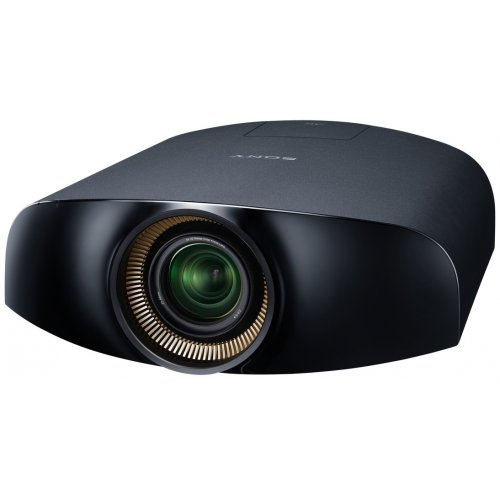
Sony VPL-GTZ280 Review: 86 Specs Compared

Avg. price:~$43,000Native panel resolution:4096x2160ANSI lumens:2000Throw ratio:?Lamp life:20000 hours

Sony VPL-GTZ280 Review: Compare 86 technical specifications to see how this product ranks in the Projectors category and whether it is worth buying.
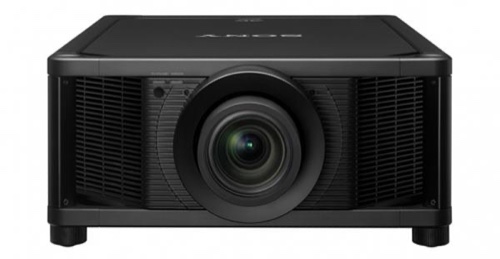
Sony VPL-GTZ280
7.3/10

Overall score

Score
7.3/ 10
✕
What it is
Our main score for this model, 1–10. It combines specs, best-of lists, expert reviews and owners.
How we count it
Parts: Technical score 35%, List score 30%, Reviews score 25%, Sentiment score 10%
Marks: Each part gets a mark out of 10. For reviews, lists and owners, a typical model in this category gets about 8 and the best one gets 10.
No data yet: A part with no data shows "?". It counts as the mark of a weaker model in this category (4 in 5 models with data score higher). This way, models with reviews, lists and owners usually come out ahead.
Score distribution
â–¼
<55-66-77-88-99-10
Score components

35%

7.0

Technical Score

30%

?

List scoreNot enough data yet, so we use 7.5, the mark of a weaker model in this category

25%

?

Reviews scoreNot enough data yet, so we use 7.8, the mark of a weaker model in this category

10%

?

Sentiment scoreNot enough data yet, so we use 6.8, the mark of a weaker model in this category

â–²Better than 64% of projectors
5.4

Ratio quality/price

Ratio quality/price
5.4/ 10
✕
What it is
An indicator that combines the projector's overall rating with its cost.
When it matters
When you are looking for a projector with a good balance between quality and price.
Score distribution
â–¼
<55-66-77-88-99-10
Score components

70%

7.3

Overall score

30%

1.0

Price

â–¼Worse than 92%
7.0

Technical Score

Technical score
7.0/ 10
✕
What it is
How good the specs are compared with the other models in this category, 1–10.
How we count it
Areas: We rate the specs in each area against the other models in this category.
Weighting: The areas that matter most to buyers count more. The shares are shown under Score components.
Share: The technical score is 35% of the overall score.
Score distribution
â–¼
<55-66-77-88-99-10
Score components

42%

8.0

Image Quality

22%

7.7

Projection & Lens

12%

5.9

HDMI & Gaming

10%

4.4

Audio & Features

8%

5.4

Connectivity

6%

6.3

Design & Power

â–²Better than 69%
?

Reviews score

Reviews score
✕
What it is
Average grade from independent test sites, magazines and video reviewers, 1–10.
How we count it
Grades: Each review's own score is converted to 1–10; without one, we grade the review ourselves. Big test sites count more, short reviews half as much as full tests. A video review counts half.
Score: The average grade is 80% of the review mark; the number of reviews is the other 20% (1 review = 5, the typical number in this category = 8, the most-reviewed model = 10).
Enough data: With few reviews, the average grade is pulled toward the typical grade of this category. No reviews yet: 7.8 for now.
Share: Reviews count 25% of the overall score.
Score distribution
â–¼
<55-66-77-88-99-10
Grades by review (0)
We have not found an independent test of this model yet. Until we do, its review part counts as 7.8.
User ratings collected online are not part of this score.
No expert tests yet
?

Sentiment score

Sentiment score
6.8/ 10
✕
What it is
How positive owners are about this model in their comments under video reviews and on forums. We read each comment, keep only people who say they own the model, and sort them into positive, mixed or negative.
How we count it
Score: We compare how satisfied this model’s owners are with the other models in this category: the typical model gets 8, the most satisfied tenth 10, the least satisfied 4. This is 80% of the owner mark; the number of owners is the other 20%.
Enough data: A model counts with 10+ owners from 4+ different discussions. With fewer, the owner part counts as 6.8 for now.
Share: Owners count 10% of the overall score (left out in categories where fewer than 10 models have enough owner comments).
Score distribution
â–¼
<55-66-77-88-99-10
Owners (0)
Not enough owner comments yet (10+ owners from 4+ discussions needed), so the owner part counts as 6.8 for now.
Our own analysis of online owner opinions, not a rating from any website.
Not enough owner comments yet
?

List score

List score
7.5/ 10
✕
What it is
How often independent test sites, magazines and video reviewers put this model in their best-of lists for this category.
How we count it
Points: The model in the most lists of this category gets 10; the others get 8 to 10 in proportion. In no list yet: 7.5. Lists count 30% of the overall score.
Enough data: Every list counts, even a single one. With fewer than 5 best-of lists in the category, this part is left out.
Lists with this model (0)
Not in any best-of list yet, so this part counts as 7.5. Models in a list get 8 to 10.
Not in any best-of list yet
  • sony-vpl-gtz280
sony-vpl-gtz280
Where to Buy
    N/A
Best Rankings
Available: ranking among products currently available (including other versions of this product).All: ranking among all products in the database.
Loading...
Loading category ranking...

Technical Specifications of Projector Sony VPL-GTZ280

Technical Score
Technical score
7.0/ 10
✕
What it is
How good the specs are compared with the other models in this category, 1–10.
How we count it
Areas: We rate the specs in each area against the other models in this category.
Weighting: The areas that matter most to buyers count more. The shares are shown under Score components.
Share: The technical score is 35% of the overall score.
Score distribution
â–¼
<55-66-77-88-99-10
Score components:

42%

8.0

Image Quality

22%

7.7

Projection & Lens

12%

5.9

HDMI & Gaming

10%

4.4

Audio & Features

8%

5.4

Connectivity

6%

6.3

Design & Power

7.0
Reviews score
7.8
Sentiment score
?
List score
?
Ratio quality/price
Value for money
5.4/ 10
✕
What it is
An indicator that combines the projector's overall rating with its cost.
When it matters
When you are looking for a projector with a good balance between quality and price.
Score distribution
â–¼
<55-66-77-88-99-10
Score components:

70%

7.3

Overall score

30%

1.0

Price

5.4
ANSI lumens
2000
This projector reaches 2000 ANSI lumens, dimmer than 54% of projectors and equal to 5% of projectors.
2000 in standard mode.
Contrast ratio
20,000:1
This projector has a contrast ratio of 20000:1, higher than 58.9% of projectors and equal to 4.8% of projectors.
Native contrast ratio.
Native panel resolution
4096x2160
This projector uses a native resolution of 4096x2160, higher than 95.9% of projectors and equal to 4.1% of projectors.
Output resolution
4096x2160
This projector supports output resolution up to 4096x2160, higher than 95.9% of projectors and equal to 3.1% of projectors.
Projection technology
LCoS
Show more
Throw ratio
?
Min throw distance
?
Max projection size
?
Zoom ratio
N/A
Motorized zoom
yes
This projector has motorized zoom. 85.4% of projectors offer this.
Show more
Input lag
?
Auto low latency mode (ALLM)
no
This projector does not switch to low-latency mode automatically. 16.1% of projectors offer this.
Variable refresh rate (VRR)
no
This projector does not support variable refresh rate. 1.8% of projectors offer this.
HDMI version
N/A
Max HDMI bandwidth
18 Gbps
This projector supports HDMI bandwidth up to 18 Gbps, higher than 48.9% of projectors and equal to 39.7% of projectors.
Different HDMI ports reach 18 and 10.2 Gbps.
Show more
N. of HDMI ports
2
This projector has 2 HDMI port/s, more than 45.9% of projectors and equal to 47.3% of projectors.
Wi-Fi connectivity
no
This projector does not connect to Wi-Fi networks. 53.4% of projectors offer this.
Wi-Fi version
N/A
Bluetooth connectivity
no
This projector does not support Bluetooth. 50.7% of projectors offer this.
Bluetooth version
N/A
Show more
Smart TV features
no
This projector does not have built-in smart TV features. 43.9% of projectors offer this.
Operating system
none
Android OS
no
This projector does not run Android OS. 19.1% of projectors run Android OS.
Dedicated smartphone app
no
This projector does not come with a dedicated smartphone app. 36.8% of projectors come with a dedicated smartphone app.
Remote control
yes
This projector includes a remote control. 1.5% of projectors offer this.
Show more
Light source type
laser
This projector uses laser light source technology, more advanced than 75.4% of projectors and equal to 24.6% of projectors.
Laser diode (or "Z-Phosphor laser".
Laser light source
yes
This projector has a laser light source. 73.3% of projectors offer this.
Laser Diode.
Lamp life
20,000 hours
This projector offers lamp life of 20,000 hours, shorter than 35.2% of projectors and equal to 25.8% of projectors.
Laser light source life.
Lamp life (eco mode)
20,000 hours
This projector offers eco-mode lamp life of 20,000 hours, shorter than 39.4% of projectors and equal to 17.9% of projectors.
Operating power consumption
1,200 W
This projector uses 1,200 W of power, more than 99.8% of projectors and equal to 0.1% of projectors.
Normal mode power draw.
Show more

Sony VPL-GTZ280 vs the Average Projector

246810TotalImage QualityProjection & LensHDMI & GamingConnectivityAudio & FeaturesDesign & Power
  • Higher output resolution
    This projector supports a higher output resolution than the average projector (4096x2160 vs 1920x1080). The average projector outputs at 1920x1080 resolution.
    4096x2160 vs 1920x1080
  • Wider color gamut
    This projector has a higher color gamut coverage than the average projector (80% BT.2020 % vs 99% Rec.709 %). The average projector has 99% Rec.709 % of color gamut coverage.
    80% BT.2,020 % vs 99% Rec.709 %
  • High native resolution
    This projector has a higher native panel resolution than the average projector (4096x2160 vs 1920x1080). The average projector has a native panel resolution of 1920x1080.
    4096x2160 vs 1920x1080
  • Supports lens memory
    This projector stores lens settings, while the average projector does not. 8.1% of projectors offer this.
  • Motorized zoom
    This projector has motorized zoom, while the average projector does not. 14.7% of projectors support motorized zoom.
  • Advanced focus control
    This projector offers more advanced focus control than the average projector (motorized vs manual). Typical projector: manual.
    motorized vs manual
  • Supports motion smoothing
    This projector supports motion smoothing, while the average projector does not. 34.1% of projectors offer this.
    Via Motionflow.
  • Laser light source
    This projector has a laser light source, while the average projector does not. 26.7% of projectors have one.
    Laser Diode.
  • Higher output resolution
    This projector supports a higher output resolution than the average projector (4096x2160 vs 1920x1080). The average projector outputs at 1920x1080 resolution.
    4096x2160 vs 1920x1080
  • Wider color gamut
    This projector has a higher color gamut coverage than the average projector (80% BT.2020 % vs 99% Rec.709 %). The average projector has 99% Rec.709 % of color gamut coverage.
    80% BT.2,020 % vs 99% Rec.709 %
  • High native resolution
    This projector has a higher native panel resolution than the average projector (4096x2160 vs 1920x1080). The average projector has a native panel resolution of 1920x1080.
    4096x2160 vs 1920x1080
  • 41.2% higher refresh rate
    This projector has a higher refresh rate than the average projector (120 Hz vs 85 Hz). The average projector has 85 Hz of refresh rate.
    120 Hz vs 85 Hz
  • Higher contrast ratio
    This projector has a higher contrast ratio than the average projector (20000:1 vs 10000:1). The average projector has 10000:1 of contrast ratio.
    Native contrast ratio.
    20,000:1 vs 10,000:1
  • Supports HLG
    This projector supports HLG, while the average projector does not. 41.2% of projectors support HLG.
  • Supports lens memory
    This projector stores lens settings, while the average projector does not. 8.1% of projectors offer this.
  • Motorized zoom
    This projector has motorized zoom, while the average projector does not. 14.7% of projectors support motorized zoom.
  • Advanced focus control
    This projector offers more advanced focus control than the average projector (motorized vs manual). Typical projector: manual.
    motorized vs manual
  • 16 % more vertical lens shift
    This projector has more vertical lens shift than the average projector (80 % vs 64 %). The average projector has 64 % vertical lens shift.
    Dependent on installed lens.
    80 % vs 64 %
  • Motorized focus
    This projector supports motorized focus, while the average projector does not. 45.6% of projectors support motorized focus.
  • Supports motion smoothing
    This projector supports motion smoothing, while the average projector does not. 34.1% of projectors offer this.
    Via Motionflow.
  • 1 more RJ45 ports
    This projector has more RJ45 ports than the average projector (1 vs 0). The average projector has 0 RJ45 ports.
    1 vs 0
  • Laser light source
    This projector has a laser light source, while the average projector does not. 26.7% of projectors have one.
    Laser Diode.
  • No Wi-Fi connectivity
    This projector does not connect to Wi-Fi networks, while the average projector does. 53.4% of projectors offer this.
  • No Bluetooth connectivity
    This projector does not support Bluetooth, while the average projector does. 50.6% of projectors offer this.
  • No built-in speaker
    This projector does not have a built-in speaker, while the average projector does. 87% of projectors have one.
  • More outdated HDCP support
    This projector supports an older HDCP version than the average projector (1.3 vs 2.2).
    Different digital inputs use HDCP 1.3 and 1.2.
    1.3 vs 2.2
  • No sleep timer
    This projector does not have a sleep timer, while the average projector does. 82.4% of projectors have one.
  • 13.36x heavier weight
    This projector is heavier than the average projector (88.2 lb vs 6.6 lb). The average projector weighs 6.6 lb.
    Without lens.
    88.2 lb vs 6.6 lb
  • 4 dB louder operation
    This projector has a higher audible noise than the average projector (35 dB vs 31 dB). The average projector has 31 dB of audible noise.
    35 dB vs 31 dB
  • 51.19x more expensive
    Sony VPL-GTZ280 is more expensive than the average projector ($43,000 vs $840).
    $43,000 vs $840
  • 51.19x more expensive
    Sony VPL-GTZ280 is more expensive than the average projector ($43,000 vs $840).
    $43,000 vs $840
  • 23.4% worse value for money
    Sony VPL-GTZ280 has a lower value-for-money score than the average projector (5.43 vs 6.7).
    5.43 vs 6.7
  • 9.1% dimmer image
    This projector has lower ANSI lumens than the average projector (2000 vs 2,200). The average projector has 2,200 ANSI lumens.
    2000 in standard mode.
    2,000 vs 2,200
  • 3 earlier release
    This projector was released earlier than the average projector (2018 vs 2021). The average projector was released in 2021.
    October 2018
    2,018 vs 2,021
  • More outdated HDCP support
    This projector supports an older HDCP version than the average projector (1.3 vs 2.2).
    Different digital inputs use HDCP 1.3 and 1.2.
    1.3 vs 2.2
  • No Wi-Fi connectivity
    This projector does not connect to Wi-Fi networks, while the average projector does. 53.4% of projectors offer this.
  • No Bluetooth connectivity
    This projector does not support Bluetooth, while the average projector does. 50.6% of projectors offer this.
  • No headphone jack
    This projector does not have a 3.5 mm audio jack, while the average projector does. 84.4% of projectors offer a 3.5 mm audio jack.
  • No built-in speaker
    This projector does not have a built-in speaker, while the average projector does. 87% of projectors have one.
  • No sleep timer
    This projector does not have a sleep timer, while the average projector does. 82.4% of projectors have one.
  • 13.36x heavier weight
    This projector is heavier than the average projector (88.2 lb vs 6.6 lb). The average projector weighs 6.6 lb.
    Without lens.
    88.2 lb vs 6.6 lb
  • 4 dB louder operation
    This projector has a higher audible noise than the average projector (35 dB vs 31 dB). The average projector has 31 dB of audible noise.
    35 dB vs 31 dB
  • 970 W higher power use
    This projector uses more power than the average projector (1,200 W vs 230 W). The average projector uses 230 W of power.
    Normal mode power draw.
    1,200 W vs 230 W
  • 2 dB louder eco mode
    This projector has a higher audible noise in eco mode than the average projector (30 dB vs 28 dB). The average projector has 28 dB of audible noise in eco mode.
    Eco mode figure.
    30 dB vs 28 dB
  • 10 in wider body
    This projector is wider than the average projector (21.7 in vs 11.7 in). The average projector has a width of 11.7 in.
    21.7 in vs 11.7 in
  • 4.2 in taller body
    This projector is taller than the average projector (9 in vs 4.8 in). The average projector has a height of 4.8 in.
    9 in vs 4.8 in
  • 3.1 in thicker body
    This projector is thicker than the average projector (9 in vs 5.9 in). The average projector has a thickness of 5.9 in.
    9 in vs 5.9 in

Third-Party Reviews

What Customers Like About Sony VPL-GTZ280

  • Native 4K resolution (4096 x 2160) provides exceptional clarity and detail
  • Long-lasting laser light source rated for up to 20,000 hours of operation
  • High frame rate support up to 120Hz, ideal for smooth motion and simulation
  • Extremely low transport delay and responsive performance for fast-moving content
  • Sealed optics protect against dust, ensuring reliable long-term performance
  • Flexible licensing allows for modular upgrades like increased brightness (up to 5,000 lumens)
  • Supports professional features like infrared night vision simulation and CAVE environments

What Customers Don't Like About Sony VPL-GTZ280

  • Base brightness is limited to 2,000 lumens unless higher output is unlocked via paid licenses
  • Large and heavy chassis (approx. 88 lb) makes installation and mounting difficult
  • High power consumption during operation (1200W)
  • Produces significant heat output requiring robust ventilation and cooling
  • Audible fan noise (35 dB) can be noticeable during quiet scenes
  • Lacks certain consumer-friendly features like a standard remote control or built-in HDR10 support out of the box
  • High premium pricing compared to enthusiast home theater models from competitors

Verdict

The Sony VPL-GTZ280 is a professional-grade 4K SXRD laser projector designed for high-end visualization, simulation, and entertainment, delivering a native 4096 x 2160 resolution with 5,000 lumens of brightness and a 20,000:1 native contrast ratio. Key characteristics include a long-lasting Z-Phosphor laser light source rated for 20,000 hours of operation, 120Hz signal processing for smooth motion and active 3D, and an additional infrared source for night-vision simulation. Its main pros are the exceptional detail of native 4K clarity, low transport delay for lag-free performance, and flexible 360-degree installation with dust-sealed optics that minimize maintenance. Notable cons include its significant weight of approximately 88 lb, high maximum power consumption of up to 1.2kW, and the fact that high-performance lenses are typically sold separately.

Compare Sony VPL-GTZ280 With Other Products in the Projectors Category

1Product to compare no. 1
VS
2Product to compare no. 2
VS
3Product to compare no. 3 (optional)

Graphic Comparison of Sony VPL-GTZ280 and Other Products in the Projectors Category

No results found