Scored using Projectors Methodology v3.0
Projectors Methodology v3.0
Mathematical & Unbiased Scoring
Products in this category are scored under Frontum Projectors Methodology v3.0: the technical score from the specifications is the base, and independent expert and video reviews (up to ±0.5 points), owner opinions (up to ±0.3) and best-of lists (up to +0.3) move it up or down.
Explore Projectors Methodology v3.0

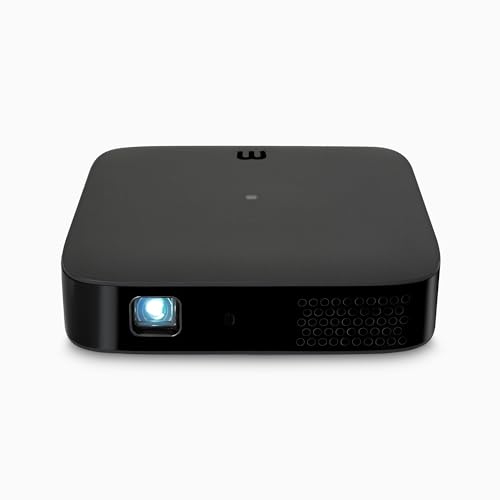
ViewSonic M1 Mini Plus Review: 86 Specs Compared

Avg. price:~$200Native panel resolution:854x480ANSI lumens:50Throw ratio:1.2:1Lamp life:30000 hours

ViewSonic M1 Mini Plus Review: Compare 86 technical specifications, 15 expert and video reviews and 22 owner opinions to see how this product ranks in the Projectors category and whether it is worth buying.
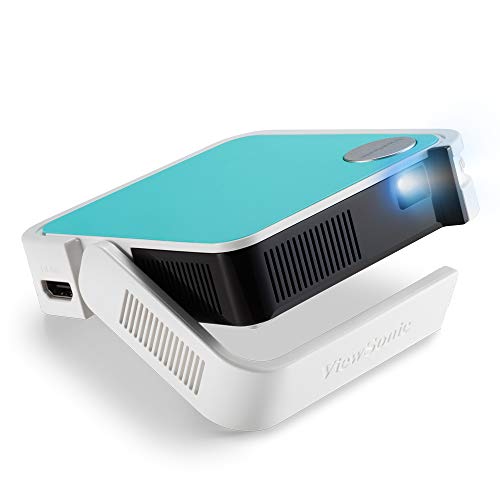
ViewSonic M1 Mini Plus
6.9/10

Overall score

Score
6.9/ 10
✕
What it is
Our main score for this model, 1–10. It combines specs, best-of lists, expert reviews and owners.
How we count it
Parts: Technical score 35%, List score 30%, Reviews score 25%, Sentiment score 10%
Marks: Each part gets a mark out of 10. For reviews, lists and owners, a typical model in this category gets about 8 and the best one gets 10.
No data yet: A part with no data shows "?". It counts as the mark of a weaker model in this category (4 in 5 models with data score higher). This way, models with reviews, lists and owners usually come out ahead.
Score distribution
â–¼
<55-66-77-88-99-10
Score components

35%

5.6

Technical Score

30%

?

List scoreNot enough data yet, so we use 7.5, the mark of a weaker model in this category

25%

8.5

Reviews score

10%

5.6

Sentiment score

â–¼Worse than 69% of projectors
7.7

Ratio quality/price

Ratio quality/price
7.7/ 10
✕
What it is
An indicator that combines the projector's overall rating with its cost.
When it matters
When you are looking for a projector with a good balance between quality and price.
Score distribution
â–¼
<55-66-77-88-99-10
Score components

70%

6.9

Overall score

30%

9.5

Price

â–²Better than 85%
5.6

Technical Score

Technical score
5.6/ 10
✕
What it is
How good the specs are compared with the other models in this category, 1–10.
How we count it
Areas: We rate the specs in each area against the other models in this category.
Weighting: The areas that matter most to buyers count more. The shares are shown under Score components.
Share: The technical score is 35% of the overall score.
Score distribution
â–¼
<55-66-77-88-99-10
Score components

42%

4.7

Image Quality

22%

5.3

Projection & Lens

12%

5.1

HDMI & Gaming

10%

7.9

Audio & Features

8%

7.0

Connectivity

6%

8.3

Design & Power

â–¼Worse than 88%
8.5

Reviews score

Reviews score
8.5/ 10
✕
What it is
Average grade from independent test sites, magazines and video reviewers, 1–10.
How we count it
Grades: Each review's own score is converted to 1–10; without one, we grade the review ourselves. Big test sites count more, short reviews half as much as full tests. A video review counts half.
Score: The average grade is 80% of the review mark; the number of reviews is the other 20% (1 review = 5, the typical number in this category = 8, the most-reviewed model = 10).
Enough data: With few reviews, the average grade is pulled toward the typical grade of this category. No reviews yet: 7.8 for now.
Share: Reviews count 25% of the overall score.
Score distribution
â–¼
<55-66-77-88-99-10

80%

8.4

Average grade

20%

8.7

Popularity

Grades by review (15)
11 reviews: 4 with a printed score, 7 estimated from the review. 4 video reviews, each counting half as much as a written test. Reviews count 25% of the overall score.
User ratings collected online are not part of this score.
â–²Better than 70%
5.6

Sentiment score

Sentiment score
5.6/ 10
✕
What it is
How positive owners are about this model in their comments under video reviews and on forums. We read each comment, keep only people who say they own the model, and sort them into positive, mixed or negative.
How we count it
Score: We compare how satisfied this model’s owners are with the other models in this category: the typical model gets 8, the most satisfied tenth 10, the least satisfied 4. This is 80% of the owner mark; the number of owners is the other 20%.
Enough data: A model counts with 10+ owners from 4+ different discussions. With fewer, the owner part counts as 6.8 for now.
Share: Owners count 10% of the overall score (left out in categories where fewer than 10 models have enough owner comments).
Score distribution
â–¼
<55-66-77-88-99-10

5.6

Mark 5.7 is below the typical mark 7.8 of this category, so it cannot lift the score above the technical score

80%

5.3

Satisfaction

20%

7.2

Popularity

Owners (22)
22 owners from 5 online discussions
9% positive
14% mixed
77% negative
Category average: 39% positive
Our own analysis of online owner opinions, not a rating from any website.
â–¼Worse than 91%
?

List score

List score
7.5/ 10
✕
What it is
How often independent test sites, magazines and video reviewers put this model in their best-of lists for this category.
How we count it
Points: The model in the most lists of this category gets 10; the others get 8 to 10 in proportion. In no list yet: 7.5. Lists count 30% of the overall score.
Enough data: Every list counts, even a single one. With fewer than 5 best-of lists in the category, this part is left out.
Lists with this model (0)
Not in any best-of list yet, so this part counts as 7.5. Models in a list get 8 to 10.
Not in any best-of list yet

What Reviewers Say About the ViewSonic M1 Mini Plus

Based on 10 · 4

Reviewers love the tiny, light build and easy keystone, but low resolution and a weak remote disappoint; battery life divides opinion.
Praised
Mixed views
Criticised
Pick a topic to see who said what
Loading...
Loading category ranking...

Technical Specifications of Projector ViewSonic M1 Mini Plus

Technical Score
Technical score
5.6/ 10
✕
What it is
How good the specs are compared with the other models in this category, 1–10.
How we count it
Areas: We rate the specs in each area against the other models in this category.
Weighting: The areas that matter most to buyers count more. The shares are shown under Score components.
Share: The technical score is 35% of the overall score.
Score distribution
â–¼
<55-66-77-88-99-10
Score components:

42%

4.7

Image Quality

22%

5.3

Projection & Lens

12%

5.1

HDMI & Gaming

10%

7.9

Audio & Features

8%

7.0

Connectivity

6%

8.3

Design & Power

5.6
Reviews score
8.5
Sentiment score
5.6
List score
?
Ratio quality/price
Value for money
7.7/ 10
✕
What it is
An indicator that combines the projector's overall rating with its cost.
When it matters
When you are looking for a projector with a good balance between quality and price.
Score distribution
â–¼
<55-66-77-88-99-10
Score components:

70%

6.9

Overall score

30%

9.5

Price

7.7
ANSI lumens
50
This projector reaches 50 ANSI lumens, dimmer than 99.8% of projectors and equal to 0.1% of projectors.
Contrast ratio
500:1
This projector has a contrast ratio of 500:1, lower than 95.4% of projectors and equal to 1.7% of projectors.
Native contrast ratio.
Native panel resolution
854x480
This projector uses a native resolution of 854x480, lower than 95.3% of projectors and equal to 2.3% of projectors.
Output resolution
854x480
This projector supports output resolution up to 854x480, lower than 95.5% of projectors and equal to 2.3% of projectors.
Projection technology
DLP
Show more
What reviewers say
Throw ratio
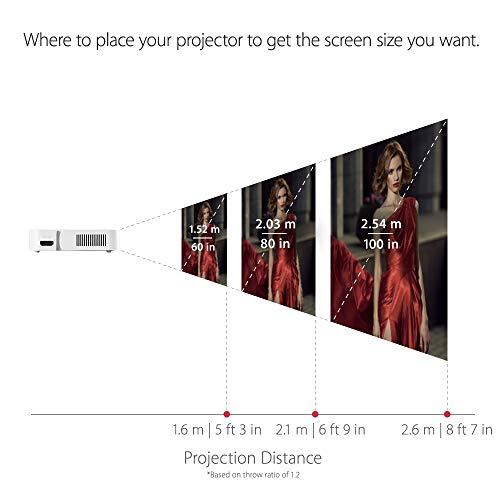
1.2:1
Min throw distance
2.1 ft
This projector needs a minimum throw distance of 2.1 ft, shorter than 82.3% of projectors and equal to 1.9% of projectors.
Max projection size
100 inch
This projector supports projection sizes up to 100 inch, smaller than 92% of projectors and equal to 6.7% of projectors.
Zoom ratio
N/A
Motorized zoom
no
This projector does not have motorized zoom. 14.8% of projectors offer this.
Show more
What reviewers say
Input lag
35 ms
This projector has input lag of 35 ms, higher than 62.4% of projectors and equal to 1.4% of projectors.
Auto low latency mode (ALLM)
no
This projector does not switch to low-latency mode automatically. 16.1% of projectors offer this.
Variable refresh rate (VRR)
no
This projector does not support variable refresh rate. 1.8% of projectors offer this.
HDMI version
1.4
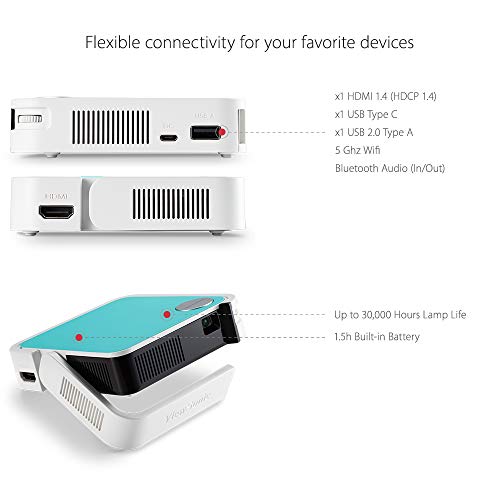
This projector supports HDMI 1.4, older than 54% of projectors and equal to 35.7% of projectors.
Max HDMI bandwidth
10.2 Gbps
This projector supports HDMI bandwidth up to 10.2 Gbps, lower than 51.2% of projectors and equal to 46.5% of projectors.
Show more
N. of HDMI ports
1
This projector has 1 HDMI port/s, fewer than 54.2% of projectors and equal to 42.9% of projectors.
Wi-Fi connectivity
yes
This projector connects to Wi-Fi networks for streaming. 46.7% of projectors offer this.
Wi-Fi version
Wi-Fi 4 (802.11n)
This projector uses Wi-Fi 4 (802.11n), which is newer than 50.1% of projectors and the same as in 5.4% of projectors.
Bluetooth connectivity
yes
This projector supports Bluetooth for speakers and headphones. 49.4% of projectors offer this.
Bluetooth version
4.2
This projector supports Bluetooth 4.2, more modern than 56.1% of projectors and equal to 6.1% of projectors.
Show more
What reviewers say
Smart TV features
yes
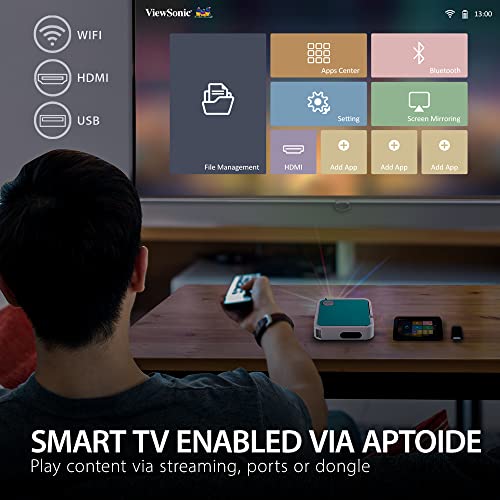
This projector has built-in smart TV features. 56.2% of projectors offer this.
Operating system
Android 6.0
Android OS
yes
This projector runs Android OS. 81% of projectors run Android OS.
Android 6
Dedicated smartphone app
yes
This projector comes with a dedicated smartphone app. 63.3% of projectors come with a dedicated smartphone app.
ViewSonic vCastSender app.
Remote control
yes
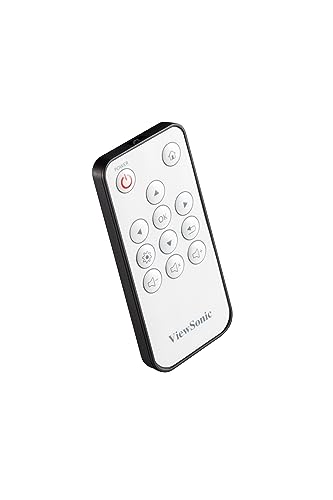
This projector includes a remote control. 1.5% of projectors offer this.
Show more
What reviewers say
Light source type
led
This projector uses led light source technology, more advanced than 33.6% of projectors and equal to 39.9% of projectors.
Laser light source
no
This projector does not have a laser light source. 26.8% of projectors offer this.
Lamp life
30,000 hours
This projector offers lamp life of 30,000 hours, shorter than 67.9% of projectors and equal to 25.9% of projectors.
Eco mode rating.
Lamp life (eco mode)
30,000 hours
This projector offers eco-mode lamp life of 30,000 hours, shorter than 64% of projectors and equal to 31.9% of projectors.
Eco mode rating.
Operating power consumption
20 W
This projector uses 20 W of power, less than 97.9% of projectors and equal to 0.7% of projectors.
Show more
What reviewers say

ViewSonic M1 Mini Plus vs the Average Projector

246810TotalImage QualityProjection & LensHDMI & GamingConnectivityAudio & FeaturesDesign & Power
  • Supports HDMI ARC
    This projector supports HDMI ARC, while the average projector does not. 35.2% of projectors support HDMI ARC.
  • Supports smart TV apps
    This projector has built-in smart TV features, while the average projector does not. 43.9% of projectors offer smart TV features.
  • 10 degrees more vertical correction
    This projector offers more vertical keystone correction than the average projector (40 degrees vs 30 degrees). The average projector offers vertical keystone correction of 30 degrees.
    40 degrees vs 30 degrees
  • Smartphone app support
    This projector supports smartphone app control, while the average projector does not. 36.7% of projectors support smartphone app control.
    ViewSonic vCastSender app.
  • Includes stereo speakers
    This projector has stereo speakers, while the average projector does not. 47.8% of projectors have stereo speakers.
  • 1.2 ft shorter throw distance
    This projector has a lower throw distance than the average projector (2.1 ft vs 3.3 ft). The average projector has 3.3 ft of throw distance.
    2.1 ft vs 3.3 ft
  • Supports voice commands
    This projector supports voice commands, while the average projector does not. 36.1% of projectors support voice commands.
    Google Assistant via remote.
  • 41.2% higher refresh rate
    This projector has a higher refresh rate than the average projector (120 Hz vs 85 Hz). The average projector has 85 Hz of refresh rate.
    120 Hz vs 85 Hz
  • 14.9% higher review score
    Reviews score
    8.5/ 10
    ✕
    What it is
    Average grade from independent test sites, magazines and video reviewers, 1–10.
    How we count it
    Grades: Each review's own score is converted to 1–10; without one, we grade the review ourselves. Big test sites count more, short reviews half as much as full tests. A video review counts half.
    Score: The average grade is 80% of the review mark; the number of reviews is the other 20% (1 review = 5, the typical number in this category = 8, the most-reviewed model = 10).
    Enough data: With few reviews, the average grade is pulled toward the typical grade of this category. No reviews yet: 7.8 for now.
    Share: Reviews count 25% of the overall score.
    Score distribution
    â–¼
    <55-66-77-88-99-10

    80%

    8.4

    Average grade

    20%

    8.7

    Popularity

    Grades by review (15)
    11 reviews: 4 with a printed score, 7 estimated from the review. 4 video reviews, each counting half as much as a written test. Reviews count 25% of the overall score.
    User ratings collected online are not part of this score.
    8.5 vs 7.4
  • 4.2x cheaper
    ViewSonic M1 Mini Plus is cheaper than the average projector ($200 vs $840).
    $200 vs $840
  • 14.4% better value for money
    ViewSonic M1 Mini Plus has a higher value-for-money score than the average projector (7.67 vs 6.7).
    7.67 vs 6.7
  • 41.2% higher refresh rate
    This projector has a higher refresh rate than the average projector (120 Hz vs 85 Hz). The average projector has 85 Hz of refresh rate.
    120 Hz vs 85 Hz
  • Wider color gamut
    This projector has a higher color gamut coverage than the average projector (125% Rec.709 % vs 99% Rec.709 %). The average projector has 99% Rec.709 % of color gamut coverage.
    125% Rec.709 % vs 99% Rec.709 %
  • 10 degrees more vertical correction
    This projector offers more vertical keystone correction than the average projector (40 degrees vs 30 degrees). The average projector offers vertical keystone correction of 30 degrees.
    40 degrees vs 30 degrees
  • 1.2 ft shorter throw distance
    This projector has a lower throw distance than the average projector (2.1 ft vs 3.3 ft). The average projector has 3.3 ft of throw distance.
    2.1 ft vs 3.3 ft
  • Supports HDMI ARC
    This projector supports HDMI ARC, while the average projector does not. 35.2% of projectors support HDMI ARC.
  • Supports AirPlay
    This projector supports AirPlay, while the average projector does not. 40.3% of projectors offer this.
  • 1 more USB ports
    This projector has more USB ports than the average projector (2 vs 1). The average projector has 1 USB ports.
    2 vs 1
  • Supports Miracast mirroring
    This projector supports Miracast, while the average projector does not. 46.4% of projectors offer this.
  • Memory card slot included
    This projector has a memory card slot, while the average projector does not. 9.4% of projectors offer a memory card slot.
    microSD slot.
  • Supports smart TV apps
    This projector has built-in smart TV features, while the average projector does not. 43.9% of projectors offer smart TV features.
  • Smartphone app support
    This projector supports smartphone app control, while the average projector does not. 36.7% of projectors support smartphone app control.
    ViewSonic vCastSender app.
  • Includes stereo speakers
    This projector has stereo speakers, while the average projector does not. 47.8% of projectors have stereo speakers.
  • Supports voice commands
    This projector supports voice commands, while the average projector does not. 36.1% of projectors support voice commands.
    Google Assistant via remote.
  • Android OS built-in
    This projector features Android OS, while the average projector does not. 19.1% of projectors feature Android OS.
    Android 6
  • 5 dB quieter operation
    This projector has a lower audible noise than the average projector (26 dB vs 31 dB). The average projector has 31 dB of audible noise.
    26 dB vs 31 dB
  • 10,000 hours longer lamp life
    This projector has a higher lamp life than the average projector (30,000 hours vs 20,000 hours). The average projector has 20,000 hours of lamp life.
    Eco mode rating.
    30,000 hours vs 20,000 hours
  • 210 W lower power use
    This projector uses less power than the average projector (20 W vs 230 W). The average projector uses 230 W of power.
    20 W vs 230 W
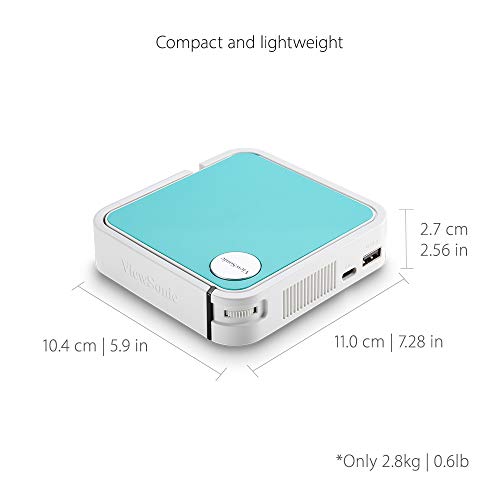
  • 90.9% lighter weight
    This projector is lighter than the average projector (0.6 lb vs 6.6 lb). The average projector weighs 6.6 lb.
    0.6 lb vs 6.6 lb
  • Includes built-in battery
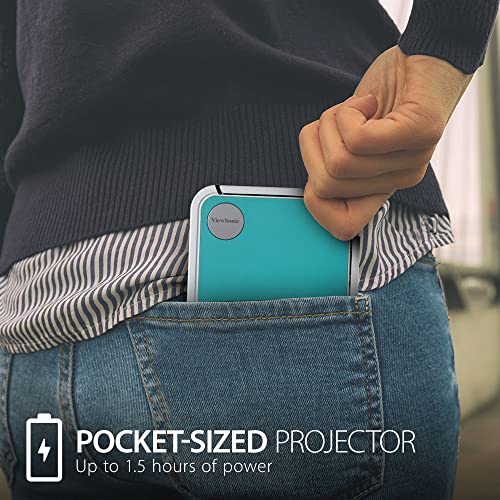
    This projector has a built-in battery, while the average projector does not. 6.3% of projectors have one.
  • 3 dB quieter eco mode
    This projector has a lower audible noise in eco mode than the average projector (25 dB vs 28 dB). The average projector has 28 dB of audible noise in eco mode.
    25 dB vs 28 dB
  • 10,000 hours longer eco lamp life
    This projector has a higher lamp life in eco mode than the average projector (30,000 hours vs 20,000 hours). The average projector has 20,000 hours of lamp life in eco mode.
    Eco mode rating.
    30,000 hours vs 20,000 hours
  • 7.4 in narrower width
    This projector is narrower than the average projector (4.3 in vs 11.7 in). The average projector has a width of 11.7 in.
    4.3 in vs 11.7 in
  • 3.7 in lower height
    This projector is shorter than the average projector (1.1 in vs 4.8 in). The average projector has a height of 4.8 in.
    1.1 in vs 4.8 in
  • 4.8 in thinner body
    This projector is thinner than the average projector (1.1 in vs 5.9 in). The average projector has a thickness of 5.9 in.
    1.1 in vs 5.9 in
  • 97.7% dimmer image
    This projector has lower ANSI lumens than the average projector (50 vs 2,200). The average projector has 2,200 ANSI lumens.
    50 vs 2,200
  • Lower output resolution
    This projector supports a lower output resolution than the average projector (854x480 vs 1920x1080). The average projector outputs at 1920x1080 resolution.
    854x480 vs 1920x1080
  • Limited HDMI format
    This projector supports a less capable max HDMI input format than the average projector (1080p/60Hz vs 4K/120Hz). The average projector supports a max HDMI input format of 4K/120Hz.
    1080p/60Hz vs 4K/120Hz
  • Low native resolution
    This projector has a lower native panel resolution than the average projector (854x480 vs 1920x1080). The average projector has a native panel resolution of 1920x1080.
    854x480 vs 1920x1080
  • Lower contrast ratio
    This projector has a lower contrast ratio than the average projector (500:1 vs 10000:1). The average projector has 10000:1 of contrast ratio.
    Native contrast ratio.
    500:1 vs 10,000:1
  • 150 inch smaller image size
    This projector has a lower projection size than the average projector (100 inch vs 250 inch). The average projector has 250 inch of projection size.
    100 inch vs 250 inch
  • 1 fewer HDMI ports
    This projector has fewer HDMI ports than the average projector (1 vs 2). The average projector has 2 HDMI ports.
    1 vs 2
  • Basic light source
    This projector has Basic light source than the average projector (led vs laser). The average projector uses a laser light source.
    led vs laser
  • 25.3% lower sentiment score
    Sentiment score
    5.6/ 10
    ✕
    What it is
    How positive owners are about this model in their comments under video reviews and on forums. We read each comment, keep only people who say they own the model, and sort them into positive, mixed or negative.
    How we count it
    Score: We compare how satisfied this model’s owners are with the other models in this category: the typical model gets 8, the most satisfied tenth 10, the least satisfied 4. This is 80% of the owner mark; the number of owners is the other 20%.
    Enough data: A model counts with 10+ owners from 4+ different discussions. With fewer, the owner part counts as 6.8 for now.
    Share: Owners count 10% of the overall score (left out in categories where fewer than 10 models have enough owner comments).
    Score distribution
    â–¼
    <55-66-77-88-99-10

    5.6

    Mark 5.7 is below the typical mark 7.8 of this category, so it cannot lift the score above the technical score

    80%

    5.3

    Satisfaction

    20%

    7.2

    Popularity

    Owners (22)
    22 owners from 5 online discussions
    9% positive
    14% mixed
    77% negative
    Category average: 39% positive
    Our own analysis of online owner opinions, not a rating from any website.
    5.6 vs 7.5
  • 97.7% dimmer image
    This projector has lower ANSI lumens than the average projector (50 vs 2,200). The average projector has 2,200 ANSI lumens.
    50 vs 2,200
  • Lower output resolution
    This projector supports a lower output resolution than the average projector (854x480 vs 1920x1080). The average projector outputs at 1920x1080 resolution.
    854x480 vs 1920x1080
  • Low native resolution
    This projector has a lower native panel resolution than the average projector (854x480 vs 1920x1080). The average projector has a native panel resolution of 1920x1080.
    854x480 vs 1920x1080
  • Lower contrast ratio
    This projector has a lower contrast ratio than the average projector (500:1 vs 10000:1). The average projector has 10000:1 of contrast ratio.
    Native contrast ratio.
    500:1 vs 10,000:1
  • 0.27 inch smaller DMD chip
    This projector has a lower DMD chip size than the average projector (0.2 inch vs 0.47 inch). The average projector has 0.47 inch of DMD chip size.
    0.2 inch vs 0.47 inch
  • 150 inch smaller image size
    This projector has a lower projection size than the average projector (100 inch vs 250 inch). The average projector has 250 inch of projection size.
    100 inch vs 250 inch
  • Limited HDMI format
    This projector supports a less capable max HDMI input format than the average projector (1080p/60Hz vs 4K/120Hz). The average projector supports a max HDMI input format of 4K/120Hz.
    1080p/60Hz vs 4K/120Hz
  • 43.3% lower HDMI bandwidth
    This projector has a lower HDMI bandwidth than the average projector (10.2 Gbps vs 18 Gbps). The average projector has 18 Gbps of HDMI bandwidth.
    10.2 Gbps vs 18 Gbps
  • Older HDMI version
    This projector has Old HDMI standard than the average projector (1.4 vs 2). The average projector supports HDMI 2.0.
    1.4 vs 2.0
  • More outdated HDCP support
    This projector supports an older HDCP version than the average projector (1.4 vs 2.2).
    1.4 vs 2.2
  • 8 ms higher input lag
    This projector has a higher input lag than the average projector (35 ms vs 27 ms). The average projector has 27 ms of input lag.
    35 ms vs 27 ms
  • 1 fewer HDMI ports
    This projector has fewer HDMI ports than the average projector (1 vs 2). The average projector has 2 HDMI ports.
    1 vs 2
  • No headphone jack
    This projector does not have a 3.5 mm audio jack, while the average projector does. 84.4% of projectors offer a 3.5 mm audio jack.
  • No RS-232 control
    This projector does not support RS-232 control, while the average projector does. 50.6% of projectors support RS-232 control.
  • 80% weaker audio output
    This projector has a lower audio output power than the average projector (2 W vs 10 W). The average projector has 10 W of audio output power.
    1 x 2W.
    2 W vs 10 W
  • Basic light source
    This projector has Basic light source than the average projector (led vs laser). The average projector uses a laser light source.
    led vs laser

Video Reviews

Hands-on testing, unboxing, and real-world video evaluations

9.0
MCPHONEY
≈ estimated
03/11/2020
Hands-on review · image, sound and presentation tests
Verdict
ViewSonic M1 Mini Plus is one of the best pocket projectors, with a sharp image and good sound, and it works best in a dark room.
8.0
Jam Ancheta
≈ estimated
08/09/2020
Full review · portability, apps, screen mirroring and battery
Verdict
ViewSonic M1 Mini Plus is not the brightest, but it works well in a dark room for pocketable home entertainment.
8.0
Nerdbench
≈ estimated
09/07/2020
Hands-on review · battery, image, Android and apps
Verdict
ViewSonic M1 Mini Plus is a fun pocket projector with good battery life and image quality, but it has limited brightness and Android app support.
Overview video
Overview video
Brand video
Not graded

Expert Reviews

In-depth analysis and verdict from leading tech publications
9.0
edtechmagazine.com
≈ estimated
1/1/2026
Hands-on test · Classroom use
Verdict
The ViewSonic M1 Mini Plus is a battery-powered projector that suits presentations in small rooms, though bigger pictures need dim lights.
9.0
biztechmagazine.com
≈ estimated
10/11/2024
Product spotlight · Business presentations
Verdict
The ViewSonic M1 Mini Plus is a battery-powered pocket projector for presentations on the go, though large images need a dim room.
9.0
audioguru.com
≈ estimated
4/11/2023
Full review · Portable projector
Verdict
The ViewSonic M1 Mini Plus is a pocket projector that sounds good for its size, but its 480p picture suits casual viewing, not home theater.
9.0
canbuyornot.com
≈ estimated
7/5/2021
Review · Pocket projector
Verdict
The ViewSonic M1 Mini Plus is a solid pocket projector for travel with easy setup, but its battery lasts only about an hour.
8.0
businessworld.in
≈ estimated
6/1/2022
Review · Compact home projector
Verdict
The ViewSonic M1 Mini Plus is a pocket-sized projector for everyday home viewing, but running Wi-Fi and Bluetooth together drops battery life below two hours.
8.5
gagadget.com
✓ explicit
6/8/2026
Hands-on review · Pocket projector
Verdict
The ViewSonic M1 Mini Plus is a pocket projector that survives rough handling, but its 120 lumens struggle in bright rooms.
8.3
geekculture.co
✓ explicit
9/10/2021
Hands-on review · Streaming projector
Verdict
The ViewSonic M1 Mini Plus is a pocket projector with clear sound and easy streaming, but its short battery and remote-only control hold it back.
9.5
lite-magazin.de
≈ estimated
4/8/2021
Hands-on test · Smart features
Verdict
The ViewSonic M1 Mini Plus is a portable projector with Wi-Fi mirroring, Bluetooth sound and streaming apps, though its 854 x 480 picture is modest.
6.0
rotek.fr
≈ estimated
6/3/2023
Full review · Pocket projector
Verdict
The ViewSonic M1 Mini Plus is easy to carry and corrects its image automatically, but its 480p picture and 1.5-hour battery are the main limits.
8.5
gagadget.it
✓ explicit
10/8/2025
Month-long test · Pocket projector
Verdict
The ViewSonic M1 Mini Plus is a handy pocket projector for movie nights and quick presentations, but its battery and brightness let it down.

Third-Party Reviews

What Customers Like About ViewSonic M1 Mini Plus

  • Highly portable 'pocket-sized' design weighing only 9.9 oz, making it ideal for travel and camping
  • Cleverly designed integrated smart stand that doubles as a lens cover and supports ceiling projection
  • Surprisingly high-quality audio from built-in JBL speakers for such a small device
  • User-friendly automatic vertical keystone correction for quick image straightening
  • Good value for money as an entry-level projector with a long-lasting LED light source (up to 30,000 hours)
  • Versatile connectivity options including HDMI, USB-A, and USB-C with power bank charging support

What Customers Don't Like About ViewSonic M1 Mini Plus

  • Low native resolution (480p) can result in soft focus and difficult-to-read small text
  • Limited brightness (120 LED lumens) makes it nearly unusable in bright daylight without blackout blinds
  • Battery life is relatively short, typically lasting between 1.5 to 2 hours on a single charge
  • Built-in smart interface and app store can be sluggish and frustrating to navigate with the included remote
  • Lack of on-body controls means the projector is virtually unusable if the small, easily lost remote is missing
  • Streaming limitations, such as the inability to mirror protected content like Netflix directly from a phone

Verdict

The ViewSonic M1 Mini Plus is an ultra-portable LED pocket projector featuring a native WVGA (854x480) resolution and 120 LED lumens of brightness (50 ANSI lumens), capable of projecting images up to 100 inches. Its standout characteristics include an integrated smart stand that doubles as a lens cover, swappable colored top plates, and built-in Wi-Fi and Bluetooth connectivity for wireless streaming from apps like Netflix and YouTube. Main pros include its highly compact 4x4-inch design, built-in JBL speakers for clear audio, and a rechargeable battery offering up to 1.5 hours of runtime, which can be extended via power bank charging through its USB-C port. However, it is limited by its modest brightness, which requires a dark room for optimal viewing, a lower SD resolution that lacks the sharpness of HD models, and a smart interface that some users find sluggish.

Compare ViewSonic M1 Mini Plus With Other Products in the Projectors Category

1Product to compare no. 1
VS
2Product to compare no. 2
VS
3Product to compare no. 3 (optional)

Graphic Comparison of ViewSonic M1 Mini Plus and Other Products in the Projectors Category

No results found