Scored using Vacuum Cleaners Methodology v3.0
Vacuum Cleaners Methodology v3.0
Mathematical & Unbiased Scoring
Products in this category are scored under Frontum Vacuum Cleaners Methodology v3.0: the technical score from the specifications is the base, and independent expert and video reviews (up to ±0.5 points), owner opinions (up to ±0.3) and best-of lists (up to +0.3) move it up or down.
Explore Vacuum Cleaners Methodology v3.0

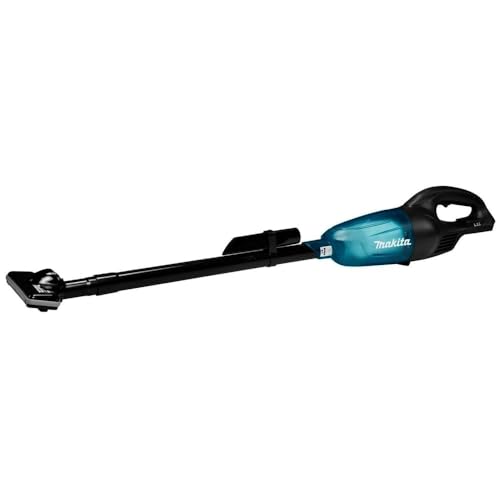
Makita DCL180ZB Review: 53 Specs Compared

Avg. price:~$100Suction power (AW):30 AWBattery runtime:20 minutesCapacity:22 fl ozWeight:2.6 lb

Makita DCL180ZB Review: Compare 53 technical specifications, 6 expert and video reviews and 1 best-of list to see how this product ranks in the Vacuum Cleaners category and whether it is worth buying.
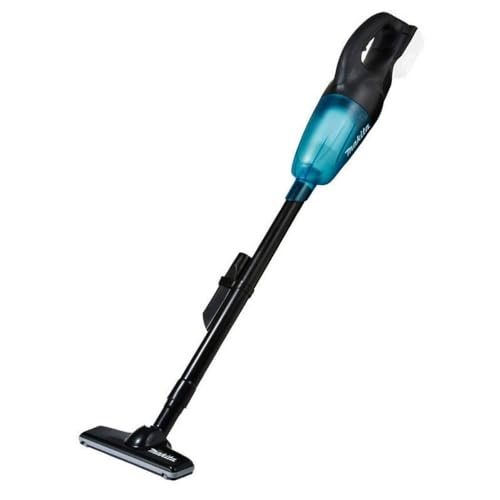
Makita DCL180ZB
6.3/10

Overall score

Score
6.3/ 10
✕
What it is
Our main score for this model, 1–10. It combines specs, best-of lists, expert reviews and owners.
How we count it
Parts: Technical score 35%, List score 30%, Reviews score 25%, Sentiment score 10%
Marks: Each part gets a mark out of 10. For reviews, lists and owners, a typical model in this category gets about 8 and the best one gets 10.
No data yet: A part with no data shows "?". It counts as the mark of a weaker model in this category (4 in 5 models with data score higher). This way, models with reviews, lists and owners usually come out ahead.
Score distribution
▼
<55-66-77-88-99-10
Score components

35%

5.4

Technical Score

30%

5.4

List score

25%

8.3

Reviews score

10%

?

Sentiment scoreNot enough data yet, so we use 6.8, the mark of a weaker model in this category

▼Worse than 97% of vacuum cleaners
7.4

Ratio quality/price

Ratio quality/price
7.4/ 10
✕
What it is
An indicator that combines the vacuum cleaner's overall score with its price.
When it matters
When you are looking for a vacuum cleaner with a good balance between quality and price.
Score distribution
▼
<55-66-77-88-99-10
Score components

70%

6.3

Overall score

30%

10

Price

▼Worse than 81%
5.4

Technical Score

Technical score
5.4/ 10
✕
What it is
How good the specs are compared with the other models in this category, 1–10.
How we count it
Areas: We rate the specs in each area against the other models in this category.
Weighting: The areas that matter most to buyers count more. The shares are shown under Score components.
Share: The technical score is 35% of the overall score.
Score distribution
▼
<55-66-77-88-99-10
Score components

28%

3.5

Performance

22%

6.5

Battery

18%

7.1

Filtration

14%

4.6

Attachments

10%

7.6

Design

8%

4.0

Smart features

▼Worse than 98%
8.3

Reviews score

Reviews score
8.3/ 10
✕
What it is
Average grade from independent test sites, magazines and video reviewers, 1–10.
How we count it
Grades: Each review's own score is converted to 1–10; without one, we grade the review ourselves. Big test sites count more, short reviews half as much as full tests. A video review counts half.
Score: The average grade is 80% of the review mark; the number of reviews is the other 20% (1 review = 5, the typical number in this category = 8, the most-reviewed model = 10).
Enough data: With few reviews, the average grade is pulled toward the typical grade of this category. No reviews yet: 7.6 for now.
Share: Reviews count 25% of the overall score.
Score distribution
▼
<55-66-77-88-99-10

80%

8.4

Average grade

20%

8.2

Popularity

Grades by review (6)
6 video reviews, each counting half as much as a written test. Reviews count 25% of the overall score.
User ratings collected online are not part of this score.
▲Better than 63%
?

Sentiment score

Sentiment score
6.8/ 10
✕
What it is
How positive owners are about this model in their comments under video reviews and on forums. We read each comment, keep only people who say they own the model, and sort them into positive, mixed or negative.
How we count it
Score: We compare how satisfied this model’s owners are with the other models in this category: the typical model gets 8, the most satisfied tenth 10, the least satisfied 4. This is 80% of the owner mark; the number of owners is the other 20%.
Enough data: A model counts with 10+ owners from 4+ different discussions. With fewer, the owner part counts as 6.8 for now.
Share: Owners count 10% of the overall score (left out in categories where fewer than 10 models have enough owner comments).
Score distribution
▼
<55-66-77-88-99-10
Owners (23)
Not enough owner comments yet (10+ owners from 4+ discussions needed), so the owner part counts as 6.8 for now.
Our own analysis of online owner opinions, not a rating from any website.
Not enough owner comments yet
5.4

List score

List score
5.4/ 10
✕
What it is
How often independent test sites, magazines and video reviewers put this model in their best-of lists for this category.
How we count it
Points: The model in the most lists of this category gets 10; the others get 8 to 10 in proportion. In no list yet: 7.5. Lists count 30% of the overall score.
Enough data: Every list counts, even a single one. With fewer than 5 best-of lists in the category, this part is left out.
Lists with this model (1)
List score: in 1 of 66 lists (2%)
▼Worse than 52%

What Reviewers Say About the Makita DCL180ZB

Based on 0 · 6

Reviewers like the solid suction, easy handling and decent battery, but are split on the filter and bin.
Praised
Mixed views
Pick a topic to see who said what
Loading...
Loading category ranking...

Technical Specifications of Vacuum Cleaner Makita DCL180ZB

Technical Score
Technical score
5.4/ 10
✕
What it is
How good the specs are compared with the other models in this category, 1–10.
How we count it
Areas: We rate the specs in each area against the other models in this category.
Weighting: The areas that matter most to buyers count more. The shares are shown under Score components.
Share: The technical score is 35% of the overall score.
Score distribution
▼
<55-66-77-88-99-10
Score components:

28%

3.5

Performance

22%

6.5

Battery

18%

7.1

Filtration

14%

4.6

Attachments

10%

7.6

Design

8%

4.0

Smart features

5.4
Reviews score
8.3
Sentiment score
?
List score
5.4
Ratio quality/price
Value for money
7.4/ 10
✕
What it is
An indicator that combines the vacuum cleaner's overall score with its price.
When it matters
When you are looking for a vacuum cleaner with a good balance between quality and price.
Score distribution
▼
<55-66-77-88-99-10
Score components:

70%

6.3

Overall score

30%

10

Price

7.4
Suction power (AW)
30 AW
This vacuum cleaner has a suction power of 30 AW, which is lower than that of 91.5% of vacuum cleaners and equal to that of 1.6% of vacuum cleaners.
Suction power (kPa)
3.6 kPa
This vacuum cleaner has a suction pressure of 3.6 kPa, which is lower than that of 99.5% of vacuum cleaners and equal to that of 0.2% of vacuum cleaners.
Airflow
46 CFM
This vacuum cleaner delivers 46 CFM airflow, which is lower than that of 76.6% of vacuum cleaners and equal to that of 0.6% of vacuum cleaners.
Motor type
brushed
Power consumption
90 W
This vacuum cleaner draws 90 W, which is lower than the power consumption of 99.2% of vacuum cleaners and equal to that of 0.1% of vacuum cleaners.
Show more
What reviewers say
Cordless
yes
This vacuum cleaner works cordlessly. 49.5% of vacuum cleaners offer cordless operation.
Battery runtime
20 minutes
This vacuum cleaner offers a battery runtime of 20 minutes, which is shorter than that of 98.5% of vacuum cleaners and equal to that of 0.2% of vacuum cleaners.
Charging time
?
Battery capacity
3,000 mAh
This vacuum cleaner has a battery capacity of 3,000 mAh, which is larger than that of 79.9% of vacuum cleaners and equal to that of 5.6% of vacuum cleaners.
Battery voltage
18 V
This vacuum cleaner uses a battery voltage of 18 V, which is lower than that of 79.8% of vacuum cleaners and equal to that of 16% of vacuum cleaners.
Show more
What reviewers say
Filter class
hepa
This vacuum cleaner uses filter class hepa, which is more advanced than the class used by 16% of vacuum cleaners and the same as the class used by 46% of vacuum cleaners.
Minimum overall efficiency
99.97%
This vacuum cleaner reaches 99.97% minimum overall efficiency, which is higher than that of 59.1% of vacuum cleaners and equal to that of 19.4% of vacuum cleaners.
Suitable for allergy sufferers
no
This vacuum cleaner is not suitable for allergy sufferers. 82.4% of vacuum cleaners are allergy-friendly.
Capacity
22 fl oz
This vacuum cleaner has a dust capacity of 22 fl oz, which is smaller than that of 68.9% of vacuum cleaners and equal to that of 2.3% of vacuum cleaners.
Bagless
yes
This vacuum cleaner uses a bagless design. 78.6% of vacuum cleaners use this setup.
Show more
What reviewers say
Main brush type
classic
Roller type
none
Anti-tangle brush
no
This vacuum cleaner does not include an anti-tangle brush. 25.7% of vacuum cleaners include this feature.
Mini motorized brush
no
This vacuum cleaner does not include a mini motorized brush. 26.9% of vacuum cleaners include this attachment.
Suitable for pet owners
no
This vacuum cleaner is not suitable for pet owners. 72% of vacuum cleaners handle pet hair well.
Show more
Vacuum type
stick
Weight
2.6 lb
This vacuum cleaner weighs 2.6 lb, which is lower than the weight of 99.1% of vacuum cleaners and equal to that of 0.6% of vacuum cleaners.
2-in-1 design
yes
This vacuum cleaner offers a 2-in-1 design. 53% of vacuum cleaners offer this flexible format.
Self-standing
no
This vacuum cleaner does not stand on its own. 18.9% of vacuum cleaners offer this convenience.
Adjustable tube height
no
This vacuum cleaner does not include adjustable tube height. 47.4% of vacuum cleaners offer this ergonomic feature.
Show more
What reviewers say
Auto suction adjustment
no
This vacuum cleaner does not support automatic suction adjustment. 19.9% of vacuum cleaners support this feature.
Dust particle sensor
no
This vacuum cleaner does not include a dust particle sensor. 8% of vacuum cleaners include this feature.
LED display
no
This vacuum cleaner does not include an LED display. 25.9% of vacuum cleaners include this interface feature.
Nozzle light
no
This vacuum cleaner does not include a nozzle light. 43.4% of vacuum cleaners include this visibility feature.
Mopping support
no
This vacuum cleaner does not support mopping. 3.7% of vacuum cleaners support this multi-function feature.

Makita DCL180ZB vs the Average Vacuum Cleaner

246810TotalPerformanceBatteryFiltrationAttachmentsDesignSmart features
  • 67.5% lower weight
    This vacuum cleaner is lighter than the average vacuum cleaner (2.6 lb vs 8 lb).
    2.6 lb vs 8 lb
  • Cordless operation
    This vacuum cleaner works cordlessly, the average vacuum cleaner does not.
  • 510 W lower power consumption
    This vacuum cleaner draws less power than the average vacuum cleaner (90 W vs 600 W).
    90 W vs 600 W
  • Includes removable battery
    This vacuum cleaner includes a removable battery, the average vacuum cleaner does not.
  • 500 mAh larger battery capacity
    This vacuum cleaner has a larger battery capacity than the average vacuum cleaner (3,000 mAh vs 2,500 mAh).
    3,000 mAh vs 2,500 mAh
  • Quieter operation
    This vacuum cleaner is quieter than the average vacuum cleaner (71-71 dB vs 77-77 dB).
    71-71 dB vs 77-77 dB
  • Includes wall bracket
    This vacuum cleaner includes a wall-mounted bracket, the average vacuum cleaner does not.
  • 0.02 % higher filtration efficiency
    This vacuum cleaner has higher filtration efficiency than the average vacuum cleaner (100 % vs 99.95 %).
    99.97 % vs 99.95 %
  • 12.2% higher review score
    Reviews score
    8.3/ 10
    ✕
    What it is
    Average grade from independent test sites, magazines and video reviewers, 1–10.
    How we count it
    Grades: Each review's own score is converted to 1–10; without one, we grade the review ourselves. Big test sites count more, short reviews half as much as full tests. A video review counts half.
    Score: The average grade is 80% of the review mark; the number of reviews is the other 20% (1 review = 5, the typical number in this category = 8, the most-reviewed model = 10).
    Enough data: With few reviews, the average grade is pulled toward the typical grade of this category. No reviews yet: 7.6 for now.
    Share: Reviews count 25% of the overall score.
    Score distribution
    ▼
    <55-66-77-88-99-10

    80%

    8.4

    Average grade

    20%

    8.2

    Popularity

    Grades by review (6)
    6 video reviews, each counting half as much as a written test. Reviews count 25% of the overall score.
    User ratings collected online are not part of this score.
    8.3 vs 7.4
  • 2x cheaper
    Makita DCL180ZB is cheaper than the average vacuum cleaner ($100 vs $200).
    $100 vs $200
  • 510 W lower power consumption
    This vacuum cleaner draws less power than the average vacuum cleaner (90 W vs 600 W).
    90 W vs 600 W
  • Quieter operation
    This vacuum cleaner is quieter than the average vacuum cleaner (71-71 dB vs 77-77 dB).
    71-71 dB vs 77-77 dB
  • Cordless operation
    This vacuum cleaner works cordlessly, the average vacuum cleaner does not.
  • Includes removable battery
    This vacuum cleaner includes a removable battery, the average vacuum cleaner does not.
  • 500 mAh larger battery capacity
    This vacuum cleaner has a larger battery capacity than the average vacuum cleaner (3,000 mAh vs 2,500 mAh).
    3,000 mAh vs 2,500 mAh
  • 0.02 % higher filtration efficiency
    This vacuum cleaner has higher filtration efficiency than the average vacuum cleaner (100 % vs 99.95 %).
    99.97 % vs 99.95 %
  • 67.5% lower weight
    This vacuum cleaner is lighter than the average vacuum cleaner (2.6 lb vs 8 lb).
    2.6 lb vs 8 lb
  • Includes wall bracket
    This vacuum cleaner includes a wall-mounted bracket, the average vacuum cleaner does not.
  • 5.9 in narrower body
    This vacuum cleaner is narrower than the average vacuum cleaner (4.5 in vs 10.4 in).
    4.5 in vs 10.4 in
  • 16.4 kPa lower suction pressure
    This vacuum cleaner has lower suction pressure than the average vacuum cleaner (3.6 kPa vs 20 kPa).
    3.6 kPa vs 20 kPa
  • 30 minutes shorter runtime
    This vacuum cleaner offers shorter battery runtime than the average vacuum cleaner (20 minutes vs 50 minutes).
    20 minutes vs 50 minutes
  • 120 AW lower suction power
    This vacuum cleaner has lower suction power than the average vacuum cleaner (30 AW vs 150 AW).
    30 AW vs 150 AW
  • 29.9% lower list score
    List score
    5.4/ 10
    ✕
    What it is
    How often independent test sites, magazines and video reviewers put this model in their best-of lists for this category.
    How we count it
    Points: The model in the most lists of this category gets 10; the others get 8 to 10 in proportion. In no list yet: 7.5. Lists count 30% of the overall score.
    Enough data: Every list counts, even a single one. With fewer than 5 best-of lists in the category, this part is left out.
    Lists with this model (1)
    List score: in 1 of 66 lists (2%)
    5.4 vs 7.7
  • Not pet-hair friendly
    This vacuum cleaner is not suitable for pet owners, the average vacuum cleaner is.
  • Not allergy-friendly
    This vacuum cleaner is not suitable for allergy sufferers, the average vacuum cleaner is.
  • No cyclonic technology
    This vacuum cleaner does not use cyclonic technology, the average vacuum cleaner does.
  • No upholstery nozzle
    This vacuum cleaner does not include an upholstery nozzle, the average vacuum cleaner does.
  • 29.9% lower list score
    List score
    5.4/ 10
    ✕
    What it is
    How often independent test sites, magazines and video reviewers put this model in their best-of lists for this category.
    How we count it
    Points: The model in the most lists of this category gets 10; the others get 8 to 10 in proportion. In no list yet: 7.5. Lists count 30% of the overall score.
    Enough data: Every list counts, even a single one. With fewer than 5 best-of lists in the category, this part is left out.
    Lists with this model (1)
    List score: in 1 of 66 lists (2%)
    5.4 vs 7.7
  • 5% worse value for money
    Makita DCL180ZB offers worse value for money than the average vacuum cleaner (7.39 vs 7.8).
    7.39 vs 7.76
  • 16.4 kPa lower suction pressure
    This vacuum cleaner has lower suction pressure than the average vacuum cleaner (3.6 kPa vs 20 kPa).
    3.6 kPa vs 20 kPa
  • 120 AW lower suction power
    This vacuum cleaner has lower suction power than the average vacuum cleaner (30 AW vs 150 AW).
    30 AW vs 150 AW
  • No cyclonic technology
    This vacuum cleaner does not use cyclonic technology, the average vacuum cleaner does.
  • 1 fewer power levels
    This vacuum cleaner offers fewer speed levels than the average vacuum cleaner (1 vs 2).
    1 vs 2
  • 1.3 in narrower cleaning path
    This vacuum cleaner has a narrower cleaning path than the average vacuum cleaner (8.9 in vs 10.2 in).
    8.9 in vs 10.2 in
  • Older release date
    This vacuum cleaner has an older release date than the average vacuum cleaner (2016 vs 2021).
    Released in August 2016.
    2016 vs 2021
  • 30 minutes shorter runtime
    This vacuum cleaner offers shorter battery runtime than the average vacuum cleaner (20 minutes vs 50 minutes).
    20 minutes vs 50 minutes
  • 4.2 V lower voltage
    This vacuum cleaner has a lower battery voltage than the average vacuum cleaner (18 V vs 22.2 V).
    18 V vs 22.2 V
  • Not allergy-friendly
    This vacuum cleaner is not suitable for allergy sufferers, the average vacuum cleaner is.
  • 12 fl oz smaller dust container
    This vacuum cleaner has a smaller dust capacity than the average vacuum cleaner (22 fl oz vs 34 fl oz).
    22 fl oz vs 34 fl oz
  • Not pet-hair friendly
    This vacuum cleaner is not suitable for pet owners, the average vacuum cleaner is.
  • No upholstery nozzle
    This vacuum cleaner does not include an upholstery nozzle, the average vacuum cleaner does.
  • No soft dusting brush
    This vacuum cleaner does not include a soft dusting brush, the average vacuum cleaner does.
  • 8.3 in deeper body
    This vacuum cleaner is deeper than the average vacuum cleaner (18.7 in vs 10.4 in).
    18.7 in vs 10.4 in

Video Reviews

Hands-on testing, unboxing, and real-world video evaluations

9.0
MrFxr
≈ estimated
12/08/2023
Hands-on review · three weeks of use
Verdict
Makita DCL180ZB is a handy little tool for maintenance work, but it clogs quickly with very fine dust.
9.0
Cool Breeze Off Grid
≈ estimated
22/02/2019
Hands-on review · pickup, emptying and cleaning
Verdict
Makita DCL180ZB has a surprisingly good pickup, and the reviewer is very happy with it despite minor drawbacks.
9.0
POUSE around the HOUSE
≈ estimated
24/01/2017
Hands-on review · demo and cleaning routine
Verdict
Makita DCL180ZB is not a main household vacuum, but a good second one if you already own Makita LXT batteries.
Not graded
Hands-on video, no verdict

Third-Party Reviews

What Customers Like About Makita DCL180ZB

  • Lightweight and highly maneuverable
  • Excellent value for money, especially for existing Makita battery users
  • Strong suction power for quick mess and fine dust pick up
  • Quiet operation compared to traditional vacuums
  • Bagless design with easy-to-empty dust capsule
  • Washable and reusable cloth filter system
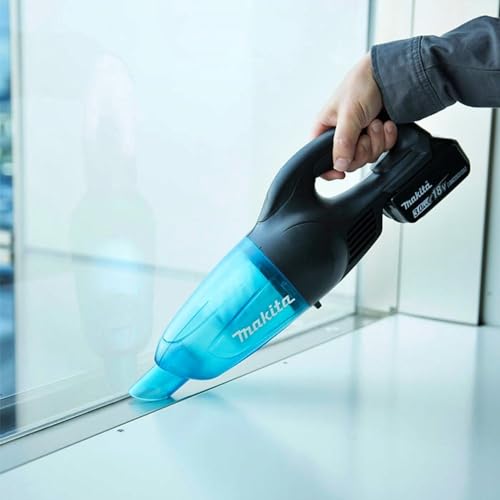
  • Highly portable and ideal for vehicle cleaning or small workshops

What Customers Don't Like About Makita DCL180ZB

  • Sold as a bare unit (battery and charger must be purchased separately)
  • Suction power drops noticeably as the filter gets clogged or filled
  • Filter clogs quickly unless paired with an optional cyclone attachment
  • Lacks an agitating brush bar, making it poorly suited for deep pile carpets
  • Limited continuous runtime (approximately 20 minutes on a standard 3.0Ah battery)
  • Extension wand can feel short for taller users

Verdict

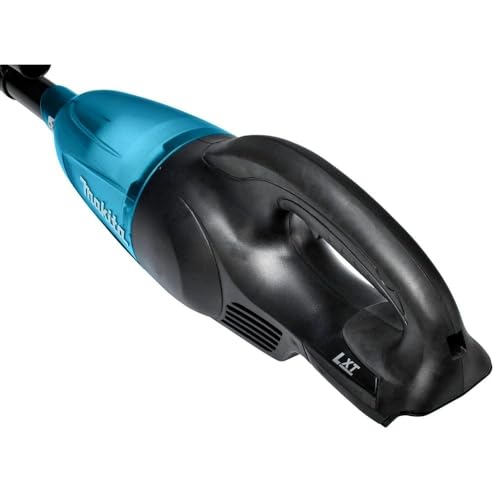
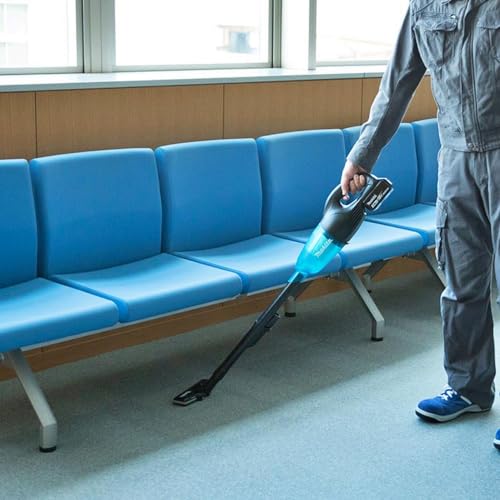
The Makita DCL180ZB is a lightweight, 2.6 lb cordless stick vacuum cleaner powered by an 18V LXT lithium-ion slide battery. It features a brushed motor delivering up to 30W of suction power, 4.2 kPa of maximum sealed suction, and a maximum airflow of 49 CFM. Key characteristics include a 22 fl oz bagless dust capacity, a 2-stage washable cloth filtration system, and an ergonomic rubberized soft-grip handle. Main pros include its highly portable, compact design, a low noise output of 71 dB, and the convenience of a detachable battery system that offers approximately 20 minutes of continuous runtime on a 3.0Ah battery. However, notable cons include its lack of a HEPA filter, poor cleaning performance on carpets due to the lack of a motorized brush roll, and the fact that it is sold as a bare tool without a battery or charger included.

Compare Makita DCL180ZB With Other Vacuum Cleaners

1Product to compare no. 1
VS
2Product to compare no. 2
VS
3Product to compare no. 3 (optional)

Graphic Comparison of Makita DCL180ZB and Other Vacuum Cleaners

No results found