Scored using Vacuum Cleaners Methodology v3.0
Vacuum Cleaners Methodology v3.0
Mathematical & Unbiased Scoring
Products in this category are scored under Frontum Vacuum Cleaners Methodology v3.0: the technical score from the specifications is the base, and independent expert and video reviews (up to ±0.5 points), owner opinions (up to ±0.3) and best-of lists (up to +0.3) move it up or down.
Explore Vacuum Cleaners Methodology v3.0

Nilfisk VP300 Review: 53 Specs Compared

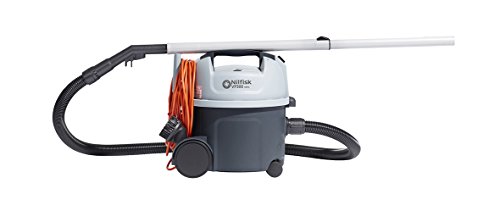
Avg. price:~$450Suction power (AW):225 AWBattery runtime:N/A minutesCapacity:338 fl ozWeight:11.7 lb

Nilfisk VP300 Review: Compare 53 technical specifications and 1 expert reviews to see how this product ranks in the Vacuum Cleaners category and whether it is worth buying.
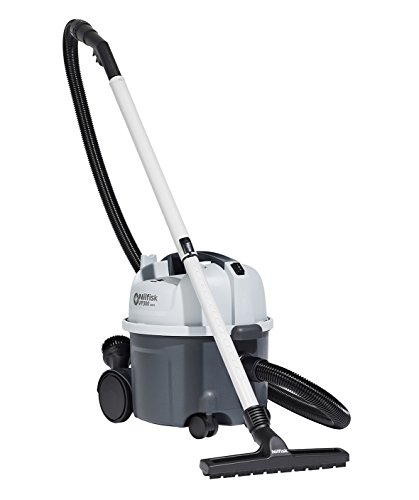
Nilfisk VP300
6.8/10

Overall score

Score
6.8/ 10
✕
What it is
Our main score for this model, 1–10. It combines specs, best-of lists, expert reviews and owners.
How we count it
Parts: Technical score 35%, List score 30%, Reviews score 25%, Sentiment score 10%
Marks: Each part gets a mark out of 10. For reviews, lists and owners, a typical model in this category gets about 8 and the best one gets 10.
No data yet: A part with no data shows "?". It counts as the mark of a weaker model in this category (4 in 5 models with data score higher). This way, models with reviews, lists and owners usually come out ahead.
Score distribution
â–¼
<55-66-77-88-99-10
Score components

35%

6.5

Technical Score

30%

?

List scoreNot enough data yet, so we use 7.5, the mark of a weaker model in this category

25%

6.5

Reviews score

10%

?

Sentiment scoreNot enough data yet, so we use 6.8, the mark of a weaker model in this category

â–¼Worse than 74% of vacuum cleaners
7.2

Ratio quality/price

Ratio quality/price
7.2/ 10
✕
What it is
An indicator that combines the vacuum cleaner's overall score with its price.
When it matters
When you are looking for a vacuum cleaner with a good balance between quality and price.
Score distribution
â–¼
<55-66-77-88-99-10
Score components

70%

6.8

Overall score

30%

8.1

Price

â–¼Worse than 91%
6.5

Technical Score

Technical score
6.5/ 10
✕
What it is
How good the specs are compared with the other models in this category, 1–10.
How we count it
Areas: We rate the specs in each area against the other models in this category.
Weighting: The areas that matter most to buyers count more. The shares are shown under Score components.
Share: The technical score is 35% of the overall score.
Score distribution
â–¼
<55-66-77-88-99-10
Score components

28%

7.8

Performance

22%

4.9

Battery

18%

8.3

Filtration

14%

5.7

Attachments

10%

4.6

Design

8%

5.8

Smart features

â–²Better than 52%
6.5

Reviews score

Reviews score
6.5/ 10
✕
What it is
Average grade from independent test sites, magazines and video reviewers, 1–10.
How we count it
Grades: Each review's own score is converted to 1–10; without one, we grade the review ourselves. Big test sites count more, short reviews half as much as full tests. A video review counts half.
Score: The average grade is 80% of the review mark; the number of reviews is the other 20% (1 review = 5, the typical number in this category = 8, the most-reviewed model = 10).
Enough data: With few reviews, the average grade is pulled toward the typical grade of this category. No reviews yet: 7.6 for now.
Share: Reviews count 25% of the overall score.
Score distribution
â–¼
<55-66-77-88-99-10

6.5

Mark 7.6 is below the typical mark 8.1 of this category, so it cannot lift the score above the technical score

80%

8.2

Average grade

20%

5.0

Popularity

Grades by review (1)
1 review, with a printed score. Reviews count 25% of the overall score.
User ratings collected online are not part of this score.
â–¼Worse than 72%
?

Sentiment score

Sentiment score
6.8/ 10
✕
What it is
How positive owners are about this model in their comments under video reviews and on forums. We read each comment, keep only people who say they own the model, and sort them into positive, mixed or negative.
How we count it
Score: We compare how satisfied this model’s owners are with the other models in this category: the typical model gets 8, the most satisfied tenth 10, the least satisfied 4. This is 80% of the owner mark; the number of owners is the other 20%.
Enough data: A model counts with 10+ owners from 4+ different discussions. With fewer, the owner part counts as 6.8 for now.
Share: Owners count 10% of the overall score (left out in categories where fewer than 10 models have enough owner comments).
Score distribution
â–¼
<55-66-77-88-99-10
Owners (0)
Not enough owner comments yet (10+ owners from 4+ discussions needed), so the owner part counts as 6.8 for now.
Our own analysis of online owner opinions, not a rating from any website.
Not enough owner comments yet
?

List score

List score
7.5/ 10
✕
What it is
How often independent test sites, magazines and video reviewers put this model in their best-of lists for this category.
How we count it
Points: The model in the most lists of this category gets 10; the others get 8 to 10 in proportion. In no list yet: 7.5. Lists count 30% of the overall score.
Enough data: Every list counts, even a single one. With fewer than 5 best-of lists in the category, this part is left out.
Lists with this model (0)
Not in any best-of list yet, so this part counts as 7.5. Models in a list get 8 to 10.
Not in any best-of list yet
  • nilfisk-vp300
  • nilfisk-vp300
  • nilfisk-vp300
  • nilfisk-vp300
  • nilfisk-vp300
  • nilfisk-vp300
nilfisk-vp300
nilfisk-vp300
nilfisk-vp300
nilfisk-vp300
nilfisk-vp300
nilfisk-vp300
Where to Buy
*As an Amazon Associate, we earn from qualifying purchases.
Loading...
Loading category ranking...

Vacuum Cleaners model ranking

Ranked #195 of 262 models in Vacuum Cleaners (Overall score)

Technical Specifications of Vacuum Cleaner Nilfisk VP300

Technical Score
Technical score
6.5/ 10
✕
What it is
How good the specs are compared with the other models in this category, 1–10.
How we count it
Areas: We rate the specs in each area against the other models in this category.
Weighting: The areas that matter most to buyers count more. The shares are shown under Score components.
Share: The technical score is 35% of the overall score.
Score distribution
â–¼
<55-66-77-88-99-10
Score components:

28%

7.8

Performance

22%

4.9

Battery

18%

8.3

Filtration

14%

5.7

Attachments

10%

4.6

Design

8%

5.8

Smart features

6.5
Reviews score
6.5
Sentiment score
?
List score
?
Ratio quality/price
Value for money
7.2/ 10
✕
What it is
An indicator that combines the vacuum cleaner's overall score with its price.
When it matters
When you are looking for a vacuum cleaner with a good balance between quality and price.
Score distribution
â–¼
<55-66-77-88-99-10
Score components:

70%

6.8

Overall score

30%

8.1

Price

7.2
Suction power (AW)
225 AW
This vacuum cleaner has a suction power of 225 AW, which is higher than that of 82.9% of vacuum cleaners.
Suction power (kPa)
22 kPa
This vacuum cleaner has a suction pressure of 22 kPa, which is higher than that of 66.9% of vacuum cleaners and equal to that of 2.5% of vacuum cleaners.
Airflow
68 CFM
This vacuum cleaner delivers 68 CFM airflow, which is higher than that of 67.4% of vacuum cleaners and equal to that of 2.3% of vacuum cleaners.
Motor type
digital
Power consumption
800 W
This vacuum cleaner draws 800 W, which is higher than the power consumption of 77.3% of vacuum cleaners and equal to that of 4.5% of vacuum cleaners.
Show more
Cordless
no
This vacuum cleaner does not work cordlessly. 49.5% of vacuum cleaners offer cordless operation.
Battery runtime
N/A
Charging time
N/A
Battery capacity
N/A
Battery voltage
N/A
Show more
Filter class
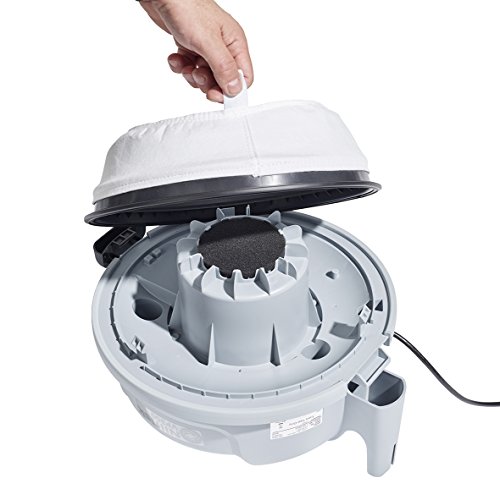
hepa 13
This vacuum cleaner uses filter class hepa 13, which is more advanced than the class used by 80.4% of vacuum cleaners and the same as the class used by 18% of vacuum cleaners.
Minimum overall efficiency
99.95%
This vacuum cleaner reaches 99.95% minimum overall efficiency, which is higher than that of 32% of vacuum cleaners and equal to that of 26.9% of vacuum cleaners.
Suitable for allergy sufferers
yes
This vacuum cleaner is suitable for allergy sufferers. 82.4% of vacuum cleaners are allergy-friendly.
Capacity
338 fl oz
This vacuum cleaner has a dust capacity of 338 fl oz, which is larger than that of 99.7% of vacuum cleaners.
Bagless
no
This vacuum cleaner does not use a bagless design. 78.6% of vacuum cleaners use this setup.
Show more
Main brush type
classic
Roller type
none
Anti-tangle brush
no
This vacuum cleaner does not include an anti-tangle brush. 25.7% of vacuum cleaners include this feature.
Mini motorized brush
no
This vacuum cleaner does not include a mini motorized brush. 26.9% of vacuum cleaners include this attachment.
Suitable for pet owners
no
This vacuum cleaner is not suitable for pet owners. 72% of vacuum cleaners handle pet hair well.
Show more
Vacuum type
canister
Weight
11.7 lb
This vacuum cleaner weighs 11.7 lb, which is greater than the weight of 72.9% of vacuum cleaners and equal to that of 0.9% of vacuum cleaners.
2-in-1 design
no
This vacuum cleaner does not offer a 2-in-1 design. 53% of vacuum cleaners offer this flexible format.
Self-standing
no
This vacuum cleaner does not stand on its own. 18.9% of vacuum cleaners offer this convenience.
Adjustable tube height
no
This vacuum cleaner does not include adjustable tube height. 47.4% of vacuum cleaners offer this ergonomic feature.
Show more
Auto suction adjustment
yes
This vacuum cleaner supports automatic suction adjustment. 19.9% of vacuum cleaners support this feature.
Dust particle sensor
no
This vacuum cleaner does not include a dust particle sensor. 8% of vacuum cleaners include this feature.
LED display
no
This vacuum cleaner does not include an LED display. 25.9% of vacuum cleaners include this interface feature.
Nozzle light
no
This vacuum cleaner does not include a nozzle light. 43.4% of vacuum cleaners include this visibility feature.
Mopping support
no
This vacuum cleaner does not support mopping. 3.7% of vacuum cleaners support this multi-function feature.

Nilfisk VP300 vs the Average Vacuum Cleaner

246810TotalPerformanceBatteryFiltrationAttachmentsDesignSmart features
  • 75 AW higher suction power
    This vacuum cleaner has higher suction power than the average vacuum cleaner (225 AW vs 150 AW).
    225 AW vs 150 AW
  • Higher filter class
    This vacuum cleaner uses a better filter class than the average vacuum cleaner (hepa 13 vs hepa).
    hepa 13 vs hepa
  • Quieter operation
    This vacuum cleaner is quieter than the average vacuum cleaner (50-62 dB vs 77-77 dB).
    50-62 dB vs 77-77 dB
  • Automatic suction adjustment
    This vacuum cleaner supports automatic suction adjustment, the average vacuum cleaner does not.
  • 304 fl oz larger dust container
    This vacuum cleaner has a larger dust capacity than the average vacuum cleaner (338 fl oz vs 34 fl oz).
    338 fl oz vs 34 fl oz
  • 11.5 ft longer power cord
    This vacuum cleaner has a longer power cord than the average vacuum cleaner (32.8 ft vs 21.3 ft).
    32.8 ft vs 21.3 ft
  • 1.6 in wider cleaning path
    This vacuum cleaner has a wider cleaning path than the average vacuum cleaner (11.8 in vs 10.2 in).
    11.8 in vs 10.2 in
  • 2 kPa higher suction pressure
    This vacuum cleaner has higher suction pressure than the average vacuum cleaner (22 kPa vs 20 kPa).
    22 kPa vs 20 kPa
  • 75 AW higher suction power
    This vacuum cleaner has higher suction power than the average vacuum cleaner (225 AW vs 150 AW).
    225 AW vs 150 AW
  • Quieter operation
    This vacuum cleaner is quieter than the average vacuum cleaner (50-62 dB vs 77-77 dB).
    50-62 dB vs 77-77 dB
  • 1.6 in wider cleaning path
    This vacuum cleaner has a wider cleaning path than the average vacuum cleaner (11.8 in vs 10.2 in).
    11.8 in vs 10.2 in
  • 2 kPa higher suction pressure
    This vacuum cleaner has higher suction pressure than the average vacuum cleaner (22 kPa vs 20 kPa).
    22 kPa vs 20 kPa
  • 11.5 ft longer power cord
    This vacuum cleaner has a longer power cord than the average vacuum cleaner (32.8 ft vs 21.3 ft).
    32.8 ft vs 21.3 ft
  • Higher filter class
    This vacuum cleaner uses a better filter class than the average vacuum cleaner (hepa 13 vs hepa).
    hepa 13 vs hepa
  • 304 fl oz larger dust container
    This vacuum cleaner has a larger dust capacity than the average vacuum cleaner (338 fl oz vs 34 fl oz).
    338 fl oz vs 34 fl oz
  • 27.9 in shorter body
    This vacuum cleaner is shorter than the average vacuum cleaner (15.4 in vs 43.3 in).
    15.4 in vs 43.3 in
  • Automatic suction adjustment
    This vacuum cleaner supports automatic suction adjustment, the average vacuum cleaner does not.
  • Not pet-hair friendly
    This vacuum cleaner is not suitable for pet owners, the average vacuum cleaner is.
  • No handheld conversion
    This vacuum cleaner does not have a 2-in-1 design, the average vacuum cleaner does.
  • No bagless design
    This vacuum cleaner does not use a bagless design, the average vacuum cleaner does.
  • No cyclonic technology
    This vacuum cleaner does not use cyclonic technology, the average vacuum cleaner does.
  • 46.3% higher weight
    This vacuum cleaner is heavier than the average vacuum cleaner (11.7 lb vs 8 lb).
    11.7 lb vs 8 lb
  • No washable filter
    This vacuum cleaner does not include a washable filter, the average vacuum cleaner does.
  • 3 in wider body
    This vacuum cleaner is wider than the average vacuum cleaner (13.4 in vs 10.4 in).
    13.4 in vs 10.4 in
  • 12.2% lower review score
    Reviews score
    6.5/ 10
    ✕
    What it is
    Average grade from independent test sites, magazines and video reviewers, 1–10.
    How we count it
    Grades: Each review's own score is converted to 1–10; without one, we grade the review ourselves. Big test sites count more, short reviews half as much as full tests. A video review counts half.
    Score: The average grade is 80% of the review mark; the number of reviews is the other 20% (1 review = 5, the typical number in this category = 8, the most-reviewed model = 10).
    Enough data: With few reviews, the average grade is pulled toward the typical grade of this category. No reviews yet: 7.6 for now.
    Share: Reviews count 25% of the overall score.
    Score distribution
    â–¼
    <55-66-77-88-99-10

    6.5

    Mark 7.6 is below the typical mark 8.1 of this category, so it cannot lift the score above the technical score

    80%

    8.2

    Average grade

    20%

    5.0

    Popularity

    Grades by review (1)
    1 review, with a printed score. Reviews count 25% of the overall score.
    User ratings collected online are not part of this score.
    6.5 vs 7.4
  • 7.6% worse value for money
    Nilfisk VP300 offers worse value for money than the average vacuum cleaner (7.22 vs 7.8).
    7.22 vs 7.76
  • 2.25x more expensive
    Nilfisk VP300 is more expensive than the average vacuum cleaner ($450 vs $200).
    $450 vs $200
  • No cyclonic technology
    This vacuum cleaner does not use cyclonic technology, the average vacuum cleaner does.
  • 1 fewer power levels
    This vacuum cleaner offers fewer speed levels than the average vacuum cleaner (1 vs 2).
    1 vs 2
  • 200 W higher power consumption
    This vacuum cleaner draws more power than the average vacuum cleaner (800 W vs 600 W).
    800 W vs 600 W
  • Older release date
    This vacuum cleaner has an older release date than the average vacuum cleaner (2011 vs 2021).
    2011 vs 2021
  • No bagless design
    This vacuum cleaner does not use a bagless design, the average vacuum cleaner does.
  • No washable filter
    This vacuum cleaner does not include a washable filter, the average vacuum cleaner does.
  • Not pet-hair friendly
    This vacuum cleaner is not suitable for pet owners, the average vacuum cleaner is.
  • No handheld conversion
    This vacuum cleaner does not have a 2-in-1 design, the average vacuum cleaner does.
  • 46.3% higher weight
    This vacuum cleaner is heavier than the average vacuum cleaner (11.7 lb vs 8 lb).
    11.7 lb vs 8 lb
  • 3 in wider body
    This vacuum cleaner is wider than the average vacuum cleaner (13.4 in vs 10.4 in).
    13.4 in vs 10.4 in
  • 5.2 in deeper body
    This vacuum cleaner is deeper than the average vacuum cleaner (15.6 in vs 10.4 in).
    15.6 in vs 10.4 in

Video Reviews

Hands-on testing, unboxing, and real-world video evaluations

Shop video
Not graded
Hands-on video, no verdict

Expert Reviews

In-depth analysis and verdict from leading tech publications

8.0
trustedreviews.com
✓ explicit
9/12/2015
Hands-on test · Bagged cylinder
Verdict
The Nilfisk VP300 ECO is a sturdy, long-reaching bagged cylinder for heavy daily use, but it struggles with pet hair and has no cable rewind.

Third-Party Reviews

What Customers Like About Nilfisk VP300

  • Strong and consistent suction power across multiple surface types
  • Highly efficient H13 HEPA filtration system that maintains excellent air quality
  • Extremely lightweight and portable design, making it easy to carry around
  • Very quiet operation, suitable for daytime cleaning in noise-sensitive environments
  • Generous 10.6-quart dust bag capacity that reduces the frequency of bag changes
  • Convenient onboard accessory storage and an extra-long power cable
  • Robust canister design that stays stable and does not tip over easily during use

What Customers Don't Like About Nilfisk VP300

  • Standard floor head and extendable extension tube feel heavy for single-handed use
  • The power cord and suction hose are noted to be shorter than those of some competing commercial models
  • Poor connection fit between the hose nozzle and the extension tube, which can frequently come apart
  • The included crevice tool is slightly too wide for narrow spaces, such as between car seats
  • Some instances of long-term component durability issues, specifically regarding the motor and power switch lifespan

Verdict

The Nilfisk VP300 is a robust, lightweight commercial tub vacuum cleaner weighing just 11.5 to 12.1 lb, featuring a 10.6-quart dust container capacity and an energy-efficient 800W or 900W motor that delivers 22 kPa of suction power. Key pros include its highly portable design, an ultra-low operating noise level of 50 to 62 dB(A) for daytime cleaning, a generous 33-foot power cable for excellent reach, and optional certified H13 HEPA filtration for superior indoor air quality. However, notable cons include the lack of an automatic cable rewind mechanism and lower effectiveness when lifting deeply embedded pet hair from thick carpets.

Compare Nilfisk VP300 With Other Vacuum Cleaners

1Product to compare no. 1
VS
2Product to compare no. 2
VS
3Product to compare no. 3 (optional)

Graphic Comparison of Nilfisk VP300 and Other Vacuum Cleaners

No results found