Scored using Projectors Methodology v3.0
Projectors Methodology v3.0
Mathematical & Unbiased Scoring
Products in this category are scored under Frontum Projectors Methodology v3.0: the technical score from the specifications is the base, and independent expert and video reviews (up to ±0.5 points), owner opinions (up to ±0.3) and best-of lists (up to +0.3) move it up or down.
Explore Projectors Methodology v3.0

Epson EMP-TW1000 Review: 86 Specs Compared

Avg. price:~$3,550Native panel resolution:1920x1080ANSI lumens:1200Throw ratio:?Lamp life:1700 hours

Epson EMP-TW1000 Review: Compare 86 technical specifications and 6 expert reviews to see how this product ranks in the Projectors category and whether it is worth buying.
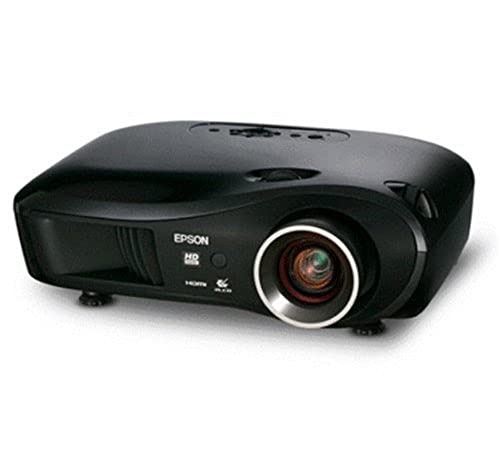
Epson EMP-TW1000
6.5/10

Overall score

Score
6.5/ 10
✕
What it is
Our main score for this model, 1–10. It combines specs, best-of lists, expert reviews and owners.
How we count it
Parts: Technical score 35%, List score 30%, Reviews score 25%, Sentiment score 10%
Marks: Each part gets a mark out of 10. For reviews, lists and owners, a typical model in this category gets about 8 and the best one gets 10.
No data yet: A part with no data shows "?". It counts as the mark of a weaker model in this category (4 in 5 models with data score higher). This way, models with reviews, lists and owners usually come out ahead.
Score distribution
â–¼
<55-66-77-88-99-10
Score components

35%

5.9

Technical Score

30%

?

List scoreNot enough data yet, so we use 7.5, the mark of a weaker model in this category

25%

5.9

Reviews score

10%

?

Sentiment scoreNot enough data yet, so we use 6.8, the mark of a weaker model in this category

â–¼Worse than 86% of projectors
4.8

Ratio quality/price

Ratio quality/price
4.8/ 10
✕
What it is
An indicator that combines the projector's overall rating with its cost.
When it matters
When you are looking for a projector with a good balance between quality and price.
Score distribution
â–¼
<55-66-77-88-99-10
Score components

70%

6.5

Overall score

30%

1.0

Price

â–¼Worse than 99%
5.9

Technical Score

Technical score
5.9/ 10
✕
What it is
How good the specs are compared with the other models in this category, 1–10.
How we count it
Areas: We rate the specs in each area against the other models in this category.
Weighting: The areas that matter most to buyers count more. The shares are shown under Score components.
Share: The technical score is 35% of the overall score.
Score distribution
â–¼
<55-66-77-88-99-10
Score components

42%

6.0

Image Quality

22%

8.3

Projection & Lens

12%

5.0

HDMI & Gaming

10%

4.4

Audio & Features

8%

3.4

Connectivity

6%

4.3

Design & Power

â–¼Worse than 76%
5.9

Reviews score

Reviews score
5.9/ 10
✕
What it is
Average grade from independent test sites, magazines and video reviewers, 1–10.
How we count it
Grades: Each review's own score is converted to 1–10; without one, we grade the review ourselves. Big test sites count more, short reviews half as much as full tests. A video review counts half.
Score: The average grade is 80% of the review mark; the number of reviews is the other 20% (1 review = 5, the typical number in this category = 8, the most-reviewed model = 10).
Enough data: With few reviews, the average grade is pulled toward the typical grade of this category. No reviews yet: 7.8 for now.
Share: Reviews count 25% of the overall score.
Score distribution
â–¼
<55-66-77-88-99-10

5.9

Mark 7.9 is below the typical mark 8.2 of this category, so it cannot lift the score above the technical score

80%

8.0

Average grade

20%

7.8

Popularity

Grades by review (6)
6 reviews: 3 with a printed score, 3 estimated from the review. Reviews count 25% of the overall score.
User ratings collected online are not part of this score.
â–¼Worse than 86%
?

Sentiment score

Sentiment score
6.8/ 10
✕
What it is
How positive owners are about this model in their comments under video reviews and on forums. We read each comment, keep only people who say they own the model, and sort them into positive, mixed or negative.
How we count it
Score: We compare how satisfied this model’s owners are with the other models in this category: the typical model gets 8, the most satisfied tenth 10, the least satisfied 4. This is 80% of the owner mark; the number of owners is the other 20%.
Enough data: A model counts with 10+ owners from 4+ different discussions. With fewer, the owner part counts as 6.8 for now.
Share: Owners count 10% of the overall score (left out in categories where fewer than 10 models have enough owner comments).
Score distribution
â–¼
<55-66-77-88-99-10
Owners (0)
Not enough owner comments yet (10+ owners from 4+ discussions needed), so the owner part counts as 6.8 for now.
Our own analysis of online owner opinions, not a rating from any website.
Not enough owner comments yet
?

List score

List score
7.5/ 10
✕
What it is
How often independent test sites, magazines and video reviewers put this model in their best-of lists for this category.
How we count it
Points: The model in the most lists of this category gets 10; the others get 8 to 10 in proportion. In no list yet: 7.5. Lists count 30% of the overall score.
Enough data: Every list counts, even a single one. With fewer than 5 best-of lists in the category, this part is left out.
Lists with this model (0)
Not in any best-of list yet, so this part counts as 7.5. Models in a list get 8 to 10.
Not in any best-of list yet
  • epson-emp-tw1000
epson-emp-tw1000
Where to Buy
    N/A
Best Rankings
Available: ranking among products currently available (including other versions of this product).All: ranking among all products in the database.

What Reviewers Say About the Epson EMP-TW1000

Based on 6

Reviewers like the handy lens controls and flexible throw distance, but complain about too few HDMI inputs and clumsy menus.
Praised
Criticised
Pick a topic to see who said what
Loading...
Loading category ranking...

Technical Specifications of Projector Epson EMP-TW1000

Technical Score
Technical score
5.9/ 10
✕
What it is
How good the specs are compared with the other models in this category, 1–10.
How we count it
Areas: We rate the specs in each area against the other models in this category.
Weighting: The areas that matter most to buyers count more. The shares are shown under Score components.
Share: The technical score is 35% of the overall score.
Score distribution
â–¼
<55-66-77-88-99-10
Score components:

42%

6.0

Image Quality

22%

8.3

Projection & Lens

12%

5.0

HDMI & Gaming

10%

4.4

Audio & Features

8%

3.4

Connectivity

6%

4.3

Design & Power

5.9
Reviews score
5.9
Sentiment score
?
List score
?
Ratio quality/price
Value for money
4.8/ 10
✕
What it is
An indicator that combines the projector's overall rating with its cost.
When it matters
When you are looking for a projector with a good balance between quality and price.
Score distribution
â–¼
<55-66-77-88-99-10
Score components:

70%

6.5

Overall score

30%

1.0

Price

4.8
ANSI lumens
1,200
This projector reaches 1,200 ANSI lumens, dimmer than 65.5% of projectors and equal to 0.6% of projectors.
Contrast ratio
12,000:1
This projector has a contrast ratio of 12000:1, higher than 50% of projectors and equal to 2.2% of projectors.
Native panel resolution
1920x1080
This projector uses a native resolution of 1920x1080, higher than 27% of projectors and equal to 59.2% of projectors.
Output resolution
1920x1080
This projector supports output resolution up to 1920x1080, higher than 25.9% of projectors and equal to 42.3% of projectors.
Projection technology
3LCD
Show more
What reviewers say
Throw ratio
?
Min throw distance
2.9 ft
This projector needs a minimum throw distance of 2.9 ft, shorter than 66.1% of projectors and equal to 1.6% of projectors.
Max projection size
300 inch
This projector supports projection sizes up to 300 inch, larger than 51.5% of projectors and equal to 38% of projectors.
Zoom ratio
2.1
This projector offers a zoom ratio of 2.1, wider than 94.4% of projectors and equal to 5% of projectors.
Motorized zoom
no
This projector does not have motorized zoom. 14.8% of projectors offer this.
Show more
What reviewers say
Input lag
?
Auto low latency mode (ALLM)
no
This projector does not switch to low-latency mode automatically. 16.1% of projectors offer this.
Variable refresh rate (VRR)
no
This projector does not support variable refresh rate. 1.8% of projectors offer this.
HDMI version
1.3
This projector supports HDMI 1.3, older than 89.8% of projectors and equal to 7.3% of projectors.
Max HDMI bandwidth
10.2 Gbps
This projector supports HDMI bandwidth up to 10.2 Gbps, lower than 51.2% of projectors and equal to 46.5% of projectors.
Show more
N. of HDMI ports
1
This projector has 1 HDMI port/s, fewer than 54.2% of projectors and equal to 42.9% of projectors.
Wi-Fi connectivity
no
This projector does not connect to Wi-Fi networks. 53.4% of projectors offer this.
Wi-Fi version
N/A
Bluetooth connectivity
no
This projector does not support Bluetooth. 50.7% of projectors offer this.
Bluetooth version
N/A
Show more
What reviewers say
Smart TV features
no
This projector does not have built-in smart TV features. 43.9% of projectors offer this.
Operating system
none
Android OS
no
This projector does not run Android OS. 19.1% of projectors run Android OS.
Dedicated smartphone app
no
This projector does not come with a dedicated smartphone app. 36.8% of projectors come with a dedicated smartphone app.
Remote control
yes
This projector includes a remote control. 1.5% of projectors offer this.
Show more
Light source type
lamp
This projector uses lamp light source technology, less advanced than 66.5% of projectors and equal to 33.5% of projectors.
Laser light source
no
This projector does not have a laser light source. 26.8% of projectors offer this.
Lamp life
1,700 hours
This projector offers lamp life of 1,700 hours, longer than 99.6% of projectors.
Lamp life (eco mode)
3,000 hours
This projector offers eco-mode lamp life of 3,000 hours, longer than 96.9% of projectors and equal to 1.9% of projectors.
Operating power consumption
240 W
This projector uses 240 W of power, more than 52.2% of projectors and equal to 1.2% of projectors.
Normal mode power draw.
Show more

Epson EMP-TW1000 vs the Average Projector

246810TotalImage QualityProjection & LensHDMI & GamingConnectivityAudio & FeaturesDesign & Power
  • 0.8 2x wider zoom range
    This projector has a higher zoom ratio than the average projector (2.1 vs 1.3). The average projector has 1.3 of zoom ratio.
    2.1 vs 1.3
  • Supports lens memory
    This projector stores lens settings, while the average projector does not. 8.1% of projectors offer this.
  • 17.1 % more horizontal lens shift
    This projector has more horizontal lens shift than the average projector (47.1 % vs 30 %). The average projector has 30 % horizontal lens shift.
    47.1 % vs 30 %
  • Wider color gamut
    This projector has a higher color gamut coverage than the average projector (115% NTSC % vs 99% Rec.709 %). The average projector has 99% Rec.709 % of color gamut coverage.
    115% NTSC % vs 99% Rec.709 %
  • 32 % more vertical lens shift
    This projector has more vertical lens shift than the average projector (96 % vs 64 %). The average projector has 64 % vertical lens shift.
    96 % vs 64 %
  • 50 inch larger image size
    This projector has a higher projection size than the average projector (300 inch vs 250 inch). The average projector has 250 inch of projection size.
    300 inch vs 250 inch
  • 0.4 ft shorter throw distance
    This projector has a lower throw distance than the average projector (2.9 ft vs 3.3 ft). The average projector has 3.3 ft of throw distance.
    2.9 ft vs 3.3 ft
  • 2 dB quieter eco mode
    This projector has a lower audible noise in eco mode than the average projector (26 dB vs 28 dB). The average projector has 28 dB of audible noise in eco mode.
    26 dB vs 28 dB
  • Wider color gamut
    This projector has a higher color gamut coverage than the average projector (115% NTSC % vs 99% Rec.709 %). The average projector has 99% Rec.709 % of color gamut coverage.
    115% NTSC % vs 99% Rec.709 %
  • Higher contrast ratio
    This projector has a higher contrast ratio than the average projector (12000:1 vs 10000:1). The average projector has 10000:1 of contrast ratio.
    12,000:1 vs 10,000:1
  • 0.8 2x wider zoom range
    This projector has a higher zoom ratio than the average projector (2.1 vs 1.3). The average projector has 1.3 of zoom ratio.
    2.1 vs 1.3
  • Supports lens memory
    This projector stores lens settings, while the average projector does not. 8.1% of projectors offer this.
  • 17.1 % more horizontal lens shift
    This projector has more horizontal lens shift than the average projector (47.1 % vs 30 %). The average projector has 30 % horizontal lens shift.
    47.1 % vs 30 %
  • 32 % more vertical lens shift
    This projector has more vertical lens shift than the average projector (96 % vs 64 %). The average projector has 64 % vertical lens shift.
    96 % vs 64 %
  • 50 inch larger image size
    This projector has a higher projection size than the average projector (300 inch vs 250 inch). The average projector has 250 inch of projection size.
    300 inch vs 250 inch
  • 0.4 ft shorter throw distance
    This projector has a lower throw distance than the average projector (2.9 ft vs 3.3 ft). The average projector has 3.3 ft of throw distance.
    2.9 ft vs 3.3 ft
  • VGA input included
    This projector supports VGA input, while the average projector does not. 44.1% of projectors support VGA input.
  • 2 dB quieter eco mode
    This projector has a lower audible noise in eco mode than the average projector (26 dB vs 28 dB). The average projector has 28 dB of audible noise in eco mode.
    26 dB vs 28 dB
  • Limited HDMI format
    This projector supports a less capable max HDMI input format than the average projector (1080p/60Hz vs 4K/120Hz). The average projector supports a max HDMI input format of 4K/120Hz.
    1080p/60Hz vs 4K/120Hz
  • Basic light source
    This projector has Basic light source than the average projector (lamp vs laser). The average projector uses a laser light source.
    lamp vs laser
  • No HDR10 support
    This projector does not support HDR10, while the average projector does. 57.6% of projectors support HDR10.
  • 1 fewer HDMI ports
    This projector has fewer HDMI ports than the average projector (1 vs 2). The average projector has 2 HDMI ports.
    1 vs 2
  • Older HDMI version
    This projector has Old HDMI standard than the average projector (1.3 vs 2). The average projector supports HDMI 2.0.
    1.3 vs 2.0
  • 43.3% lower HDMI bandwidth
    This projector has a lower HDMI bandwidth than the average projector (10.2 Gbps vs 18 Gbps). The average projector has 18 Gbps of HDMI bandwidth.
    10.2 Gbps vs 18 Gbps
  • 45.5% dimmer image
    This projector has lower ANSI lumens than the average projector (1,200 vs 2,200). The average projector has 2,200 ANSI lumens.
    1,200 vs 2,200
  • No Wi-Fi connectivity
    This projector does not connect to Wi-Fi networks, while the average projector does. 53.4% of projectors offer this.
  • 20.3% lower review score
    Reviews score
    5.9/ 10
    ✕
    What it is
    Average grade from independent test sites, magazines and video reviewers, 1–10.
    How we count it
    Grades: Each review's own score is converted to 1–10; without one, we grade the review ourselves. Big test sites count more, short reviews half as much as full tests. A video review counts half.
    Score: The average grade is 80% of the review mark; the number of reviews is the other 20% (1 review = 5, the typical number in this category = 8, the most-reviewed model = 10).
    Enough data: With few reviews, the average grade is pulled toward the typical grade of this category. No reviews yet: 7.8 for now.
    Share: Reviews count 25% of the overall score.
    Score distribution
    â–¼
    <55-66-77-88-99-10

    5.9

    Mark 7.9 is below the typical mark 8.2 of this category, so it cannot lift the score above the technical score

    80%

    8.0

    Average grade

    20%

    7.8

    Popularity

    Grades by review (6)
    6 reviews: 3 with a printed score, 3 estimated from the review. Reviews count 25% of the overall score.
    User ratings collected online are not part of this score.
    5.9 vs 7.4
  • 38.3% worse value for money
    Epson EMP-TW1000 has a lower value-for-money score than the average projector (4.84 vs 6.7).
    4.84 vs 6.7
  • 4.23x more expensive
    Epson EMP-TW1000 is more expensive than the average projector ($3,550 vs $840).
    $3,550 vs $840
  • No HDR10 support
    This projector does not support HDR10, while the average projector does. 57.6% of projectors support HDR10.
  • 45.5% dimmer image
    This projector has lower ANSI lumens than the average projector (1,200 vs 2,200). The average projector has 2,200 ANSI lumens.
    1,200 vs 2,200
  • No 3D video
    This projector does not support 3D video, while the average projector does. 55.4% of projectors support 3D video.
  • 14 earlier release
    This projector was released earlier than the average projector (2007 vs 2021). The average projector was released in 2021.
    2,007 vs 2,021
  • No 3D glasses support
    This projector does not display 3D with glasses, while the average projector does. 54.4% of projectors offer 3D with glasses.
  • Limited HDMI format
    This projector supports a less capable max HDMI input format than the average projector (1080p/60Hz vs 4K/120Hz). The average projector supports a max HDMI input format of 4K/120Hz.
    1080p/60Hz vs 4K/120Hz
  • Older HDMI version
    This projector has Old HDMI standard than the average projector (1.3 vs 2). The average projector supports HDMI 2.0.
    1.3 vs 2.0
  • 43.3% lower HDMI bandwidth
    This projector has a lower HDMI bandwidth than the average projector (10.2 Gbps vs 18 Gbps). The average projector has 18 Gbps of HDMI bandwidth.
    10.2 Gbps vs 18 Gbps
  • More outdated HDCP support
    This projector supports an older HDCP version than the average projector (1.1 vs 2.2).
    1.1 vs 2.2
  • 1 fewer HDMI ports
    This projector has fewer HDMI ports than the average projector (1 vs 2). The average projector has 2 HDMI ports.
    1 vs 2
  • No Wi-Fi connectivity
    This projector does not connect to Wi-Fi networks, while the average projector does. 53.4% of projectors offer this.
  • No Bluetooth connectivity
    This projector does not support Bluetooth, while the average projector does. 50.6% of projectors offer this.
  • No headphone jack
    This projector does not have a 3.5 mm audio jack, while the average projector does. 84.4% of projectors offer a 3.5 mm audio jack.
  • 1 fewer USB ports
    This projector has fewer USB ports than the average projector (0 vs 1). The average projector has 1 USB ports.
    0 vs 1
  • No built-in speaker
    This projector does not have a built-in speaker, while the average projector does. 87% of projectors have one.
  • No sleep timer
    This projector does not have a sleep timer, while the average projector does. 82.4% of projectors have one.
  • Basic light source
    This projector has Basic light source than the average projector (lamp vs laser). The average projector uses a laser light source.
    lamp vs laser
  • 18,300 hours shorter lamp life
    This projector has a lower lamp life than the average projector (1,700 hours vs 20,000 hours). The average projector has 20,000 hours of lamp life.
    1,700 hours vs 20,000 hours
  • 17,000 hours shorter eco lamp life
    This projector has a lower lamp life in eco mode than the average projector (3,000 hours vs 20,000 hours). The average projector has 20,000 hours of lamp life in eco mode.
    3,000 hours vs 20,000 hours
  • 2 dB louder operation
    This projector has a higher audible noise than the average projector (33 dB vs 31 dB). The average projector has 31 dB of audible noise.
    33 dB vs 31 dB
  • 86.4% heavier weight
    This projector is heavier than the average projector (12.3 lb vs 6.6 lb). The average projector weighs 6.6 lb.
    12.3 lb vs 6.6 lb
  • 4.3 in wider body
    This projector is wider than the average projector (16 in vs 11.7 in). The average projector has a width of 11.7 in.
    16 in vs 11.7 in
  • 4.5 W higher standby power
    This projector uses more standby power than the average projector (5 W vs 0.5 W). The average projector uses 0.5 W of standby power.
    5 W vs 0.5 W

Video Reviews

Hands-on testing, unboxing, and real-world video evaluations

Overview video
Not graded
Not graded
Overview video

Expert Reviews

In-depth analysis and verdict from leading tech publications
7.0
avforums.com
✓ explicit
9/7/2007
Calibration test · Full HD LCD
Verdict
The Epson EMP-TW1000 is a sharp Full HD LCD projector that calibrates very accurately, with deeper blacks than rival Panasonic PT-AE1000.
8.0
techradar.com
✓ explicit
2/10/2009
Hands-on review · Short-throw LCD
Verdict
The Epson EMP-TW1000 is a flexible Full HD projector with good color, but its weak black level keeps pictures from looking fully convincing.
5.0
trustedreviews.com
✓ explicit
6/10/2009
Lab test · Full HD LCD
Verdict
The Epson EMP-TW1000 is quick to set up with smooth motion, but its poor black levels are a serious flaw that holds it back.
8.0
cineforhome.com
≈ estimated
10/6/2008
Hands-on test · Placement and menus
Verdict
The Epson EMP-TW1000 is very flexible to place, with 2x zoom and large lens shift, though its lens controls on the unit are fiddly.
8.0
cine4home.de
≈ estimated
8/6/2007
Hands-on test · Full HD LCD
Verdict
The Epson EMP-TW1000 is a flexible Full HD LCD projector for small rooms, with wide lens shift and ten memory banks, but its controls on the unit are fiddly.
9.0
01smartlife.it
≈ estimated
1/9/2009
First look · Full HD LCD home cinema
Verdict
The Epson EMP-TW1000 is a compact LCD projector with warm, detailed color that suits films and games, though it trails DLP rivals on detail.

Third-Party Reviews

What Customers Like About Epson EMP-TW1000

  • High placement flexibility due to a large 2.1x zoom range and extensive vertical/horizontal lens shift
  • Excellent value for a full HD (1080p) projector, particularly at its historical price point
  • Vibrant and natural color reproduction, especially when calibrated in 'Theater' modes
  • Comprehensive calibration controls and an easy-to-navigate menu system
  • Quiet operation in low lamp (Eco) mode
  • Good motion handling with minimal blurring in action scenes

What Customers Don't Like About Epson EMP-TW1000

  • Weak black levels and shadow detail, which can appear as dark gray rather than deep black
  • Significant loss of brightness when using high-quality color filters in 'Theater' modes
  • Only a single HDMI 1.3 input, which is limited compared to some competitors
  • Manual lens shift and zoom controls lack the precision and stability of motorized alternatives
  • Unfavorable air filter placement on the bottom, requiring removal from ceiling mounts for routine cleaning
  • Slow adaptive iris response time, taking up to 15 seconds to fully close for dark scenes

Verdict

The Epson EMP-TW1000 is a high-definition 3LCD home theater projector featuring a native 1080p (1920x1080) resolution and an advanced 'Crystal Clear Fine' (C2Fine) panel system. It delivers a maximum brightness of 1,200 ANSI lumens and an impressive dynamic contrast ratio of 12,000:1, supported by an auto-iris that adjusts light output 60 times per second for deeper black levels. Its primary strengths include exceptional setup flexibility provided by a wide 2.1x manual zoom lens and extensive lens shift (up to 96% vertical and 47% horizontal), along with 10-bit color processing for smooth gradations. However, its main drawbacks are the lack of motorized lens controls, a relatively aged lamp-based light source with a standard life of around 1,700 to 3,000 hours, and a chassis design shared with lower-end models that some users find less premium.

Compare Epson EMP-TW1000 With Other Products in the Projectors Category

1Product to compare no. 1
VS
2Product to compare no. 2
VS
3Product to compare no. 3 (optional)

Graphic Comparison of Epson EMP-TW1000 and Other Products in the Projectors Category

No results found